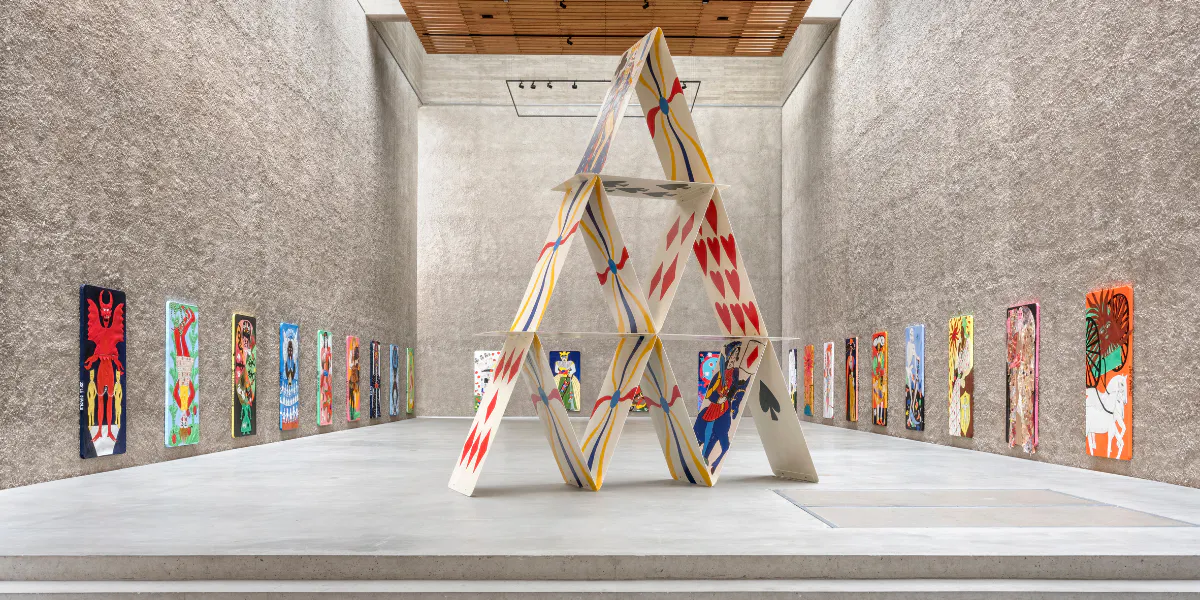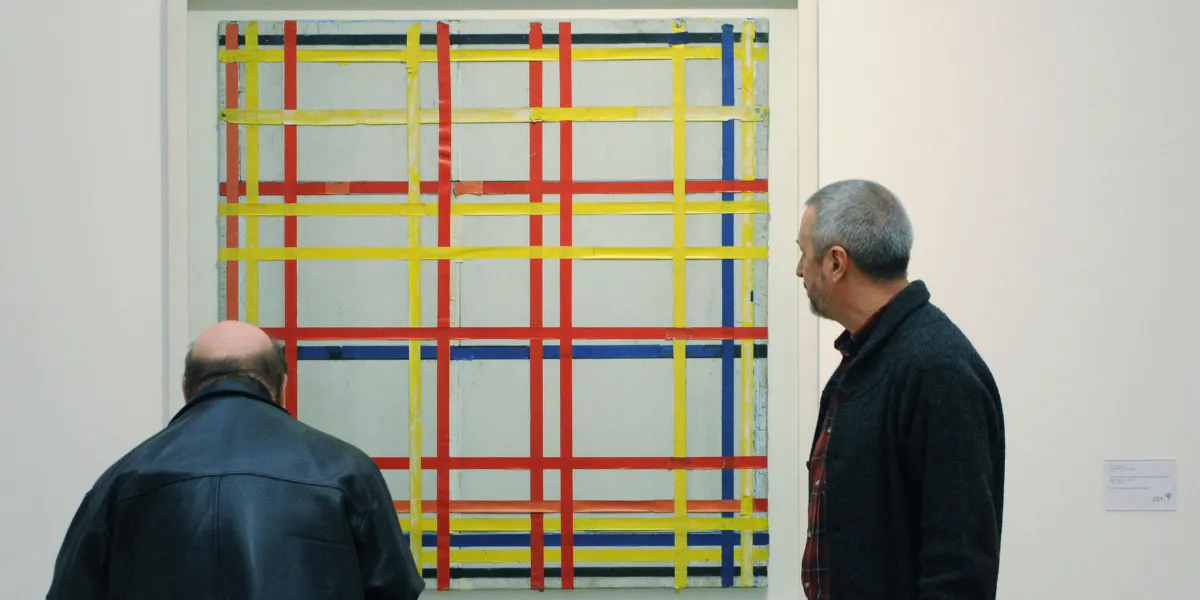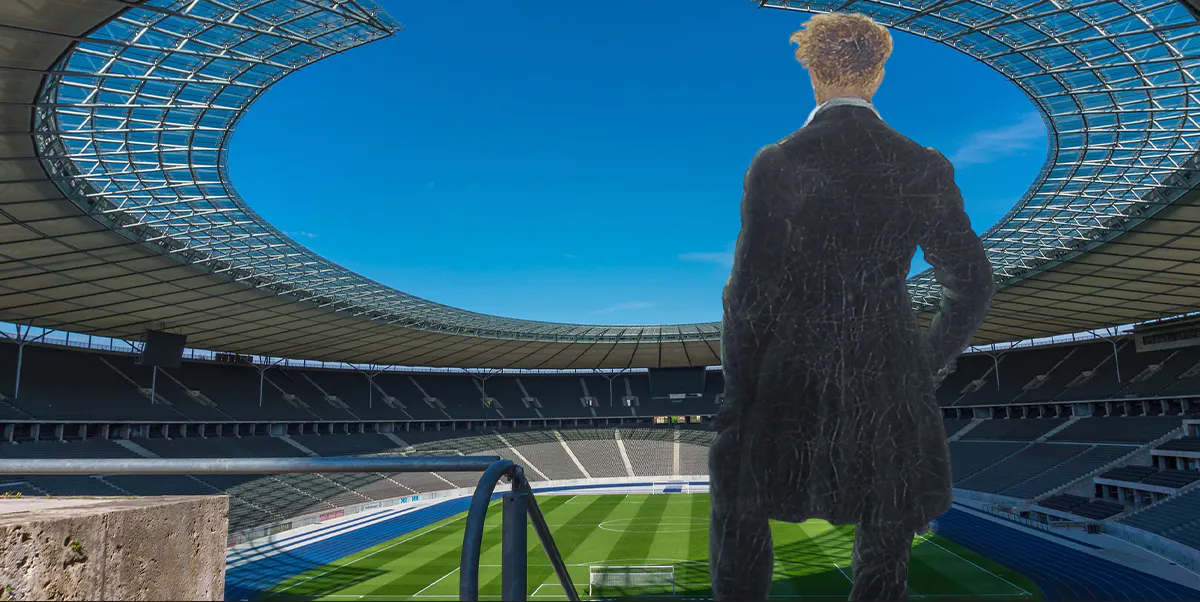
Some people are drawn to the football stadium, while others prefer the museum - and that's perfectly fine, of course, because as Frederick the Great once said: "To each his own." This year's European Football Championship in Germany is being held in ten cities with suitable stadium facilities, from Hamburg in the north to Munich in the south, and from Düsseldorf in the west to Berlin in the east. We have sought out the best art museums in these cities, which you should definitely visit regardless of the European Championship.
Munich
As the former residence of the Bavarian electors and kings and the current capital of the Free State of Bavaria, Munich naturally boasts world-class museums, many of which are conveniently located close to each other in the Kunstareal in the Maxvorstadt district. Here you will find the Brandhorst Museum dedicated to modern and contemporary art, the Städtische Galerie im Lenbachhaus, the State Collection of Classical Antiquities, and the State Museum of Egyptian Art. Additionally, there are the Alte and Neue Pinakothek, as well as the Pinakothek der Moderne, which incorporates the Neues Museum, the oldest design museum in the world. Finally, the Museum of Urban and Contemporary Art in the historic city centre brings you up to date.
Although not an art museum, the Deutsches Museum on Museum Island in the Isar is the largest museum of its kind in the world and is dedicated to masterpieces of science and technology. Munich's palaces are also worth a visit, including the Residenz with its Treasury and State Coin Collection, and Nymphenburg Palace with its magnificent park, the Marstall Museum, and the Porcelain Museum, which of course displays works from the Nymphenburg Porcelain Manufactory.
See also: 5 Portraits of Women in Black

Dortmund
If you want to give football a chance but still don't want to miss out on visiting a museum, Dortmund is the place to be, as it is home to the German Football Museum. If you are travelling to the city in the eastern Ruhr region by train, you can't miss the museum; it is located on your right as you leave the main station in the direction of the city centre. Not far behind it is the Museum Ostwall in the Dortmunder U, where you can view 20th-century art. The focus is on "Brücke" and "Blauer Reiter" (with the second largest collection of works by Alexej von Jawlensky) as well as ZERO, Fluxus, and Informel. If you turn left on the station forecourt, you will come to the Museum of Art and Cultural History, housed in an Art Deco building from 1924, which exhibits artefacts from prehistory and early history to the 20th century.
See also: 6 Sensational Paintings of Sports
Düsseldorf
The rich art history of today's capital of North Rhine-Westphalia began in 1709 with the construction of the picture gallery by Elector Johann Wilhelm zu Pfalz-Neuburg. Düsseldorf gained international significance in the 19th century through the artists trained at the Royal Prussian Academy of Art, who themselves coined the renowned term "Düsseldorf School of Painting," later adopted by art historians. Düsseldorf is home to the North Rhine-Westphalia Art Collection, which is exhibited in the K20, K21, and Schmela-Haus. The Museum Kunstpalast houses paintings and sculptures from the Middle Ages to the present day, along with several specialised collections, among which the glass collection is particularly noteworthy. Opposite the K20 on Grabbeplatz is the Kunsthalle Düsseldorf, whose brutalist building hosts temporary exhibitions. Düsseldorf also boasts a real gem in the enchanting Benrath Palace from the 18th century.
Cologne
Founded by the Romans in the 1st century, the city of Cologne has amassed a great deal of art over the past 2,000 years and is home to one of Germany's most famous landmarks, Cologne Cathedral. The Roman-Germanic Museum offers an insight into life in Colonia Claudia Ara Agrippinensium, where you can admire the Dionysus mosaic from a Roman villa, the imposing tomb of a legionary veteran, and the fascinating Braunsfeld Diatret glass.
The oldest museum in the city is the Wallraff-Richartz-Museum, which houses important art from the 13th to the 19th century. Located between the cathedral and the banks of the Rhine is the Museum Ludwig, dedicated to modern art and attracting the most visitors of all Cologne's museums each year. Visitors can explore the most extensive collection of American pop art in Europe, among other exhibits. Also notable are the Museum of Applied Arts and the Museum of East Asian Art.
See also: François Boucher and the 18th-century Pin-Up

Gelsenkirchen
Located in the heart of the Ruhr region, the city of Gelsenkirchen hosts the Gelsenkirchen Art Museum, situated in a historic building with a modern extension dating back to 1984, located in the Buer district. The museum showcases art from the past century, with two notable focuses: art from the first half of the 20th century and Kinetic art, boasting one of the largest collections in Europe. While exploring the Ruhr region, a visit to the UNESCO World Heritage Site Zeche Zollverein is highly recommended. This former coal mine, closed in 1986, has been transformed into a hub of industrial culture. The former boiler house now houses the Red Dot Design Museum. Travelers continuing to Essen should not miss the exquisite collection of modern and contemporary art at the Museum Folkwang.
See also: 8 Must-see Design Museums Around the World
Hamburg
The Hanseatic city of Hamburg is home to significant museums near the railway station. If you exit the main station towards the Alster, you will find the Hamburger Kunsthalle, where Caspar David Friedrich's Lone Wanderer resides. Heading south, you encounter the Museum für Kunst und Gewerbe (Museum of Arts and Crafts), housing a collection of 500,000 objects spanning antiquity to modern times from various regions worldwide. The Period Rooms, including Verner Panton's Mirror Canteen, are particularly captivating. Nearby are the Deichtorhallen, one of Europe's largest exhibition venues for modern and contemporary art. The Bucerius Kunst Forum on Alter Wall hosts four exhibitions annually, spanning themes from antiquity to the present day.
Not a museum, but one of the most visited attractions in Germany is the Miniaturwunderland, recognized as the largest model railway in the world according to Guinness World Records. This miniature world is situated in the Speicherstadt warehouse district, another UNESCO World Heritage Site in Germany.

Frankfurt
Frankfurt boasts one of Germany's most renowned art museums: the Städelsches Kunstinstitut. Situated along the banks of the Main River, it showcases paintings from the Middle Ages to the present day, a collection of prints and drawings, sculptures, photographs, and an extensive reference library. Nearby, the Liebieghaus hosts an impressive collection of sculptures. Along the Museumsufer (Museum Embankment), many other museums enrich the cultural landscape, including the Museum of Applied Arts, the German Film Museum, and the German Architecture Museum.
Frankfurt boasts an internationally renowned exhibition centre in its old town with the Schirn Kunsthalle, located right next to the Römer. Since its opening in 1986, the Schirn has hosted over 240 exhibitions. On the same side of the Main River is the Museum of Modern Art, showcasing art from the 1960s to the present day.
See also: The 6 Most Famous German Paintings
Stuttgart
In the old ducal and later royal residence city of Stuttgart, we encounter another state capital with a rich artistic and cultural offering. While the New Palace in the city center serves as the seat of the state government, right next door, the Old Palace houses the Württemberg State Museum. This museum showcases Stone Age artworks, artifacts from the Celtic period, and paintings from the 19th century. Following this is the collection of the Stuttgart Art Museum, which features art from the 19th century to the present day. Notably, the Staatsgalerie Stuttgart is a significant institution displaying art from several centuries, housed in both a classicist and a postmodern building.
However, the two most visited museums in the city have nothing to do with art. As a crucial hub for the automotive industry, it's the Mercedes-Benz Museum and the Porsche Museum that take the spotlight in Stuttgart.
Leipzig
The book fair has been held in Leipzig since the early 17th century. With this rich literary tradition, it's no surprise that the Saxon city is home to the oldest book museum in the world, the German Museum of Books and Writing. Additionally, the Museum of Printing Arts is notable in this context. The Grassi Cultural Centre on Johannisplatz owes its existence and name to a wealthy Leipzig merchant of Italian origin. This expansive complex houses the Museum of Applied Arts, the Museum of Ethnology in Leipzig, and the Museum of Musical Instruments of the University of Leipzig, which includes the Egyptian Museum and the Museum of Antiquities.

Berlin
The final match of the European Championship will be played on 14 July at the Olympic Stadium in Berlin. Amidst the iconic landmarks such as the Brandenburg Gate, Reichstag building, and television tower, Berlin boasts numerous significant museums. At the heart of the capital on the River Spree is Museum Island, another UNESCO World Heritage Site. Located at the northern tip of the island is the Bode Museum, featuring a sculpture collection, the Museum of Byzantine Art, and the Coin Cabinet. Just behind it stands the Pergamon Museum, renowned for the Babylonian Ishtar Gate and the Pergamon Altar. The Old Museum, New Museum, and Old National Gallery also form part of this impressive ensemble. South of the Berlin Cathedral, on the southern part of the island, lies the Humboldt Forum, housed in the externally reconstructed Berlin City Palace, which will open in 2021 and includes the Ethnological Museum and the Museum of Asian Art.
See also: 250 Years of Caspar David Friedrich: 6 Exhibitions to See
Another cultural hub in Berlin is located at Potsdamer Platz, where you can explore the Picture Gallery, the Museum of Decorative Arts, the New National Gallery, and the Museum of Prints and Drawings. Additionally, worth visiting are the Bauhaus Archive and the Hamburger Bahnhof, home to the National Gallery of Contemporary Art. If you enjoy visiting palaces, Berlin offers Charlottenburg Palace as a must-see. Furthermore, consider a detour to nearby Potsdam with its lush landscape of gardens and palaces, notably Sanssouci, Frederick the Great's cherished retreat. Don't miss the Barberini Museum, renowned for its focus on Impressionism.
Our tour of the museums in the European Championship cities concludes here. Naturally, there is much more to explore in each location, but that would certainly exceed the scope of this article.