At the beginning of August, the auction of the collection of Texan businessman and philanthropist Edwin Lochridge Cox, featuring important Impressionist and Post-Impressionist works, was announced for 11 November at Christie's.
One of the works presented was the oil painting Cabanes de bois parmi les oliviers et cyprès, which Vincent van Gogh (1853-1890) executed in October 1889 during his stay in the mental hospital in Saint-Rémy. However, the impressive sale also includes another work by the Dutch artist that's worth mentioning: the watercolour Meules de blé ('Grain Stack').
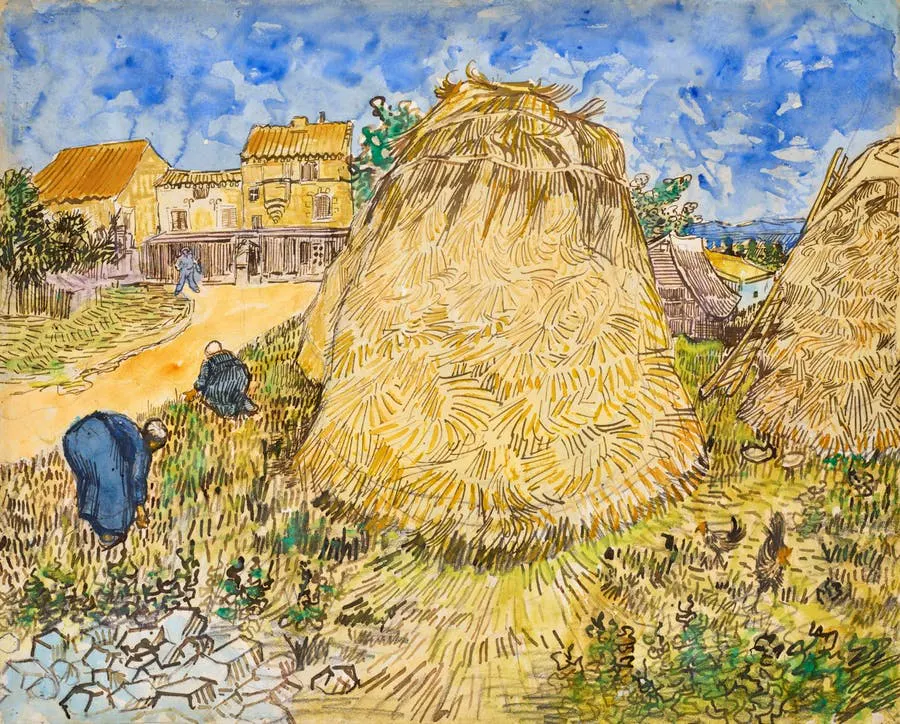
Meules de blé was created during van Gogh's almost one-year stay in Arles in the south of France, which enchanted him with its light and landscape when he arrived in February. The harvest season began at the beginning of June and van Gogh discovered numerous motifs of country life that had preoccupied him for a long time.
See also: 8 Paintings that Vincent Van Gogh Copied
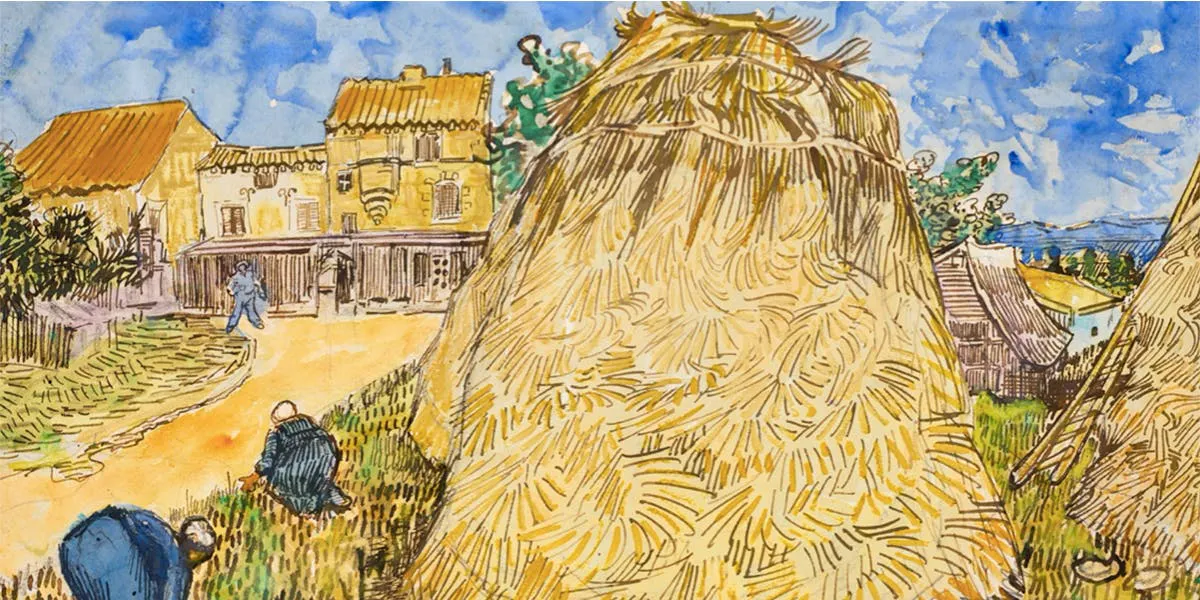
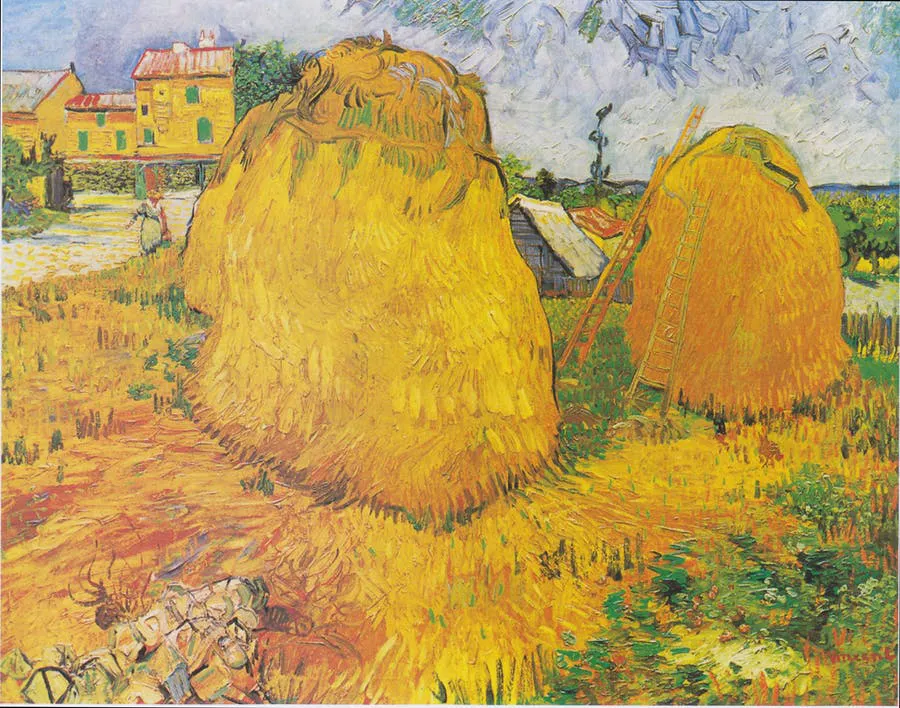
The watercolour shows a few grain stacks in a field on the edge of Arles, as well as two farm workers, and served as a study for the oil painting Wheat Stacks in Provence, which was made shortly afterwards.
With an estimated price of $20-30 million (£14.5-21.7 mil), Meules de blé has a very good chance of becoming the most expensive work on paper by van Gogh in auction history.
Just as interesting as the future of the work is its past, which is a little complicated. Van Gogh sold Meules de blé to his brother Theo. After Theo's death in 1891, Theo's wife Johanna van Gogh-Bonger (1862-1925) inherited it and in 1905 selected it as one of a total of 457 works that were shown at the major Vincent van Gogh retrospective at the Stedelijk Museum in Amsterdam. That was the last public exhibition of Meules de blé.
In 1907, Johanna van Gogh-Bonger sold the watercolour to the art dealer Gustave Fayet and, with a stopover at the E. Druet gallery in Paris, it finally came into the possession of the Jewish collector Max Meirowsky (1866-1949) in Berlin in 1913. Meirowsky fled Germany in 1938 and placed Meules de blé in the care of art dealer Paul Graupe, who brought it back to Paris.
There, the collector Alexandrine de Rothschild (1884-1965) became the new owner of the watercolour and fled to Switzerland during the German occupation of France. Her art collection was confiscated by the Nazis and brought to Austria.
After the Second World War, Meules de blé was part of various private collections, most recently, since 1979, the Cox collection. Attempts by Alexandrine de Rothschild to get the work restituted were unsuccessful. Before the auction of Meules de blé, however, the Cox family and the heirs of Max Meirowsky and Alexandrine de Rothschild came to an undisclosed agreement, which "clarified the dispute over the ownership situation," as reported by Christie's.