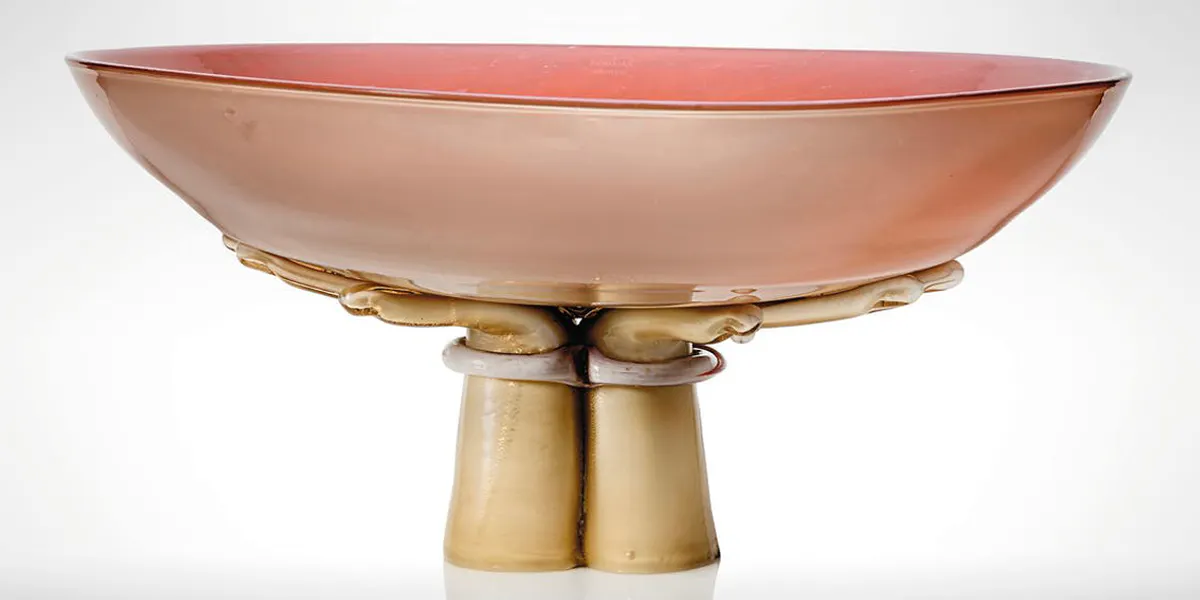
The luxury Murano glass company Venini began with Paolo Venini (1895-1959), a man who became one of the leading figures in the production of Murano glass and an important contributor to 20th-century design. However, it took some time for Venini to arrive at this point. Venini was born in the town of Cusano near Milan, Italy. After serving in World War I, he trained as a lawyer and began his practice in Milan. However, he soon developed an acquaintance with Giacomo Cappellin, a Venice native who owned a Milan antiques shop, which sent Venini on a different path.
In 1921, Venini joined forces with the master glassblower Andrea Rioda in Murano and the two men established the company Cappellin Venini & C. The now famous firm went on to breathe new life into the traditional glass industry on this island in the north of Venice, which had been the main centre of European glass production since the end of the 18th century.
The company soon took on the services of painter Vittorio Zecchin, and under his artistic direction, Art Nouveau influenced the first creations to emerge from its kilns. Venini himself was no ardent defender of tradition: throughout his life, he sought to shake free from the past by experimenting with new techniques. He was notably one of the first on the island to use methane, opening up an infinite field of colours in his works – and pushing forward ongoing stylistic research stretched by countless collaborations.

From 1923 onwards, the young company showed its productions at the Monza decorative-arts exhibition, then at the biennales in Venice, Milan, Rome and Turin. Each time it roused the interest of various international museums that added its works to their collections – namely the MoMA in New York and institutions in Scandinavia, a region whose 20th-century designers Venini left an enduring impression.
See also: Lucio Fontana: The Man Behind the Cut

But the Cappellin-Venini partnership didn’t last, and once the separation was finalised, in 1925 Paolo found himself (at the age of 30 years) at the head of VSM Venini & C. Under his leadership, and with artistic direction handed over to sculptor Napoleone Martinuzzi, the staunchly modernist bent of the glassworks strengthened and production diversified. The vases it originally produced were joined by stylised animals, flowers and fruits, as well as a broad range of light fittings, which were aimed both at private customers as well as the public market.
A visionary entrepreneur, the former lawyer had a knack for finding support among talented individuals.
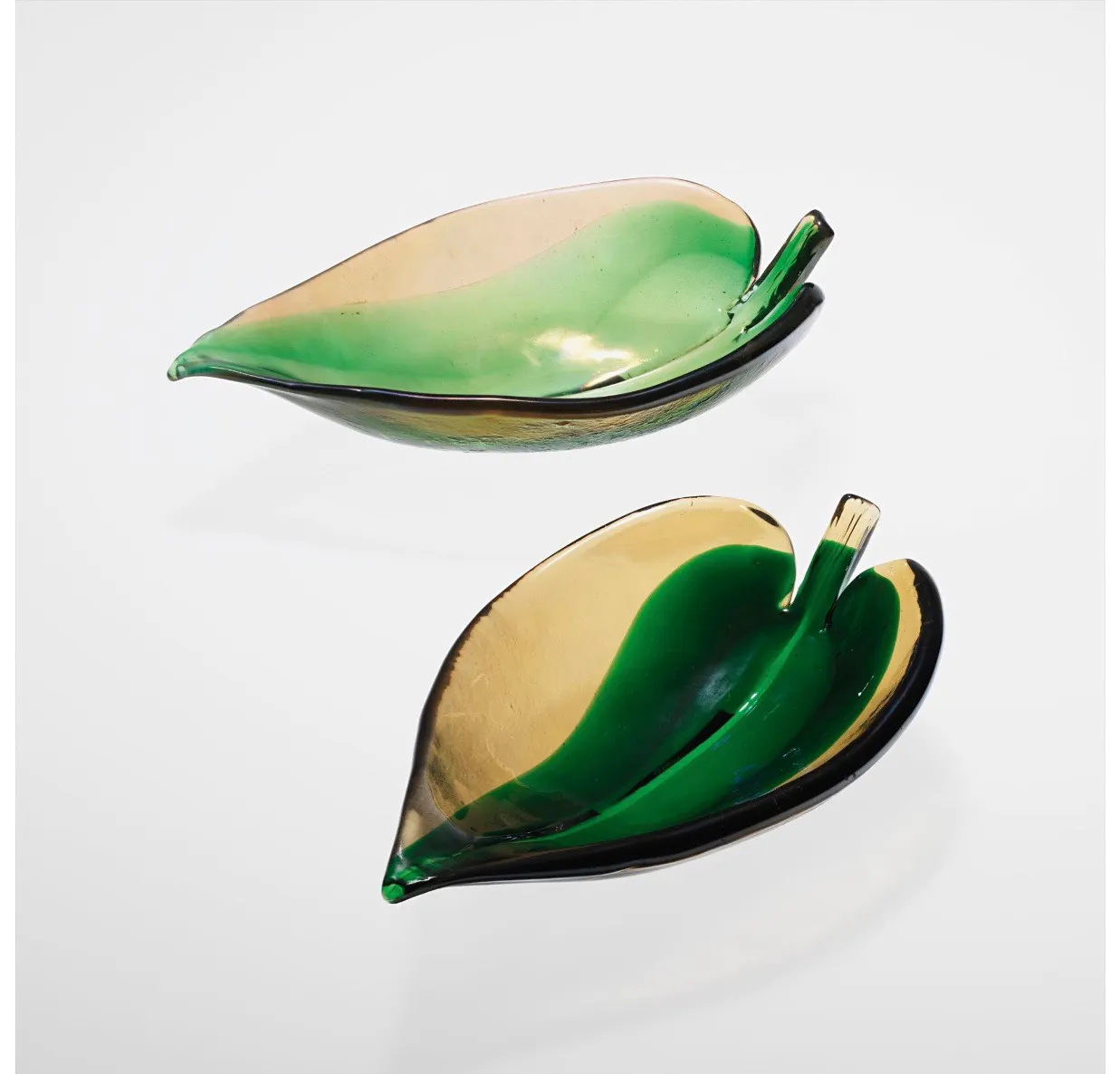
Architects Tomazo Buzzi and Gio Ponti, artist Carlo Scarpa, Swedish ceramicist Tyra Lundgren – responsible for the legendary leaf-shaped dish, which went on to inspire many variations – American painter Ken Scott and designer Fulvio Bianconi are some of the great names associated with the Venini glassworks in the interwar period and up to the end of the 1950s.
See also: 100 Years of Bauhaus
Bianconi notably came up with the famous Fazzoletto, the handkerchief-vase deemed one of the ‘classics’ of the prestigious Venetian house, as well as Commedia dell’Arte figures. In tandem with these fruitful collaborations, Venini developed post-war decorative techniques for fine blown glass, and also for modelling solid ‘sunken’ glass.

By 1959, when the glassworks brand was known European wide, its founder passed away. His son-in-law, architect Ludovico Diaz de Santillana, became head of the family business, and he managed to perpetuate Paolo’s spirit of technical innovation and recourse, looking to contemporary artists for stylistic input.
In this way, Tobia Scarpa (Carlo Scarpa’s son), Finland’s Tapio Wirkkala, and Italian architects and designers Alessandro Mendini, Gae Aulenti and Ettore Sottsass, helped fill out Venini’s catalogue and promote the company, which remained in the family’s hands until the end of the 1980s.
See also: Snuff Bottles: Still up to Snuff
In 1972, a fire destroyed the company’s offices and archives, depriving historians specialising in art or industry of precious data, however the fire did not harm production tools. It was precisely fear of fire that had pushed Venetian authorities to ‘exile’ master glassblowers and glassmakers to Murano at the end of the 13th century.
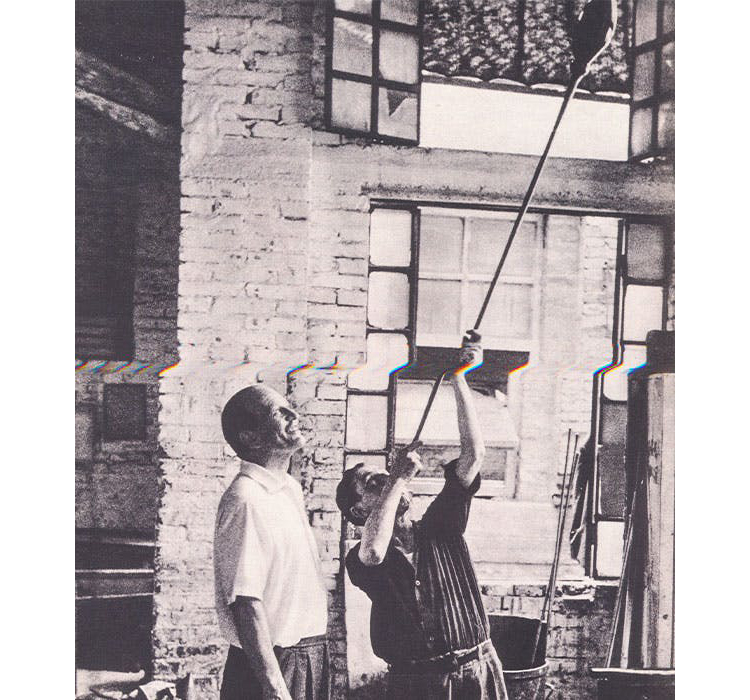
In the 1980s, Venini became a genuine economic and strategic force in the eyes of major Italian financial groups, dominated by personalities such as Arturo Ferruzzi and Raul Gardini, who ended up owning a majority stake of the company in the middle of the decade. In 1997, after various acquisitions in its sector of activity (glassware and lighting), the company generated a turnover of 20 billion lire (around £10 million) and had over a hundred employees. The Italian market no longer represented any more than 50% of the company’s production and exports, whose focus had shifted from Europe to the United States.
That same year, Gardini sold the Murano glassworks to the Royal Scandinavia group. The latter only kept the company in its portfolio for four years before selling it to Italian Luxury Industries, a group that notably pursued its international-development plan by setting up exclusive-distribution agreements.
See also: Canaletto: The Spirit of Venice
In 2016, it was the jewellery company Damiani that acquired this gem in luxury glassware – a gem that had not been left unscathed by the crisis at the end of the 2000s. Between 2008 and 2015, Venini’s turnover dropped from £14 to £19 million, and prior to its takeover its 70 employees even had to go through a temporary lay-off phase. The new majority shareholder has planned to boost synergies with its own activities, namely by designing glass-jewellery lines.
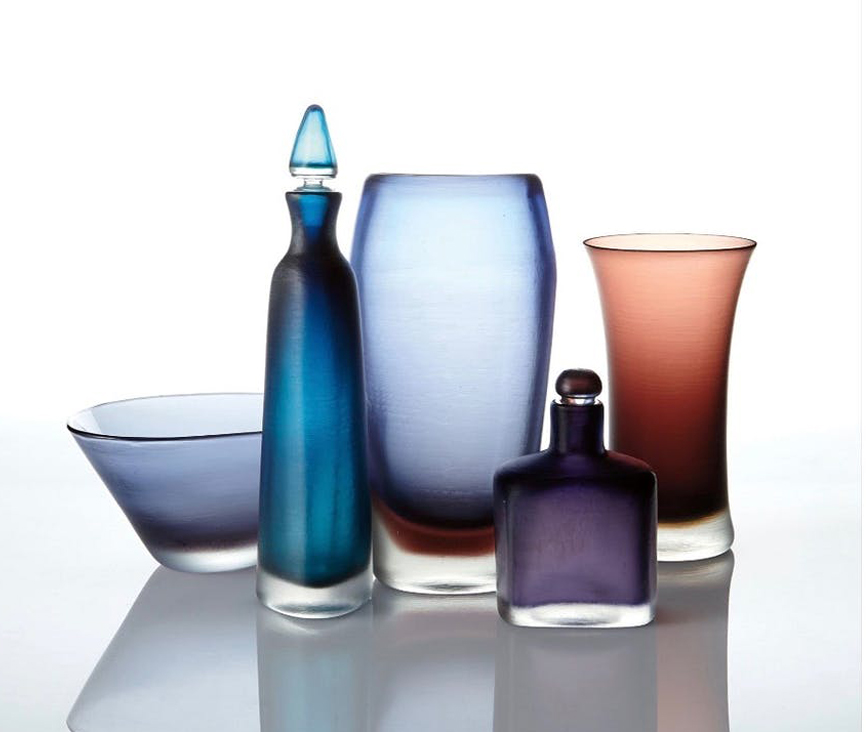
Guido Damiani recently told Fashion Network that Venini is “a fantastic brand with a strong history that it’s necessary to communicate about in order to introduce it to emerging luxury consumers. We can help it commercially and internationally in our biggest markets, like Japan.”
The decoration and lighting sector geared at hotels and luxury boutiques (some chandeliers sell for more than £900,000) is another sector with significant development potential. Meanwhile, the Murano glassworks company, armed with colourful light-filled wares, continues to live on.