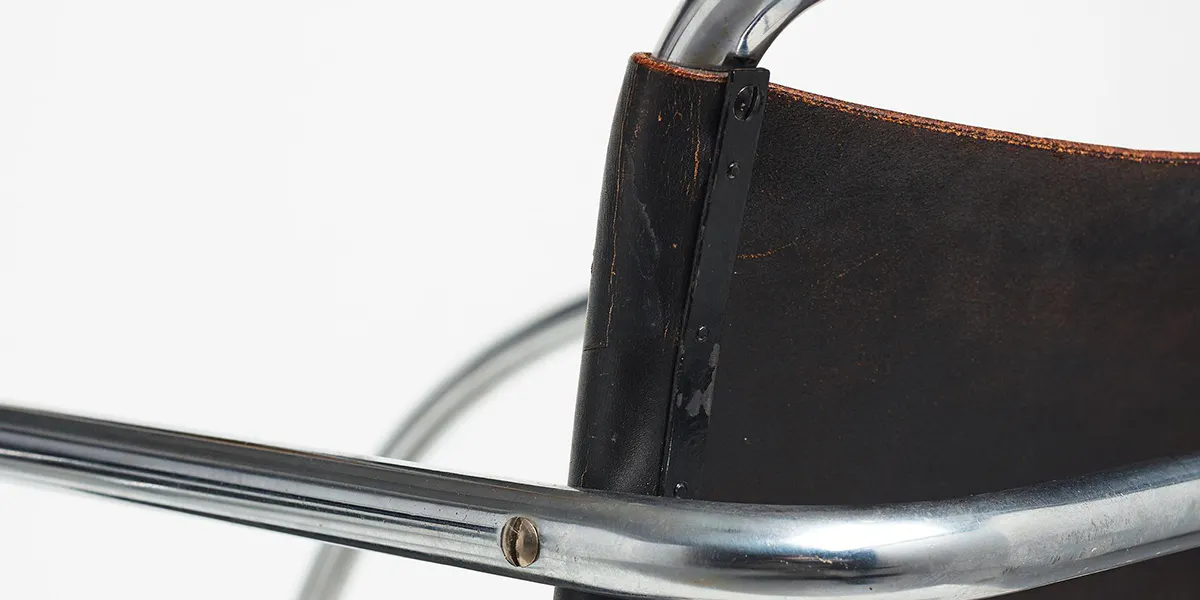
Among the most adaptable of furniture pieces is the chair, used for dining, working or simply waiting. Here, we explore twelve groundbreaking designs that span three centuries.
1. Unknown, Windsor Chair, early 18th century
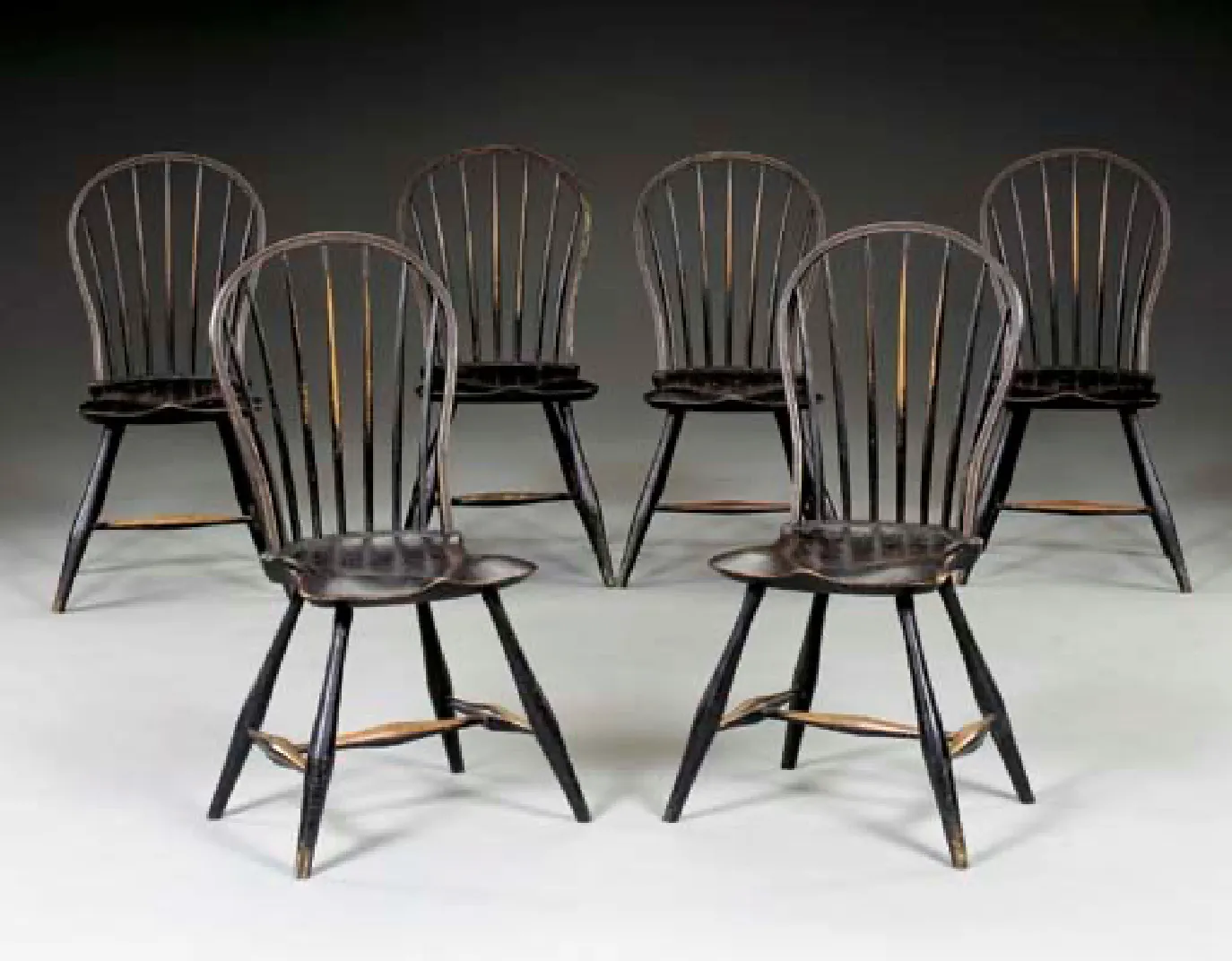
The Windsor Chair originated in the early 18th century in the area west of London. It takes its name from the town of Windsor, from where chairs were transported down the Thames to London. Its success lies in its simplicity: it required little wood, its components could be prepared in advance, and it could be assembled on demand. It became the first mass-produced chair. Many Windsor chairs were also shipped to the British colonies in North America, where they remain just as popular as they are in the UK.
2. Jean-Joseph Chapuis, Chapuis Chair, ca. 1805
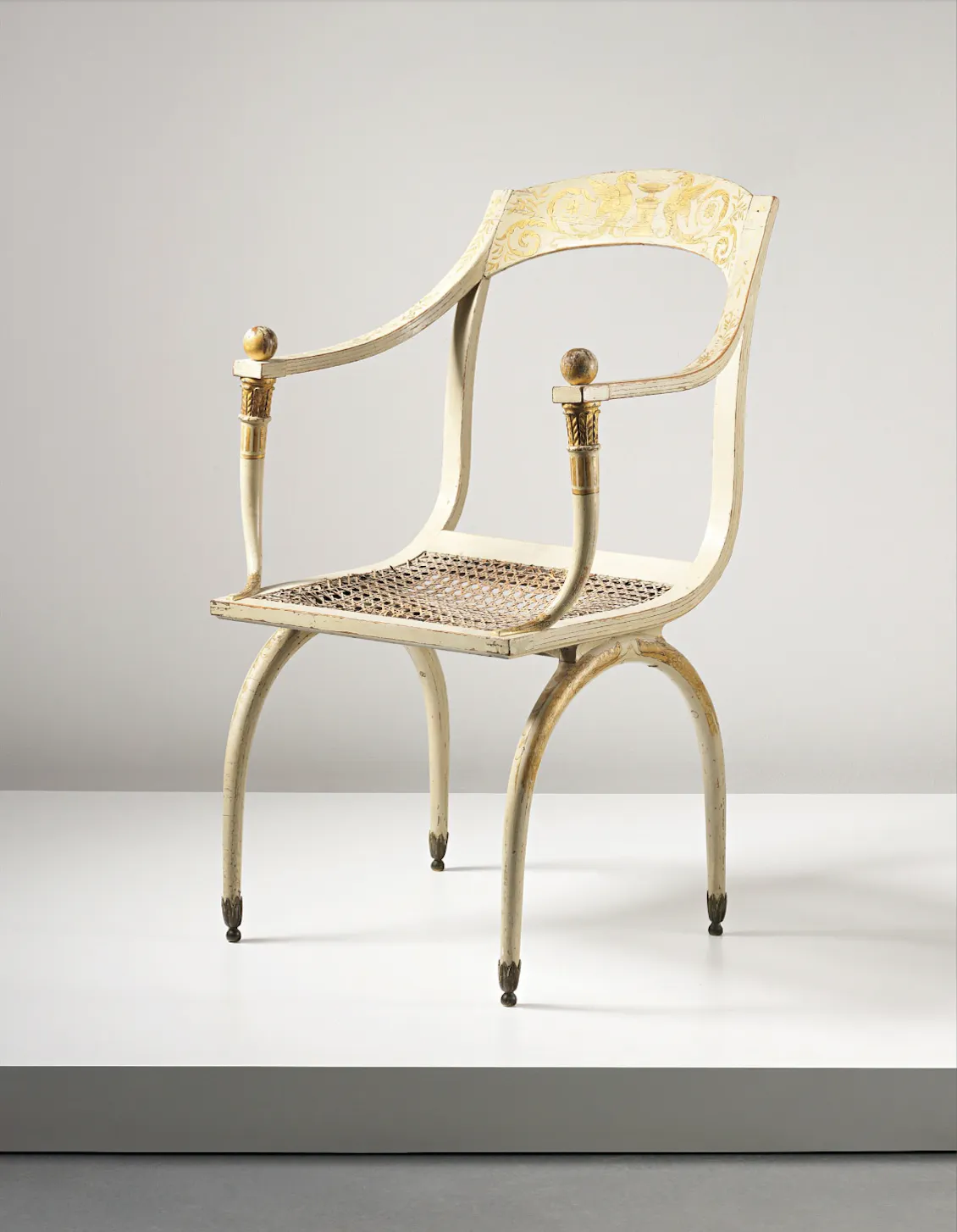
In 1805, when Napoleon ordered the refurbishment of the Château de Laeken near Brussels, he turned to Belgian master cabinetmaker Jean-Joseph Chapuis, who had trained in Paris. What made Chapuis’ chairs revolutionary was his early use of plywood. By gluing together layers of veneer, he created chairs that were both lightweight and remarkably strong, a rare combination at the time.
3. Thonet, Bentwood Chair No. 14, 1859
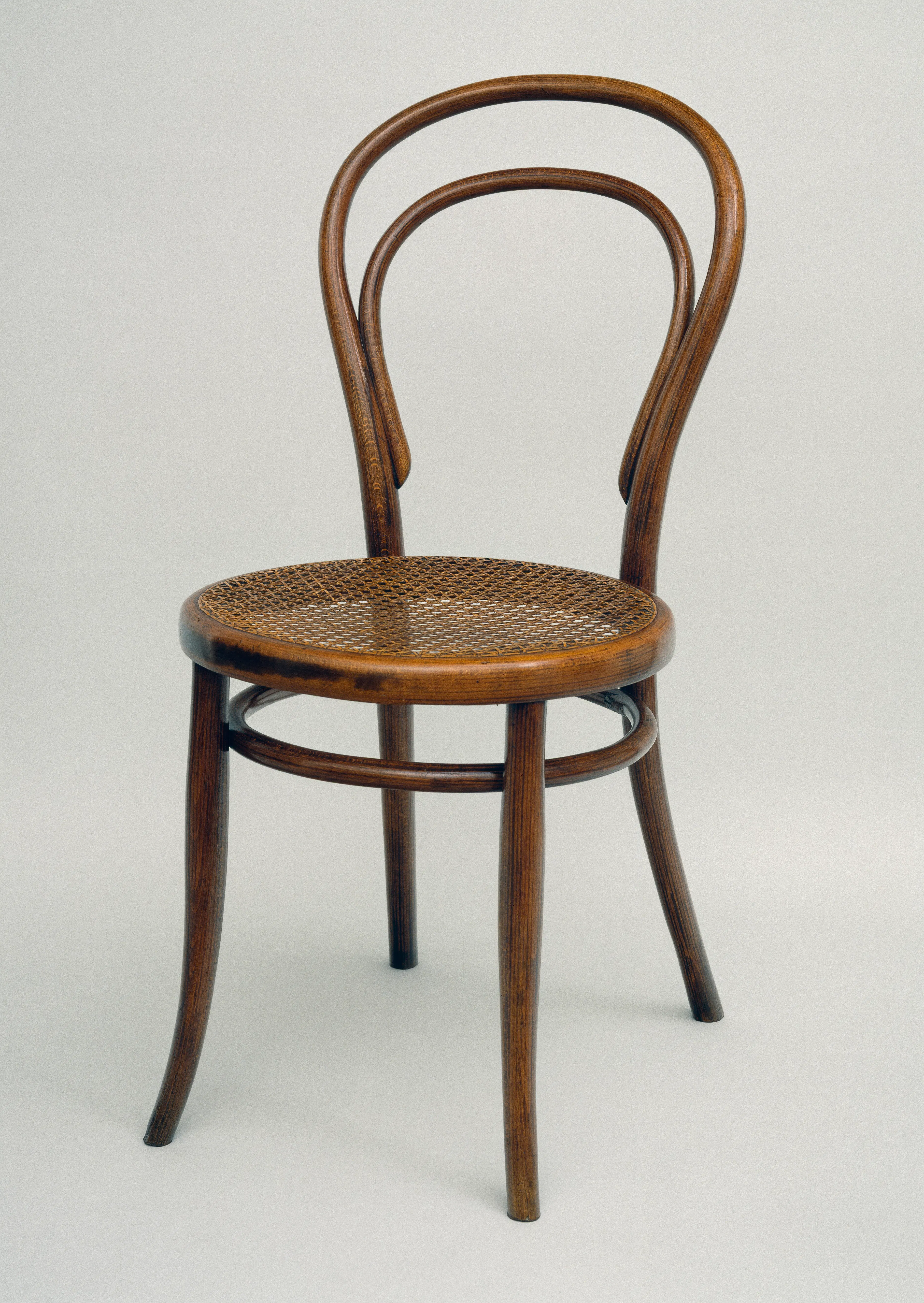
In 1808, American cabinetmaker Samuel Gragg patented his Elastic Chair, using steam to bend wood. His method, however, gained little traction until Michael Thonet developed similar techniques decades later, unaware of Gragg’s work. Thonet’s bentwood furniture, first produced in Boppard and later in Vienna, became hugely influential. His Chair No. 14, introduced in 1859, became the classic café chair. Nearly 50 million units were sold by 1930, making it the best-selling wooden chair of all time.
See also: The Chairs that Made Thonet
4. Ludwig Mies van der Rohe, Weißenhof Chair (MR 20), 1927
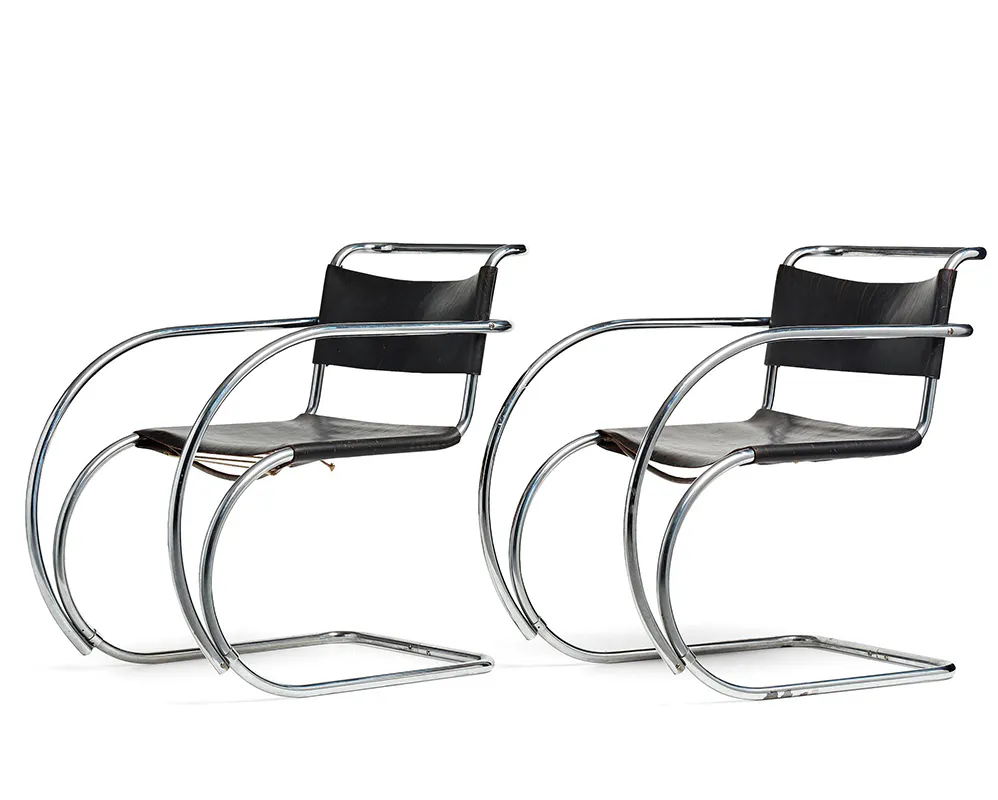
The invention of the cantilever chair, a chair with no rear legs, supported instead by a single bent steel frame, is still a subject of debate. Dutch designer Mart Stam built a prototype in 1926, and the following year Ludwig Mies van der Rohe presented his refined version, the MR 20, for the Weissenhof Estate in Stuttgart. Marcel Breuer is also credited with contributing to its development. Despite the uncertainty over its origin, the cantilever chair became one of the most influential furniture designs of the 20th century.
See also: Ludwig Mies van der Rohe: From Traditionalism to Modernism
5. Gerrit Rietveld, Zig Zag Chair, 1932
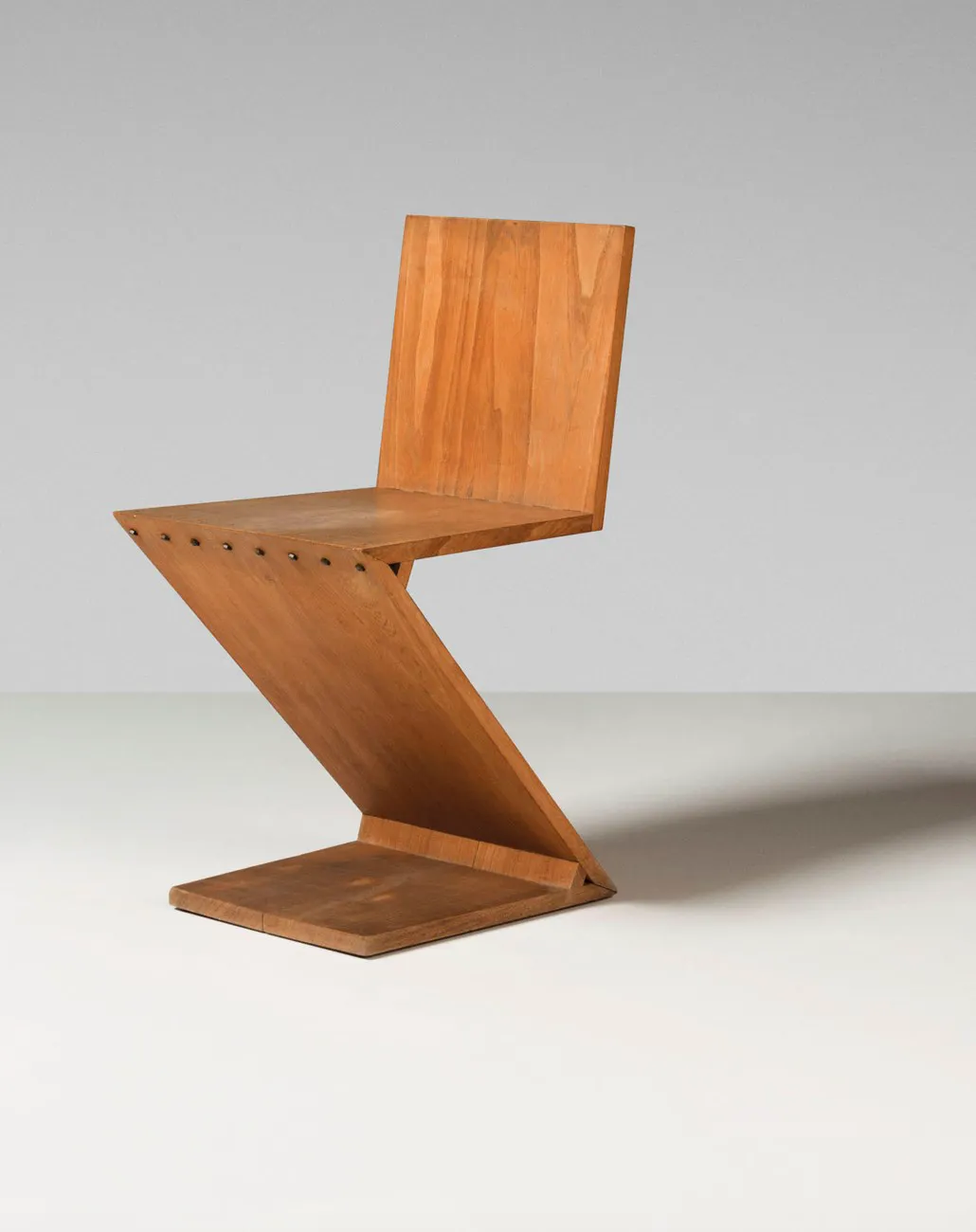
In around 1930, Gerrit Rietveld set out to design a chair made from a single folded material. When that proved structurally unfeasible, he instead assembled four panels of pine. The result was the Zig Zag Chair — not quite his original vision, but an enduring icon of modern design.
6. Eero Saarinen, Tulip Chair, 1955
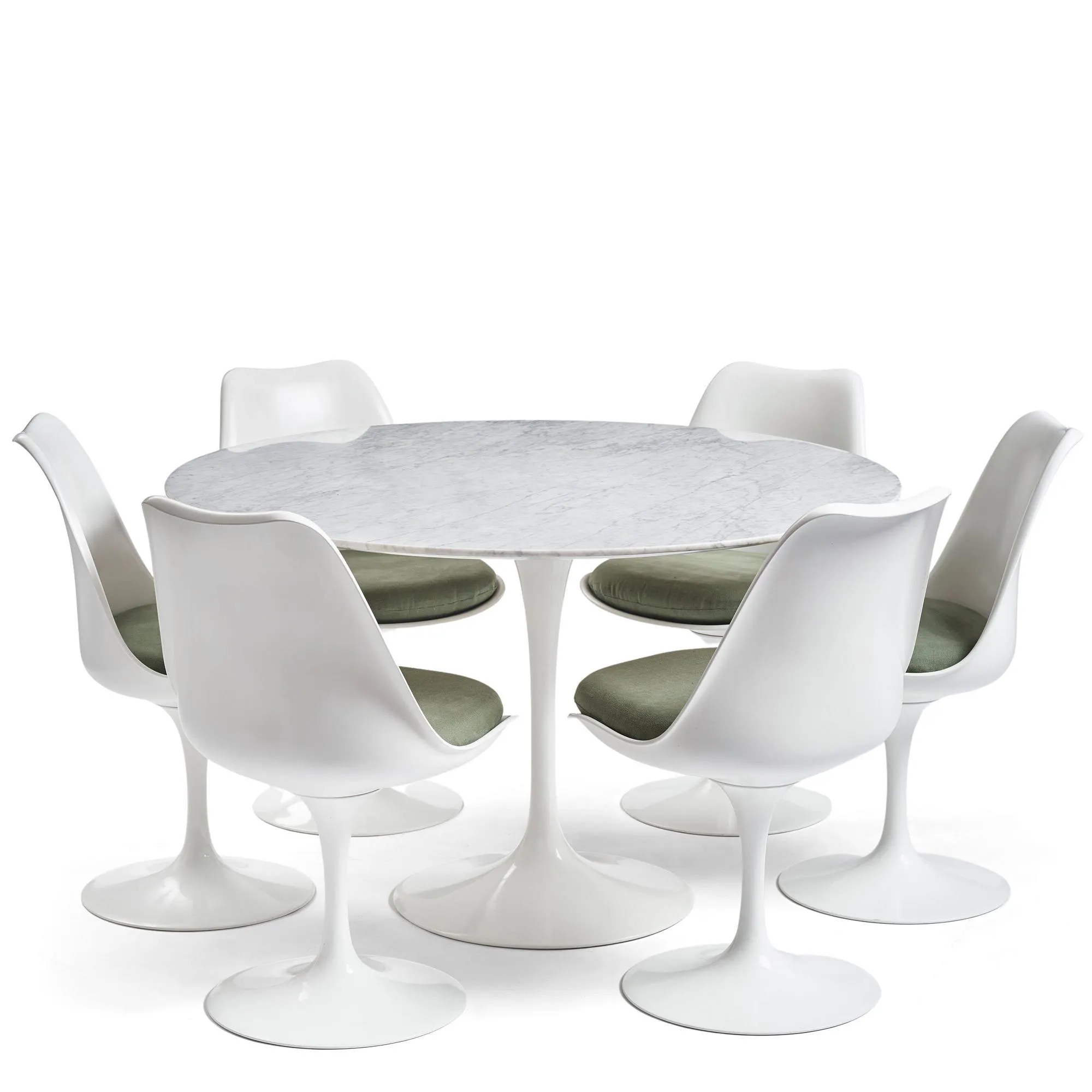
Legs — too many of them cluttering up the space under dining tables — inspired Finnish architect and designer Eero Saarinen to take action. In 1955, he introduced the Tulip Chair, the first dining chair with a single central leg (aside from milking stools and some short-lived Biedermeier experiments, which he likely never saw). Saarinen originally wanted it to be made entirely of plastic, but that proved impossible at the time. The final version featured a fibreglass shell and an aluminium base, produced by Knoll.
See also: Barnebys' Guide to Vintage Scandinavian Design
7. Gio Ponti, Superleggera, 1957
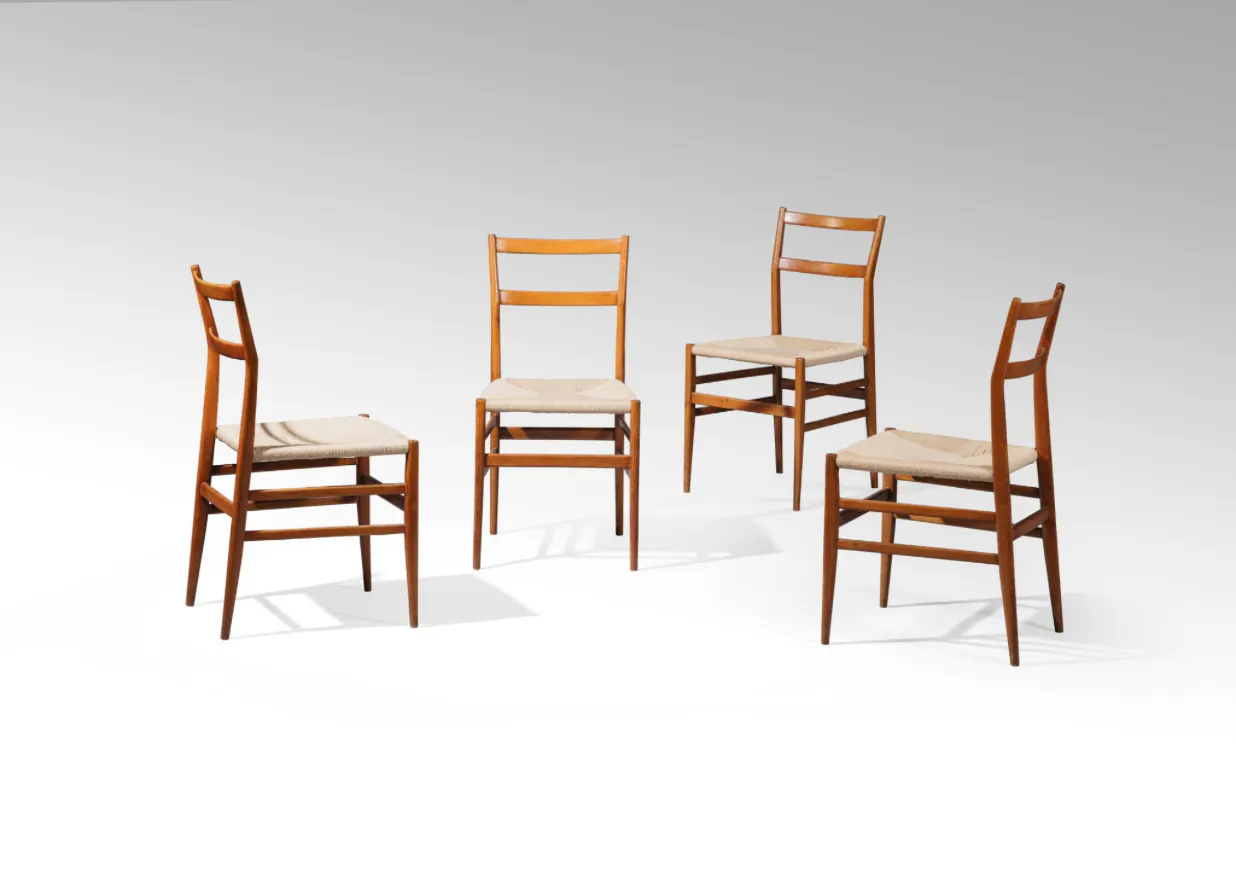
One of the recurring goals in 20th-century furniture design was to create ever lighter chairs. Italian architect Gio Ponti pursued this for years, and in 1957 he unveiled the Superleggera. With legs of triangular cross-section, it weighed just 1.7 kg. To prove its strength despite its feather-light frame, Ponti once threw it from a fourth-floor window without damaging it.
See also: A House of Fantasy
8. Verner Panton, S Chair (1965) & Panton Chair (1967)
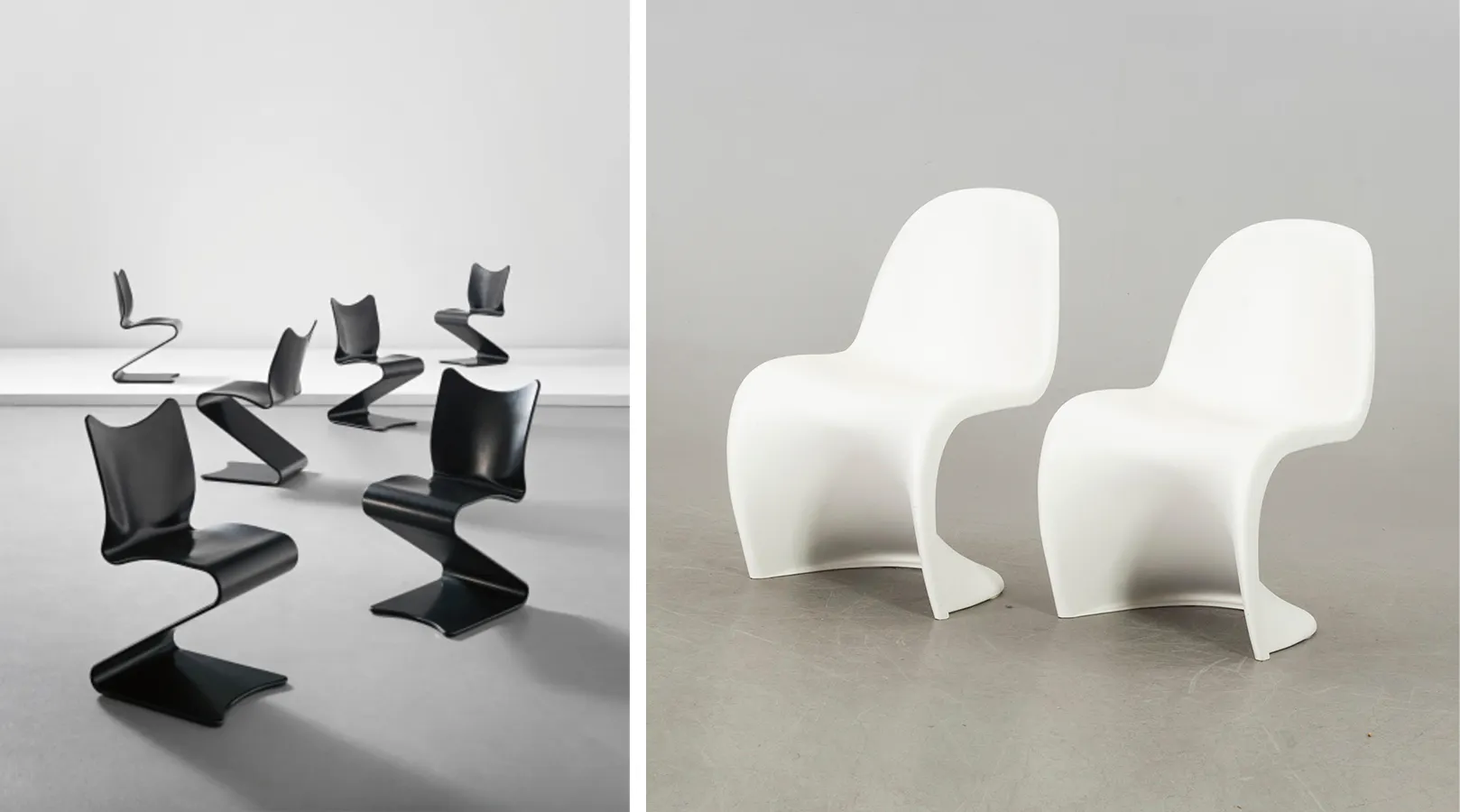
What Rietveld attempted in 1932, Verner Panton finally achieved in the 1960s: a chair made from a single continuous form. His S Chair, with its flowing curves, was made from layered plywood, but remained relatively heavy. Panton had always envisioned a plastic cantilever version, and in 1967 his Panton Chair became the first of its kind — sculptural, stackable and moulded from one piece of plastic.
9. Helmut Bätzner, Bofinger Chair, 1964
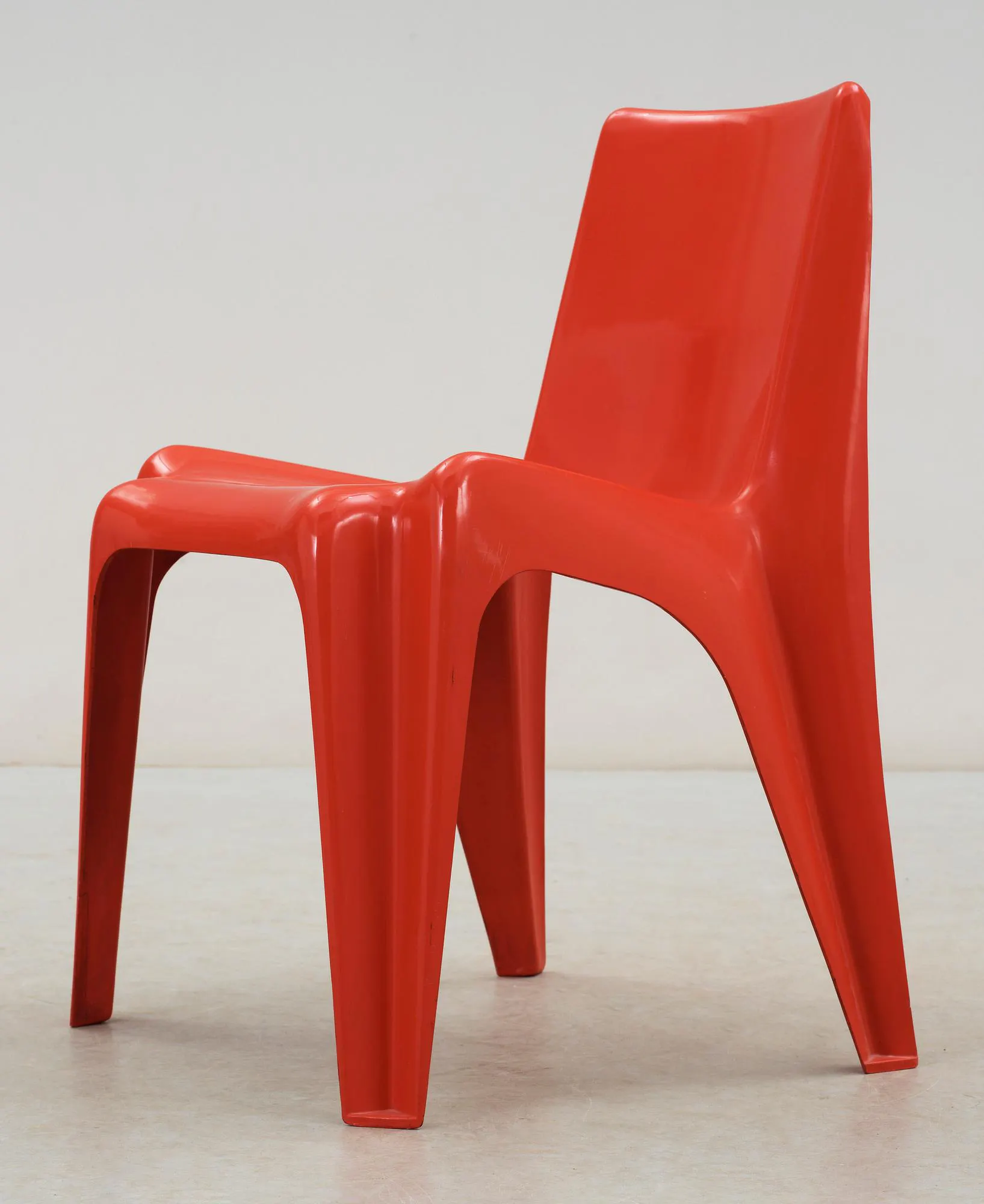
Although the Panton Chair broke new ground, it wasn’t the first chair made from a single piece of plastic. That honour goes to the Bofinger Chair, designed by Karlsruhe architect Helmut Bätzner. He began working on it in 1964 with the aim of producing a chair that was stable, lightweight, weatherproof and stackable. Using fibreglass-reinforced polyester, Bätzner’s chair could be made in a single press, enabling large-scale production for the first time.
Want more articles like this delivered straight to your inbox Subscribe to our free newsletter!
10. David Rowland, 40/4 Chair, 1964
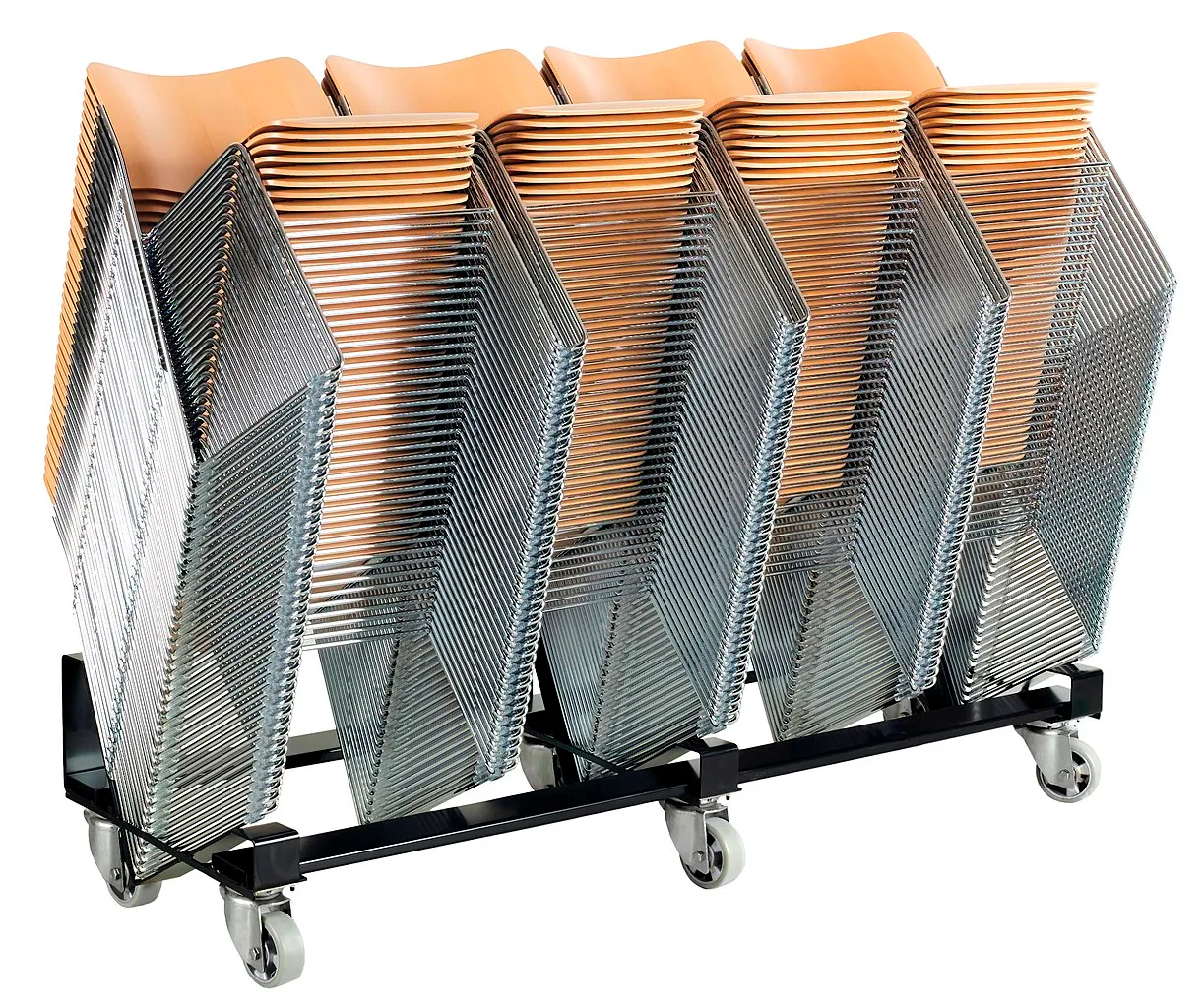
Large spaces often require temporary seating, but storing dozens of chairs can be a challenge. American industrial designer David Rowland addressed this in 1964 with his 40/4 Chair, so named because 40 chairs could be stacked to a height of just 40 inches (about 120 cm). Though it was initially difficult to find a manufacturer, the 40/4 Chair went on to become a global success in schools, conference halls and offices.
11. Frank Gehry, Wiggle Side Chair, 1969-72
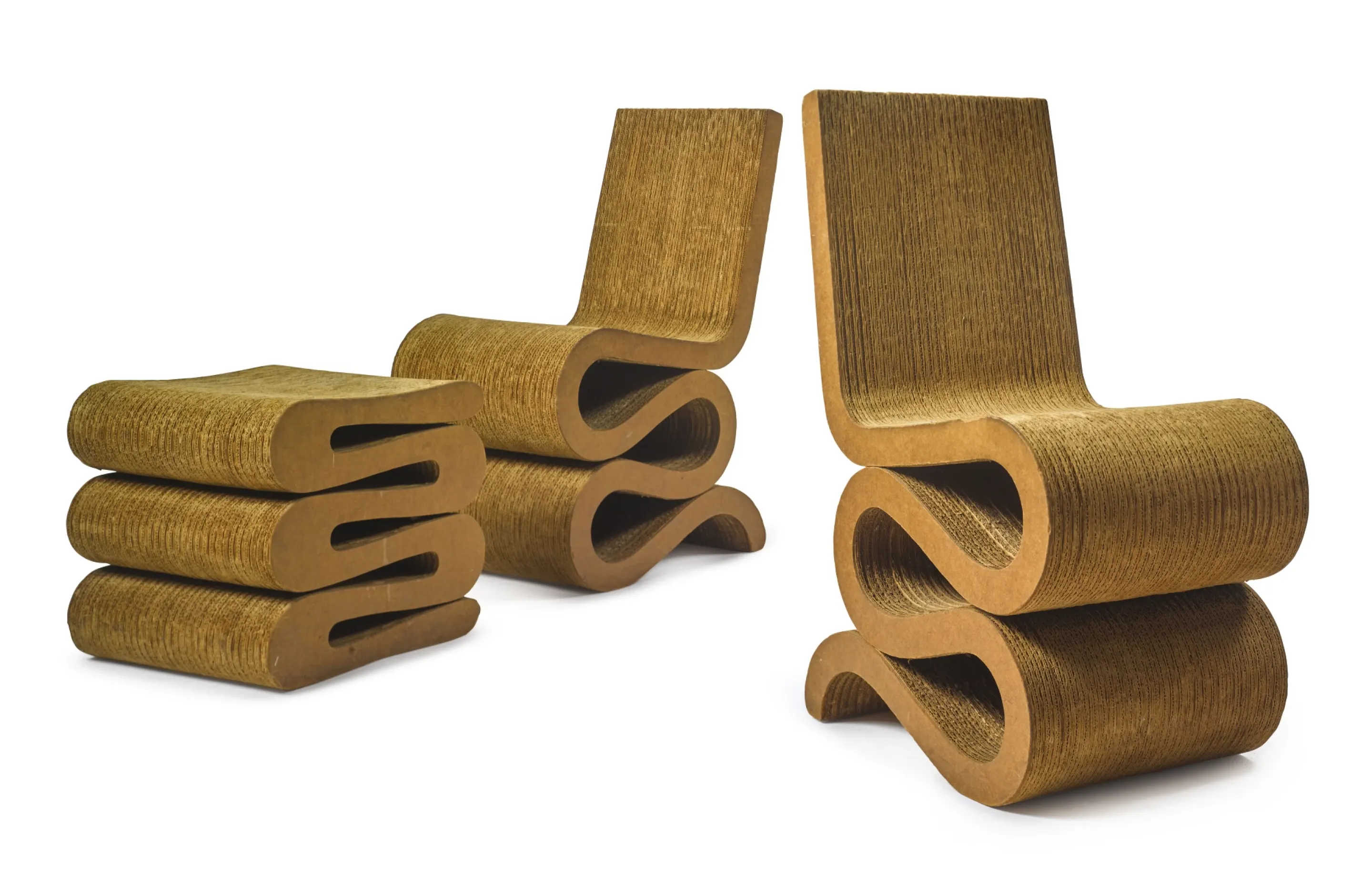
Cardboard isn’t the first material that springs to mind when designing a chair, but architect Frank Gehry saw its potential. In 1969, inspired by one of his building models, he began creating a furniture line called Easy Edges. Made from stacked layers of corrugated cardboard, the Wiggle Side Chair was one of 17 pieces in the series. Surprisingly durable, it challenged perceptions of everyday materials.
See also: The Design Classics of the Future
12. Henry Massonnet, Fauteuil 300 (Monobloc), 1972
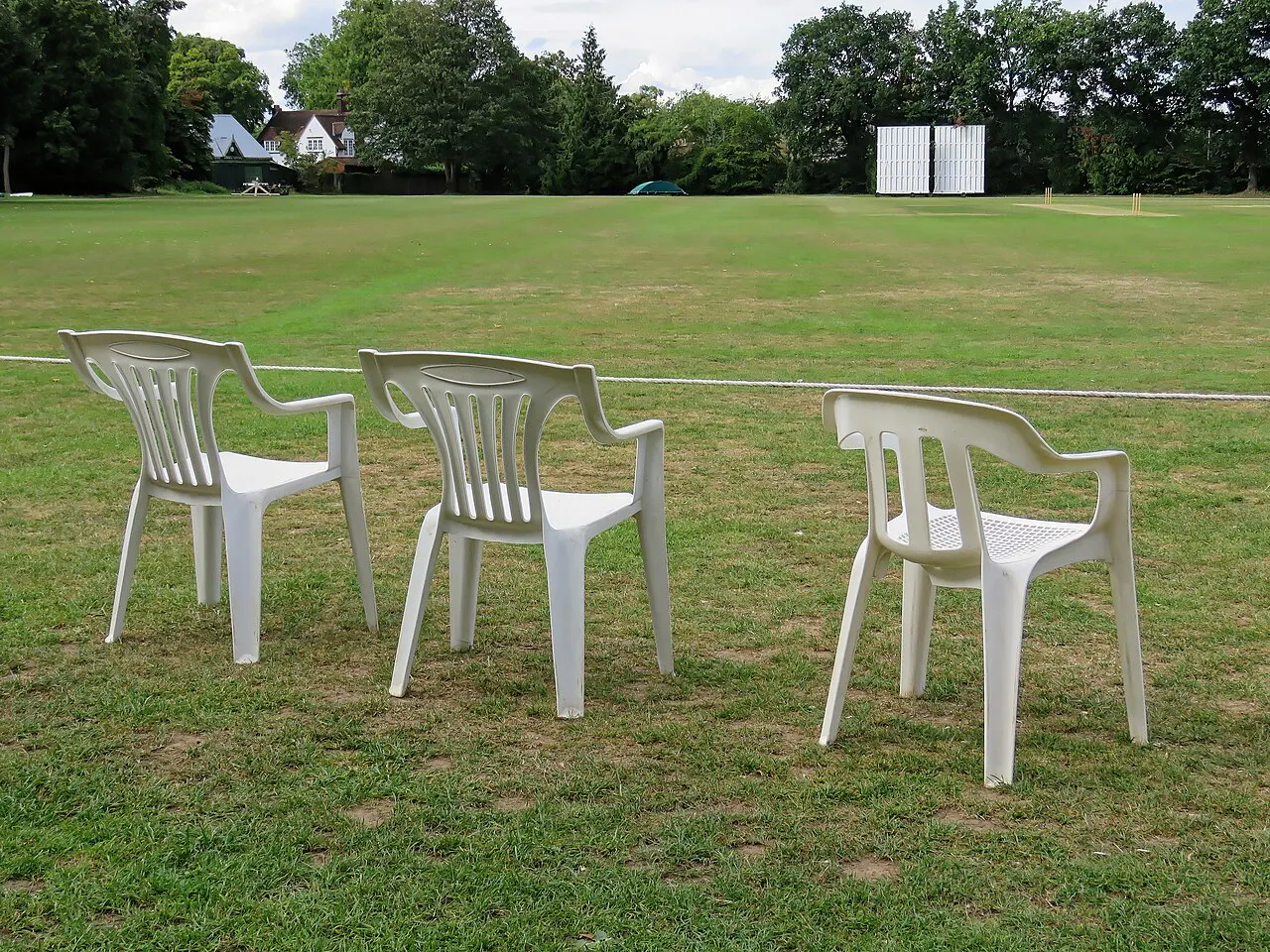
Almost everyone has sat in one of these: the ubiquitous white plastic chair with low armrests and a perforated back. Known as the Monobloc, it is the best-selling chair in history. Its origins trace back to 1972, when French entrepreneur and designer Henry Massonnet introduced the Fauteuil 300. Inspired by the Bofinger Chair and earlier metal chairs from the 1920s, Massonnet created a one-piece, injection-moulded plastic chair that was cheap to produce, durable, stackable and suited to indoor or outdoor use.