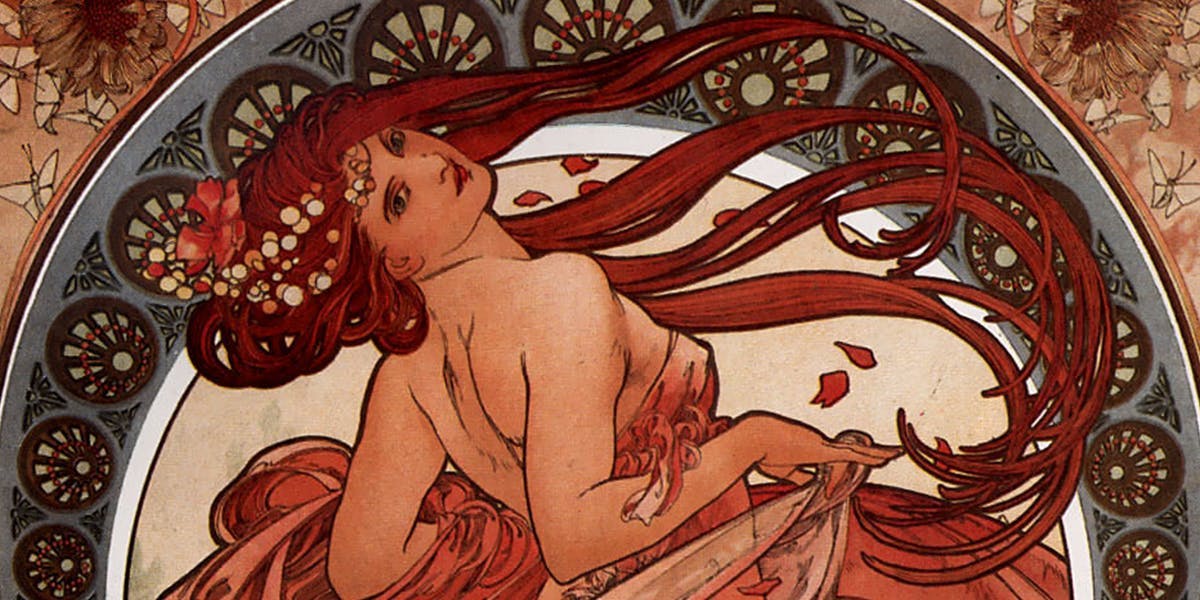
Few artists are considered initiators of an artistic movement. A pioneer of the Art Nouveau style, a 19th century reaction to excessive industrialisation, Alphonse Mucha was a Czech illustrator who arrived in Paris in 1887. His commercial and advertising posters embody the inventive Art Nouveau aesthetic that defined the turn of the century. Here are seven things to know about the poster king.
1. His application to the Academy of Fine Arts in Prague was rejected
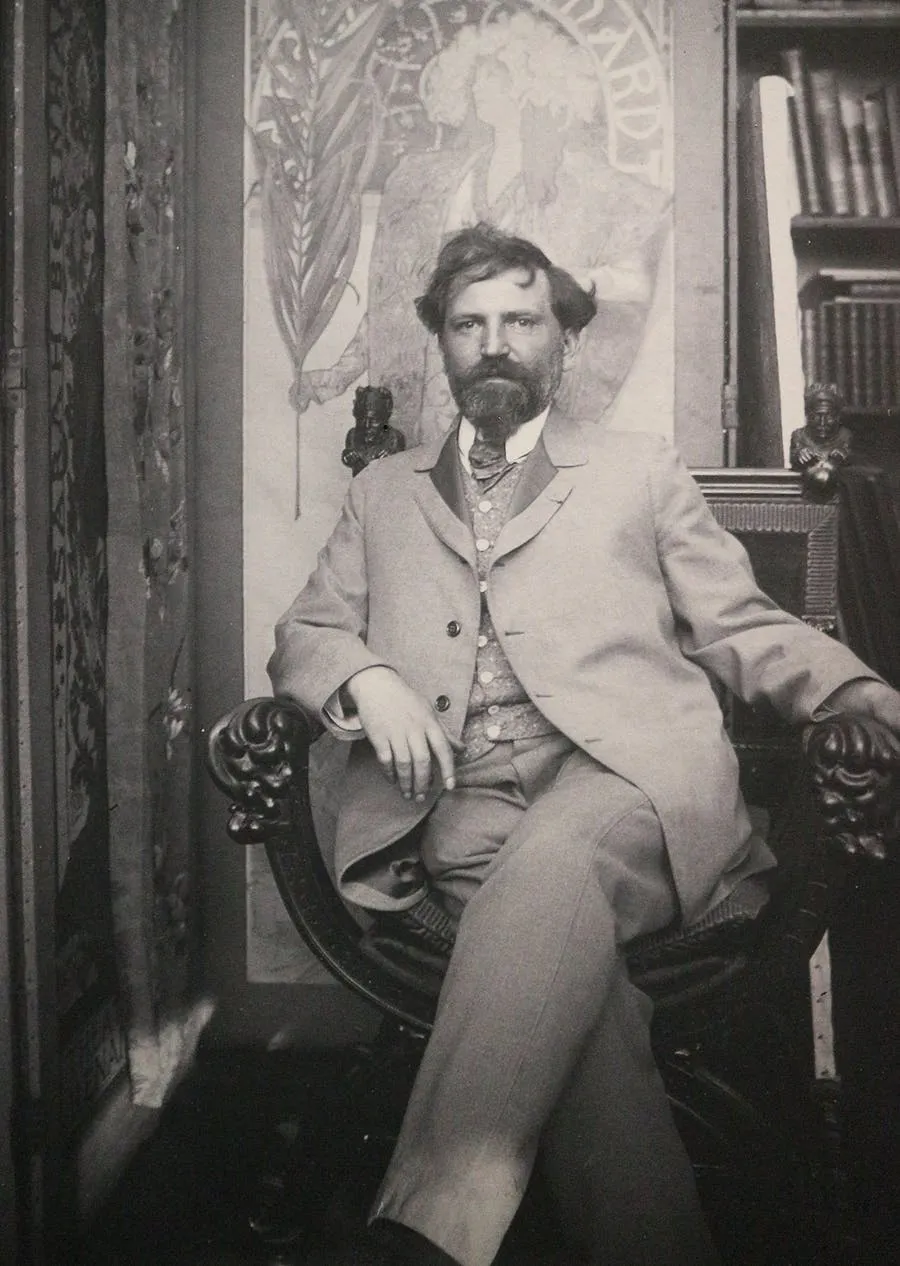
A talented singer, Alphonse Mucha sang in the choir of the church in the Moravian capital, Brno, but drawing was part of his daily life. His meeting with the last representative of Baroque sacral painting, the master Umlauf, at the age of 8 during a trip, influenced him deeply.
See also: Tiffany Glass: Art Nouveau Illuminated
His father, who was a bailiff, got him a job as a court clerk in 1875, but the young Alphonse applied to the Academy of Fine Arts in Prague three years later. The institution rejected him with a scathing recommendation: "Choose another profession where you will be more useful." Mucha did not give up and, after several jobs, mainly in the world of the theatre, as well as a course at the Academy of Munich, he settled in Paris in 1887.
2. He helped Gauguin in a time of crisis
In August 1893, Paul Gauguin returned penniless to Paris from Tahiti. Mucha was then living above a small restaurant located on rue de La Grande-Chaumière, opposite the Academy where he studied. The two artists meet in said restaurant, which was frequented by many artists. Mucha had a workshop that he generously shared with Gauguin to allow him to prepare an exhibition of his Tahitian works.
Gauguin posed for Mucha on several occasions, the latter preferring to call upon his comrades rather than professional models to save money.
3. He completed the work that changed his career in a week
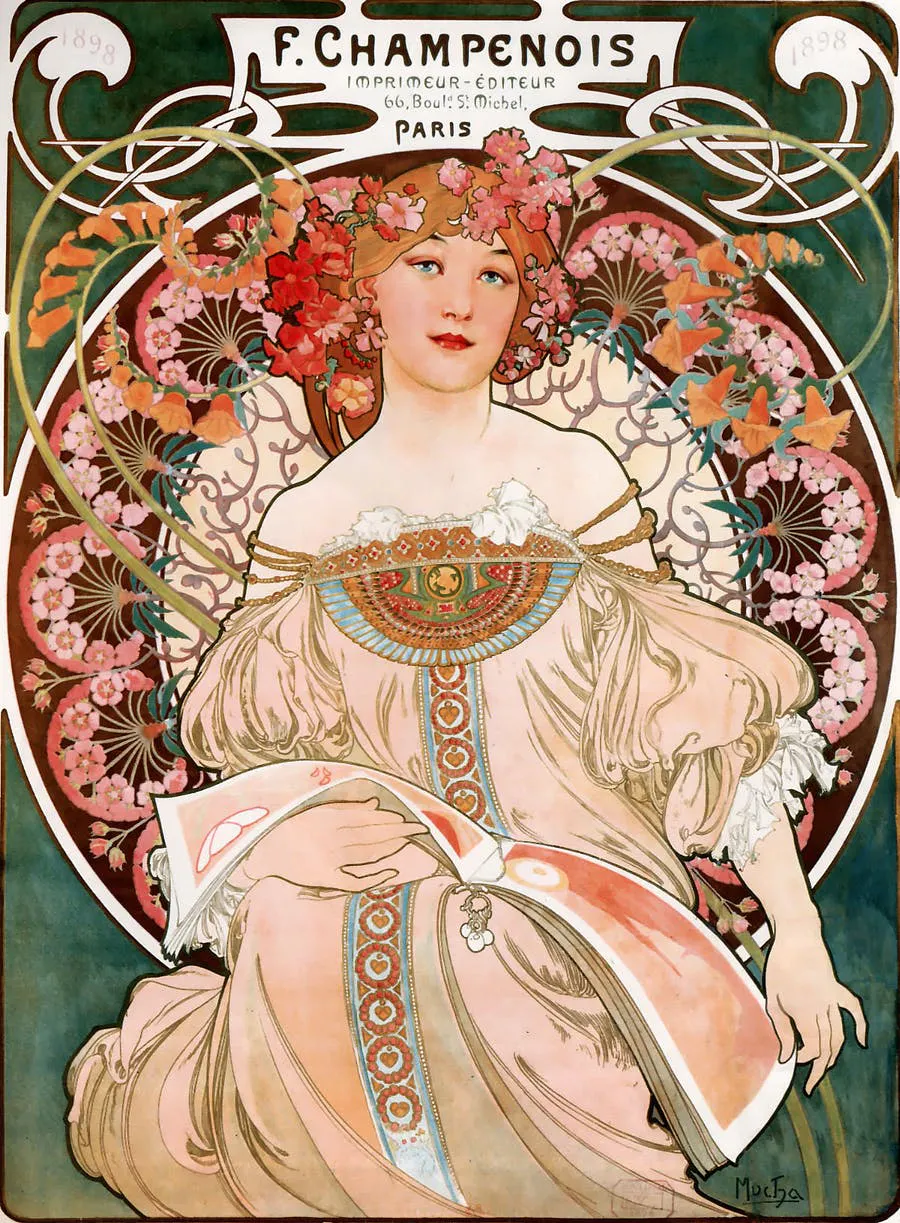
On 24 December 1894, the great French actress Sarah Bernhardt urgently contacted her printer to create a poster for her play Gismonda, scheduled at the Théâtre de la Renaissance. Mucha was the only artist available at the printer and accepted the project. He delivered, in one week, a majestic poster which on the morning of 1 January 1895, was plastered en masse in the streets of Paris.

The poster was so popular that people cut them up to take part of the work with them. This success lead Sarah Bernhardt to hire Mucha for a six-year contract, which radically changed the trajectory of his career.
4. He designed a collection of jewellery
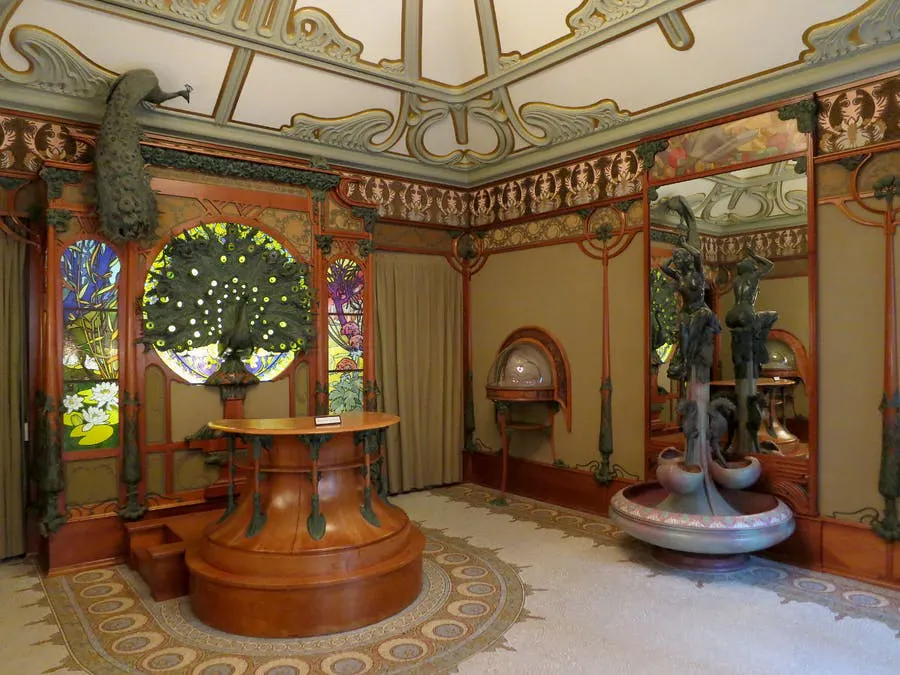
In 1895, the Parisian goldsmith and jeweller Georges Fouquet (1862-1957) took over his father's shop and decided to renew the style of the house by hiring new talents. Interested in the jewellery that adorns the women in Mucha's posters, he contacted him and challenged him to create an entire jewellery collection for his stand at the 1900 Paris Exposition.
See also: 1925: The Height of Art Deco
The following year, when Fouquet decided to move his boutique to rue Royale, he called on Mucha again, but this time asked him to design the entire store: exterior and interior, including furniture, lighting and display cases. The shop is now visible at the The Musée Carnavalet in Paris.
5. He inspired the comic book
Legend has it that Mucha's artistic style influenced Joe Quesada and Stan Lee, the comic book artists who fuelled Marvel's biggest hits. In Mucha's posters, the characters always took centre stage, were highlighted by majestic sets and seemed to spring up in heroic poses. A composition style which, perhaps, inspired the representation of superheroes.
See also: History's 6 Most Popular Movie Posters
6. He photographed his models
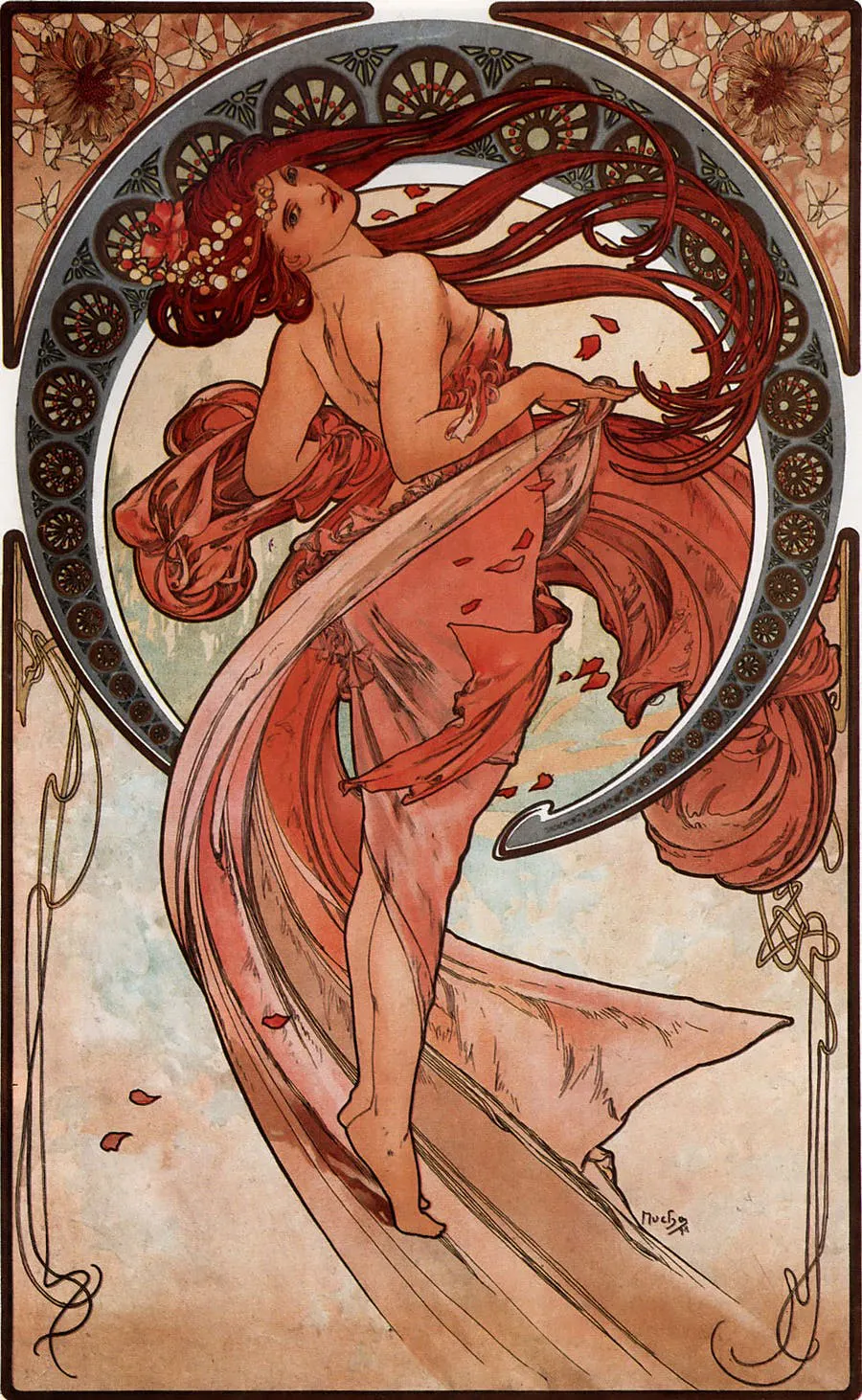
As soon as he arrived in Paris, Mucha began to photograph models and built up a catalogue of images to inspire his illustrations. His collection of photos is an interesting witness to the women of his time and to beauty canons in general.
See also: Art Deco: The Great Celebration
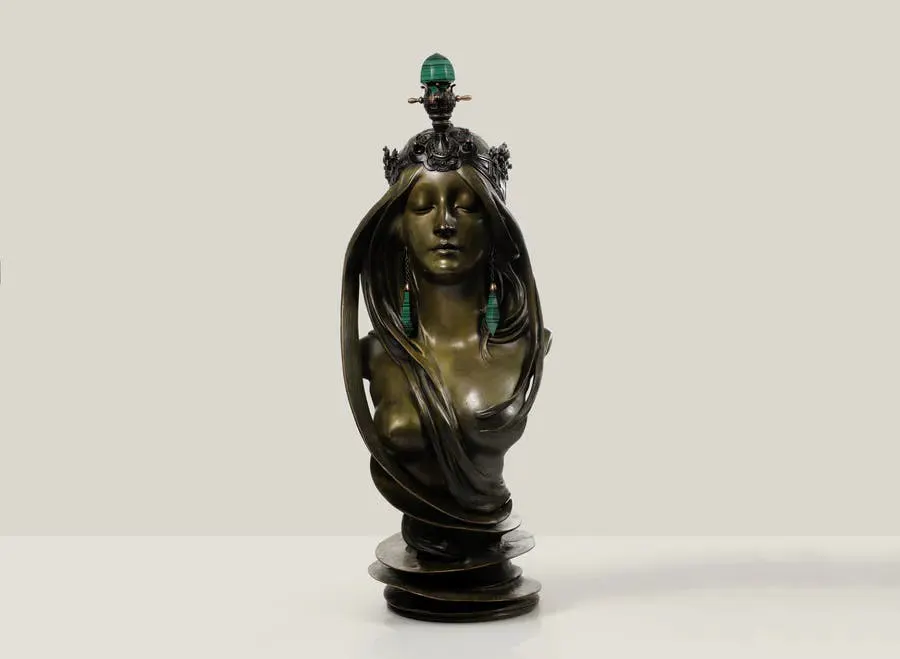
Parisian dancer and beauty icon Cléo de Mérode is said to have served as a model for his famous bronze bust La Nature, a copy of which is kept at the Royal Museums of Fine Arts of Belgium, Brussels.
7. Nazis arrested him
When what was then Czechoslovakia was occupied by the Nazis in 1939, Mucha was one of the first artists to be arrested by Nazi troops. Almost eighty years old and already suffering from pneumonia, he was subjected to intense interrogations and passed away shortly after being released.