

Sam Francis was born in San Mateo, California in 1923, and suffered from Tuberculosis which left him hospitalised for many years. He began to paint to help pass the time; the first decoration to inspire him was that of a white ceiling which reflected daylight.
The artist then painted on paper, first out of convenience, and then for interest. After leaving the hospital, he studied at the University of California, Berkeley. He then discovered abstract art and at the turn of the 1950s and moved to Paris. There, he attended Fernand Léger’s academy alongside other American painters, and the Nina Dausset Gallery offered Francis his first exhibition in 1952.
See also: Henri Matisse: Master of Fauvism and Simplification
The Provençal light also inspired a series of Francis’ white works, such as Other White (1952), which echoed in his hospital room. Around 1955 he produced one of his first masterpieces, Deep Orange and Black: a three-meter-long explosion of colours distilled using the dripping technique already used by Jackson Pollock. There was no longer any bottom or surface, just a piece of infinity, captured as a print.
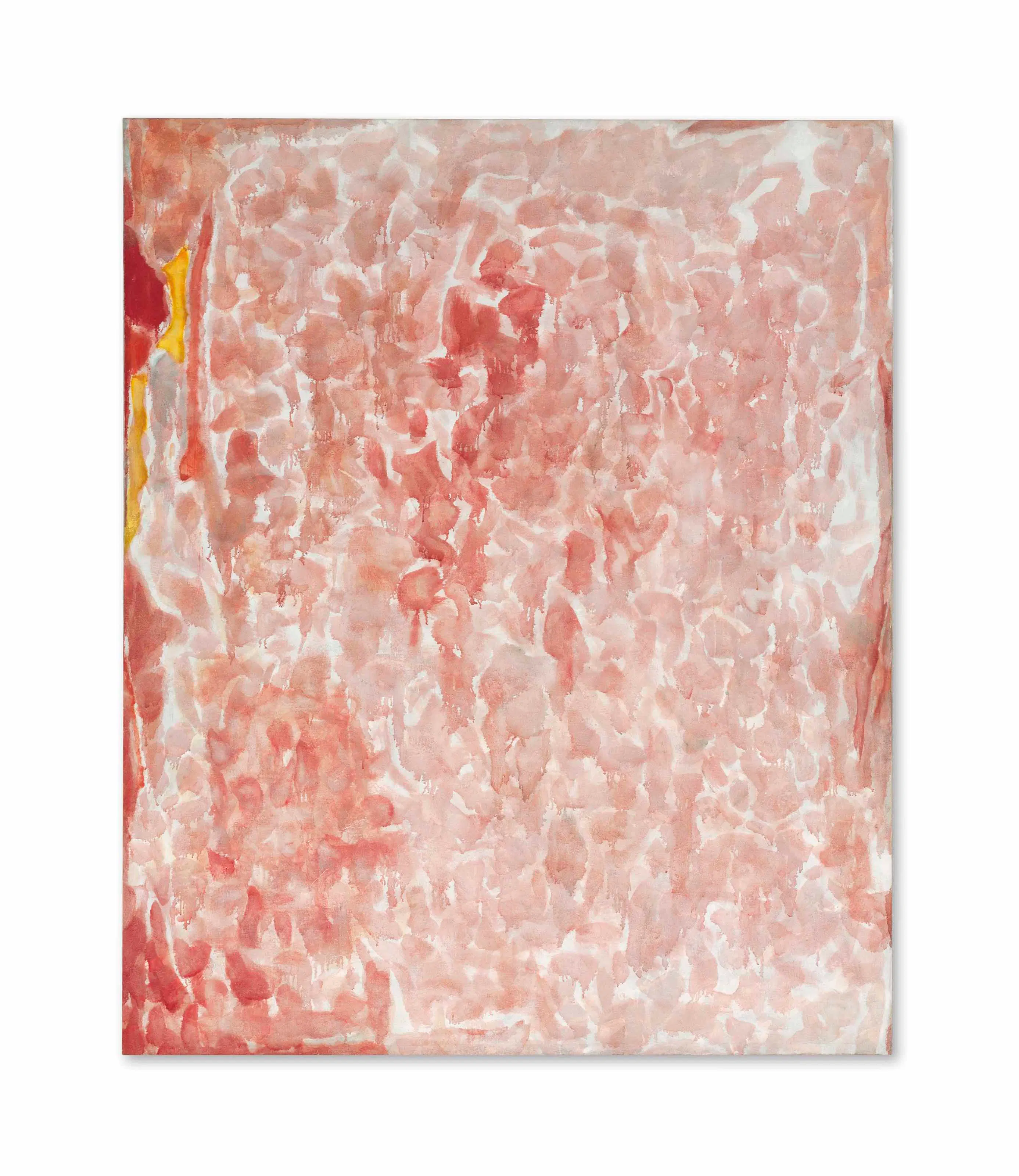
In 1953, Francis discovered Monet's Water Lilies at the Musée de l'Orangerie. This revelation gave birth to In Lovely Blueness (n°1) (c. 1955), which the painter offered to the Georges Pompidou Centre at its inauguration. This painting is one of the artist’s largest, along with Basel Mural (1956-1958), Tokyo Mural (1958) and Chase Manhattan Mural (1959). Asian art and the Impressionists, especially Matisse (who also spent part of his youth in bed), also influenced the painter. In its large formats, colour spots reminiscent of Vassily Kandinsky and Piet Mondrian gradually burst out Francis’ works, as in The Whiteness of the whale, 1957.
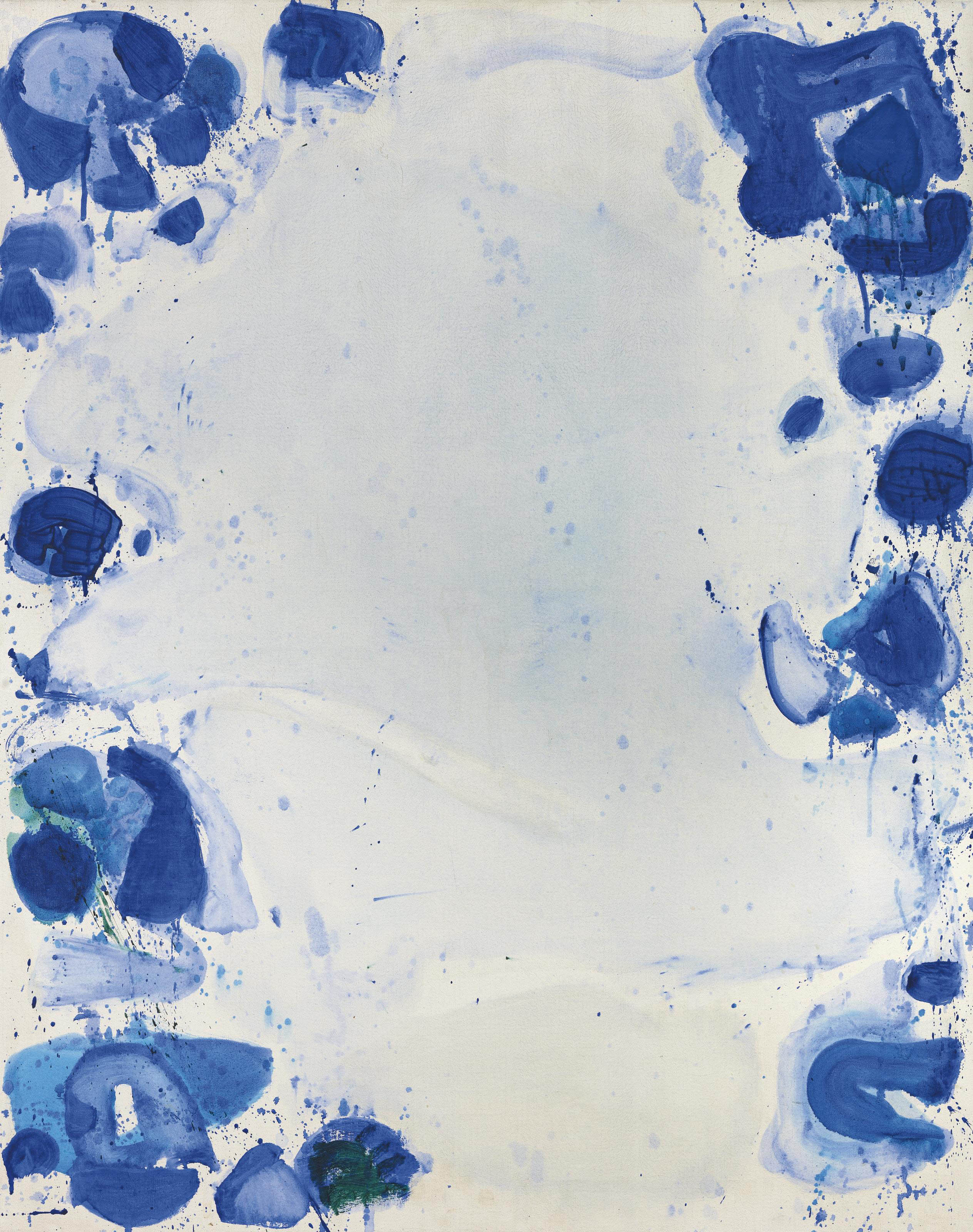
After a decade in Paris, Francis decided to travel. He visited Japan, Mexico and the United States. Under the influence of Matisse's nudes, presented at the Kunsthalle in Bern in 1959, blue became omnipresent in his creations: heavens spread over his mystical spiral canvas in Blue Sky painting (1960), and sea took the form of anthropomorphic figures in Untitled (1960) and in molecular Blue Balls (1960-63).
See also: David Hockney: The £70-million Living Man
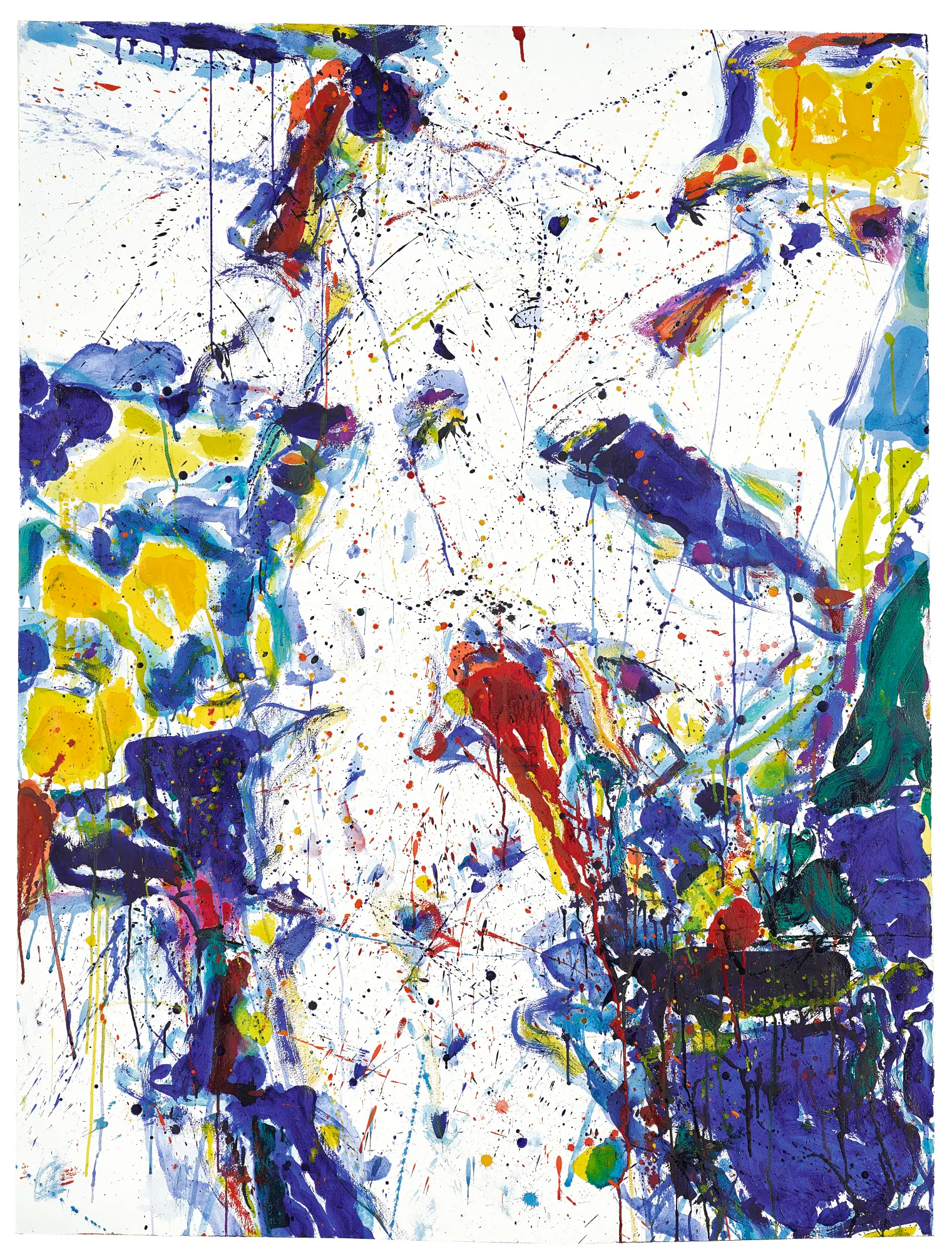
However, is this blue that appears everywhere really that important?
“What matters in these paintings is not what is painted, but what is not painted,” said Francis. White is even more important than blue. White is conscious, blue is unconscious. Thus, colour is spatialised to extreme limits of the frame to make way for a total vacuum, as in Sail I (1968).
See also: Claude Monet: The Father of Impressionism
In 1962, Francis returned to California. He moved to Santa Monica and continued his research. Colours spread into cells of life, as in Untitled from the Pasadena box (1964). A first retrospective was organised at the Museum of Fine Arts in Houston in 1967, followed by an exhibition at the Centre National d'art Contemporain in Paris (1968-1969).
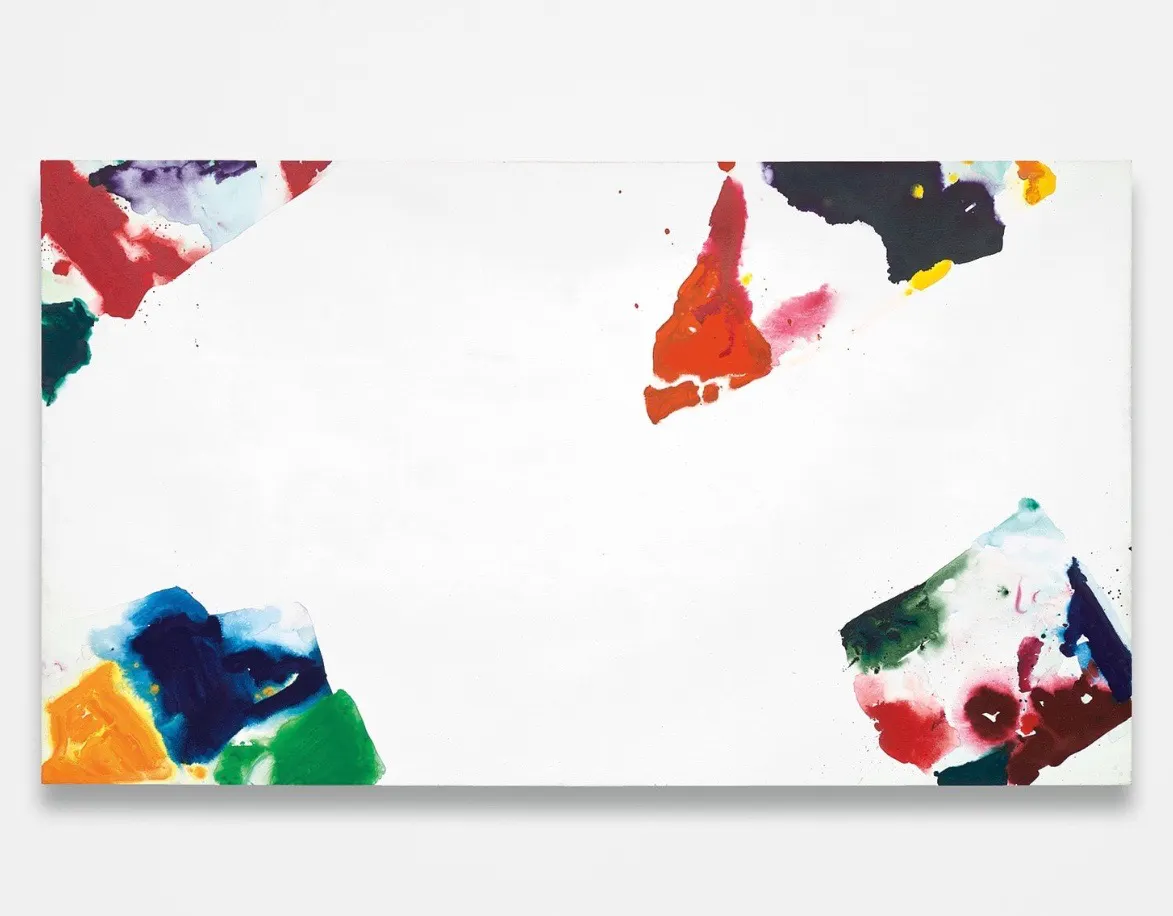
Francis’ paintings of the 1970s are characterised by a significant geometrisation of shapes, as in Untitled Mandala (1975). The painter’s mystical visions testified to the influence of his alchemical and psychoanalytical readings: The East is Red (1970) celebrates the ecstatic union of colour and emptiness.
See also: Yayoi Kusama: The Queen of Cool
What matters in these paintings is not what is painted, but what is not painted.
From 1975 onwards, Francis regularly divided the surface of his paintings. He produced his most poetic series, on occasion tending towards monochrome (as in La Primavera, 1988). In Untitled, painted in 1978, the composition of the coloured rays is perfectly controlled. The contrast between the white background and the grid of blue, black, red and green tones gives the pictorial space a dazzling effect. Large formats are adorned with a dreamlike vision reviving the celestial fascination of the early days, as with Free Floating Clouds (1980).
See also: Fernand Leger: Art in Full Swing
Francis died in 1994 at the age of 71, leaving behind some of the works most representative of post-war American art. On the market, he enjoys a high ranking, especially for his top works. In 2014, Red and Pink (1951) sold for US$3.04 million (£4.87 mil) at Christie’s New York, and Untitled (1980) went for US$470,500 (£292,000) in November 2018 at Sotheby’s New York.