In August of this year, the Canadian mining company Lucara Diamond announced the discovery of an extraordinary rough diamond weighing 2,492 carats at the Karowe mine in Botswana. While this is a remarkable find, it is not the largest diamond ever discovered. The story of diamonds spans billions of years geologically, with the oldest known diamond dating back an astonishing 4.25 billion years.
See also: Barnebys’ Guide to Diamonds
Here ten historical diamonds and what you should know about them:
1. The Cullinan
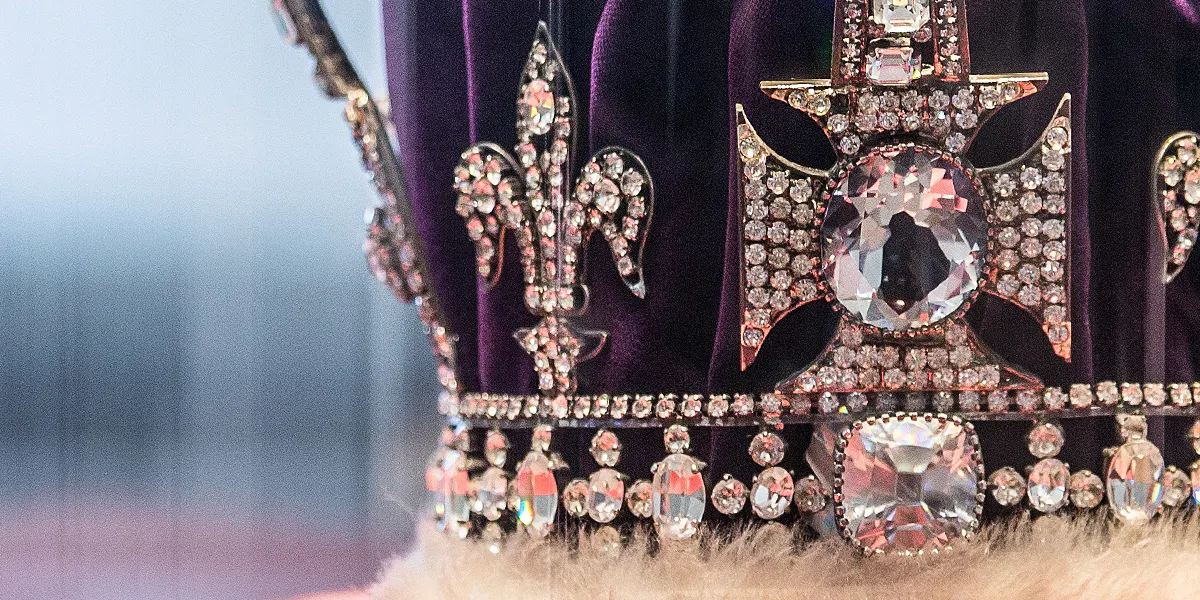
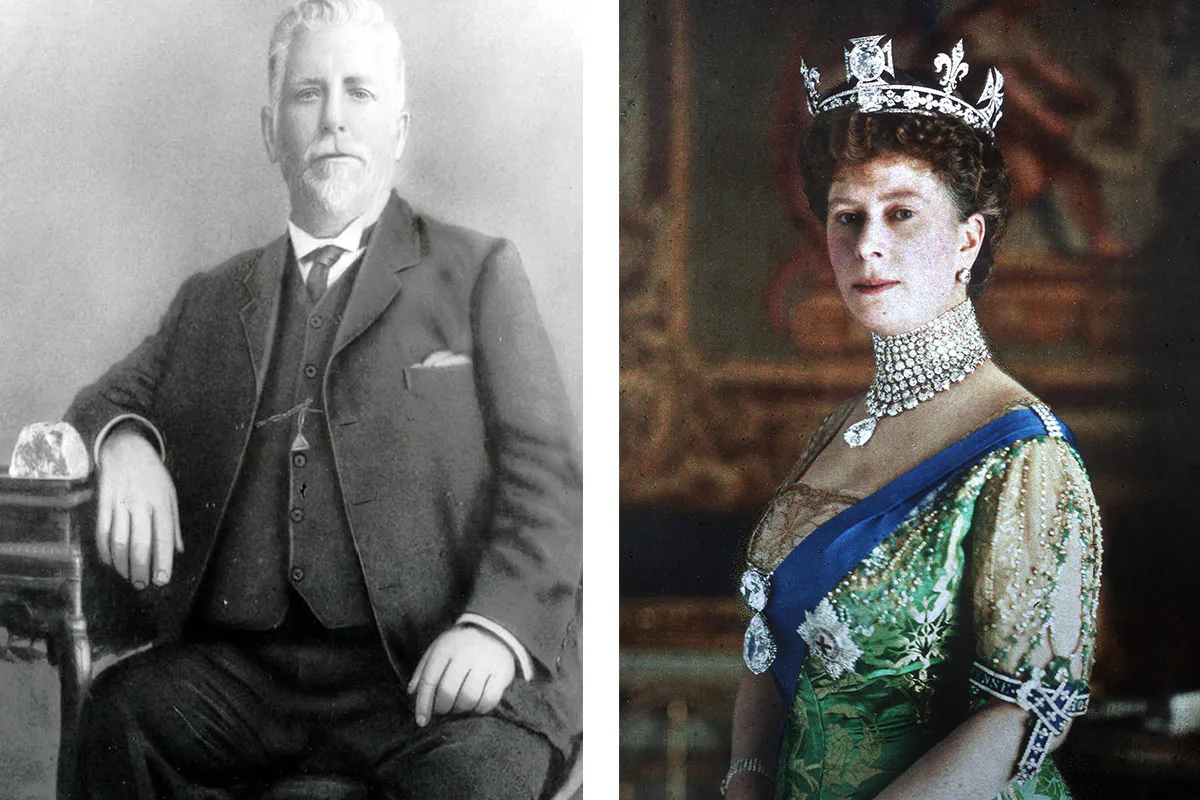
The largest diamond ever discovered was found in 1905 at the Premier Mine in Cullinan, in present-day South Africa. It weighed an impressive 3,106.75 carats, equivalent to 621.35 grams on a standard scale. The diamond was named after the mine’s owner, Thomas Cullinan. At the time, South Africa was a British colony, and in 1907, the local government decided to purchase the diamond as a gift for King Edward VII. In England, the Cullinan was split into 105 stones, with the nine largest becoming part of the British Crown Jewels, which are now housed in the Tower of London. The most famous of these is the largest stone, Cullinan I, also known as the Great Star of Africa. Weighing 530.2 carats and cut into a pear shape, it was set into King Edward VII’s sceptre, though it can also be removed and worn as a pendant.
2. The Great Mogul
Small gifts are said to preserve friendships, and this wisdom was likely understood by Emir Jemla, who presented Mughal ruler Shah Jahan with a rather large "gift." Discovered around 1650 in the Kollur Mine near Golconda in southeastern India, the light blue rough diamond weighed an impressive 787.5 carats—or perhaps even more. Named the Great Mogul, after Shah Jahan himself, the diamond was eventually cut by a Venetian gem cutter, though this process resulted in the loss of a significant number of carats. Shah Jahan's son later showed the now-finished rose-cut diamond to French traveler Jean-Baptiste Tavernier, whose writings remain the only Western account of the Great Mogul. The diamond disappeared in 1739 when Persian ruler Nader Shah invaded and looted Delhi, the capital of the Mughal Empire. Among the spoils of war were the famed Peacock Throne and several priceless diamonds. The Great Mogul was believed to be among them, but it has been missing ever since.
3. The Orlov Diamond
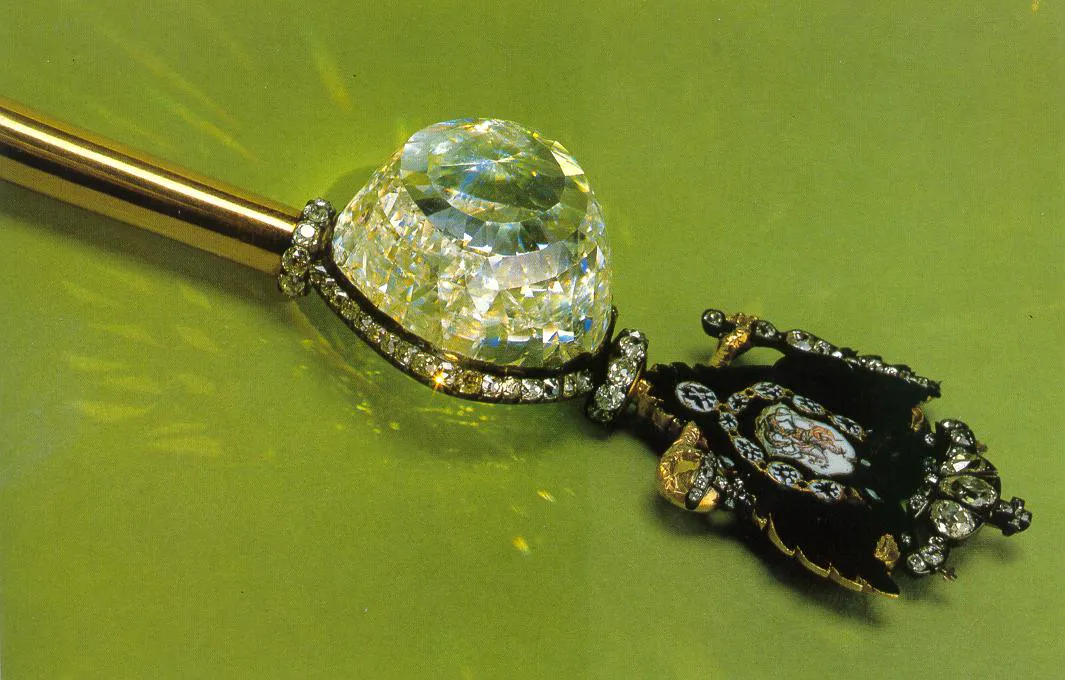
Some speculate that one of the treasures housed in the Moscow Kremlin might actually be the Great Mogul: the famous Orlov Diamond. Weighing 189.62 carats, this diamond features a cut strikingly similar to that of the Great Mogul. Another legend surrounding the bluish-green stone's origin suggests that it was stolen around 1750 by a French mercenary from a temple and later sold to a British merchant. What is certain, however, is that the diamond caught the attention of Russian Prince Grigory Orlov in Antwerp. He purchased it in an attempt to regain the favour of Empress Catherine II, though the plan failed. Nonetheless, Catherine kept the diamond and had it mounted in her sceptre. According to the temple theft legend, the diamond was cursed to bring misfortune to any future owner. Over time, every assassination attempt on a czar, and ultimately the downfall of the Romanovs, has been linked to the Orlov Diamond.
See also: Fabergé Eggs: 8 Little Known Facts
4. The Koh-i-Noor
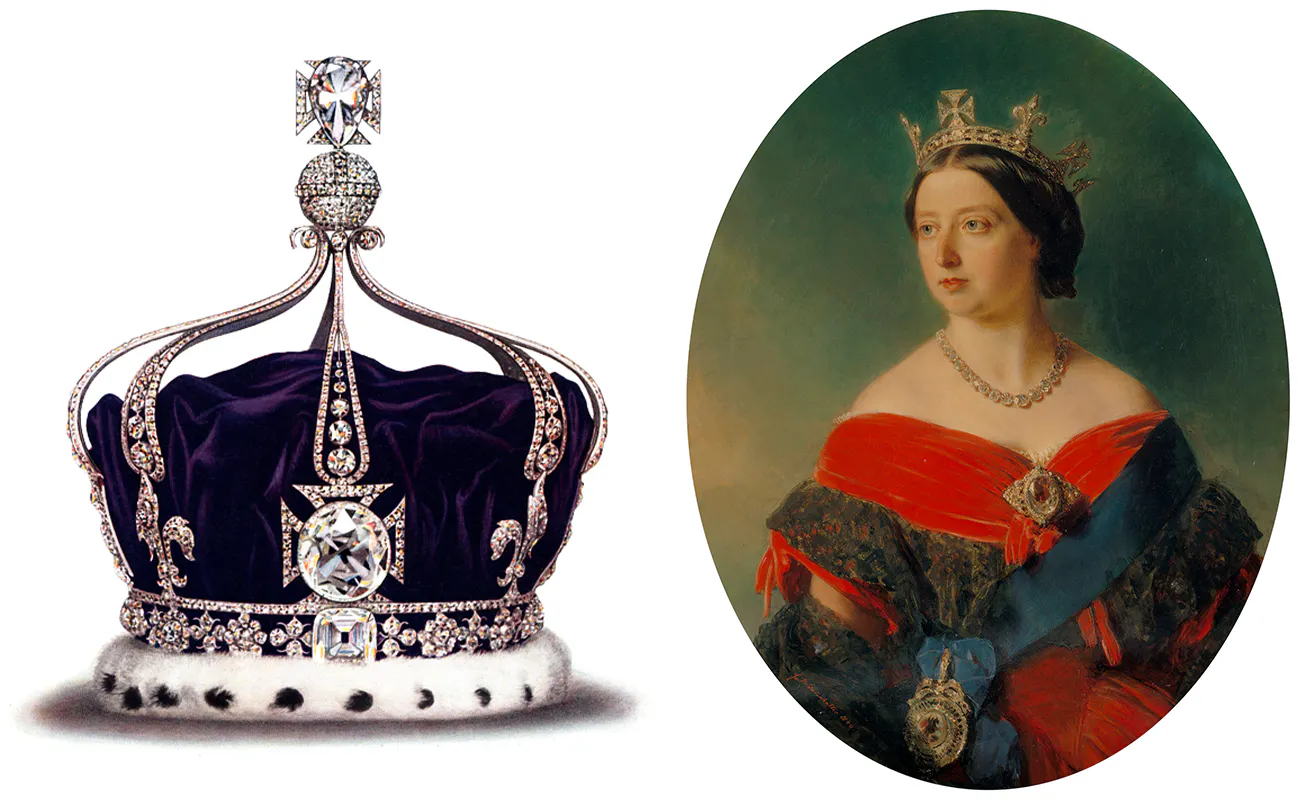
Among the treasures seized by Nader Shah in 1739 was one of the most famous and legendary diamonds in history: the Koh-i-Noor, meaning "Mountain of Light" in Persian—a name fitting for such an impressive diamond, which weighed 186 carats. The Koh-i-Noor's history stretches back centuries, with its first recorded mention in 1304, though this is not fully verified. Highly coveted throughout the ages, the diamond changed hands many times, both before and after Nader Shah. Most recently, it was acquired by the British East India Company during the annexation of Punjab, where it was found in one of the Maharaja's treasure chambers. In 1850, the diamond was presented to Queen Victoria.
See also: What Is Tipu's Tiger?
Among the treasures seized by Nader Shah in 1739 was one of the most famous and legendary diamonds in history: the Koh-i-Noor, meaning "Mountain of Light" in Persian—a name fitting for such an impressive diamond, which weighed 186 carats. The Koh-i-Noor's history stretches back centuries, with its first recorded mention in 1304, though this is not fully verified. Highly coveted throughout the ages, the diamond changed hands many times, both before and after Nader Shah. Most recently, it was acquired by the British East India Company during the annexation of Punjab, where it was found in one of the Maharaja's treasure chambers. In 1850, the diamond was presented to Queen Victoria.
5. The Florentine
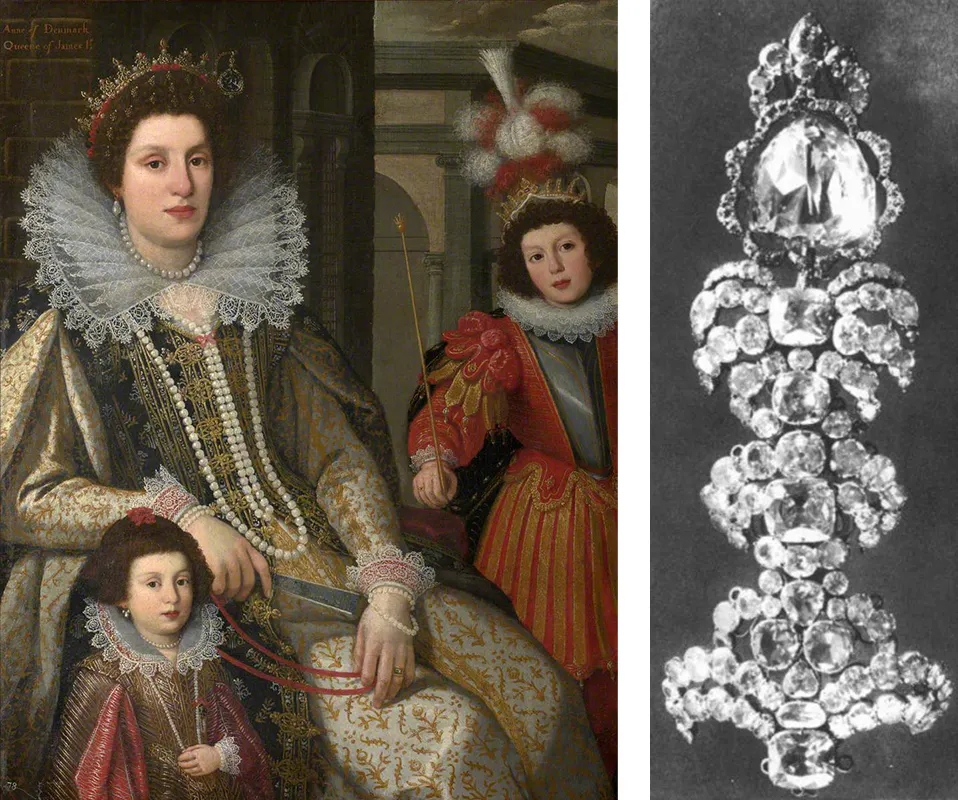
Many questions surround the pale yellow Florentine diamond, particularly regarding its whereabouts since the early 1920s. Its early history is equally mysterious, with three different versions of its origins. The most likely account suggests that it once belonged to Charles the Bold, Duke of Burgundy, who carried it with him during the Battle of Nancy in 1477, where he was killed and his body looted. The diamond eventually made its way to Italy through various channels, first belonging to the Duke of Milan, then to Pope Julius II, and finally to the Medici family in Florence, from which it derives its name.
See also: La Peregrina and La Pelegrina: The World's Most Famous Pearls
In 1737, Francis Stephen of Lorraine, the husband of Maria Theresa and later Holy Roman Emperor, succeeded the Medici family as Grand Duke of Tuscany, bringing the Florentine into the possession of the Habsburgs. At some point, the diamond was set into a hat ornament and later publicly displayed at the Hofburg Palace in Vienna. However, it remained part of the family's private jewellery collection. In 1918, shortly before the proclamation of the Republic of Austria, the last emperor, Charles I, transported it to Switzerland. The family entrusted their remaining valuables, including the Florentine, to a financial advisor, who ultimately absconded with them—leaving the diamond's fate unknown.
On two occasions, however, yellow diamonds were offered for sale that might have been the recut Florentine: once in the American market in 1923 and again at a Christie’s auction in Geneva in 1981.
6. The Regent
The exceptionally clear, slightly bluish-glimmering Regent diamond is closely tied to the French royal family. It was allegedly discovered in 1698 by a slave in the famous Golkonda mines. The man, who had hoped to use the 426-carat rough diamond to buy his freedom and escape India, was betrayed and murdered. The stone was eventually purchased by Thomas Pitt, the Governor of Madras (now Chennai), who took it to England and had it cut into the 140.64-carat cushion-cut diamond known today as the Regent.
See also: How the Affair of the Diamond Necklace Ruined Marie Antoinette
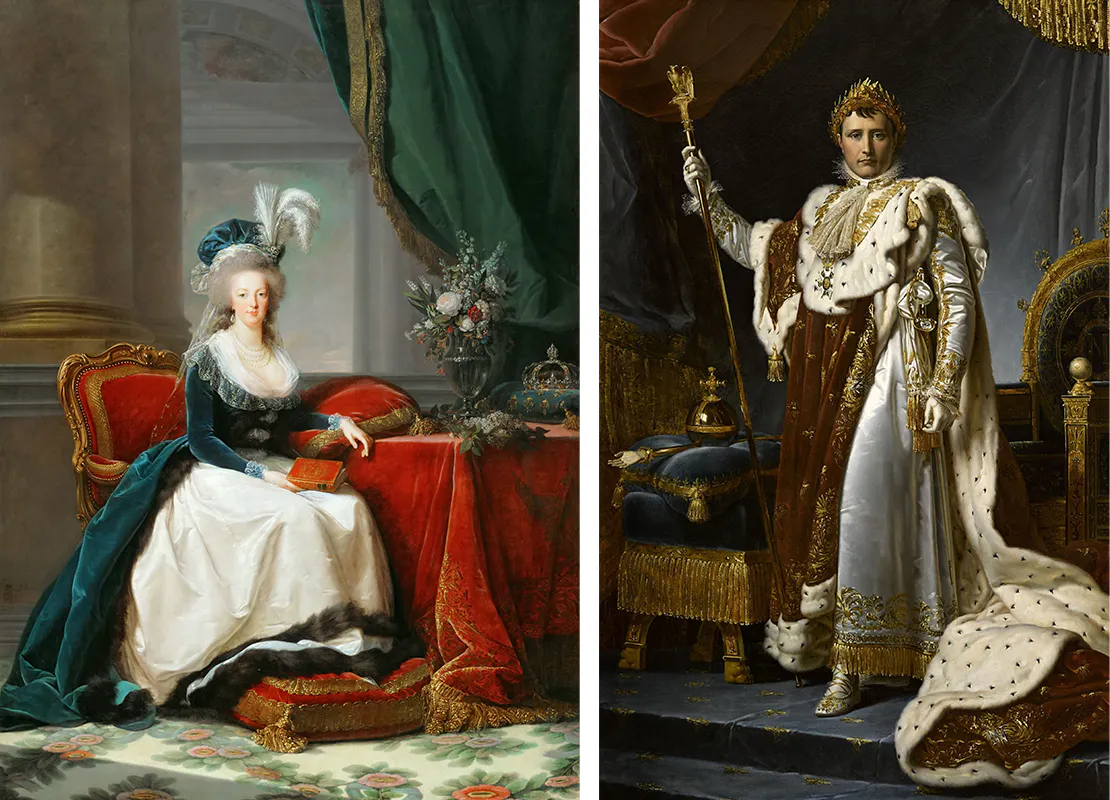
In 1717, Philippe II of Orléans, the regent of France, bought the diamond from Pitt, and it was subsequently named "Le Régent." In 1722, Le Régent adorned the coronation crown of Louis XV, and in 1775, that of his grandson and successor, Louis XVI. It was also worn by Marie Antoinette as a hair ornament. After briefly disappearing during the French Revolution, the diamond was set into Napoleon’s parade sword. It was later incorporated into the coronation crowns of Louis XVIII, Charles X, and Napoleon III. The final wearer was Empress Eugénie, who had a tiara made with the diamond. Today, the Regent is on display in the Galerie d’Apollon at the Louvre.
7. The Sancy
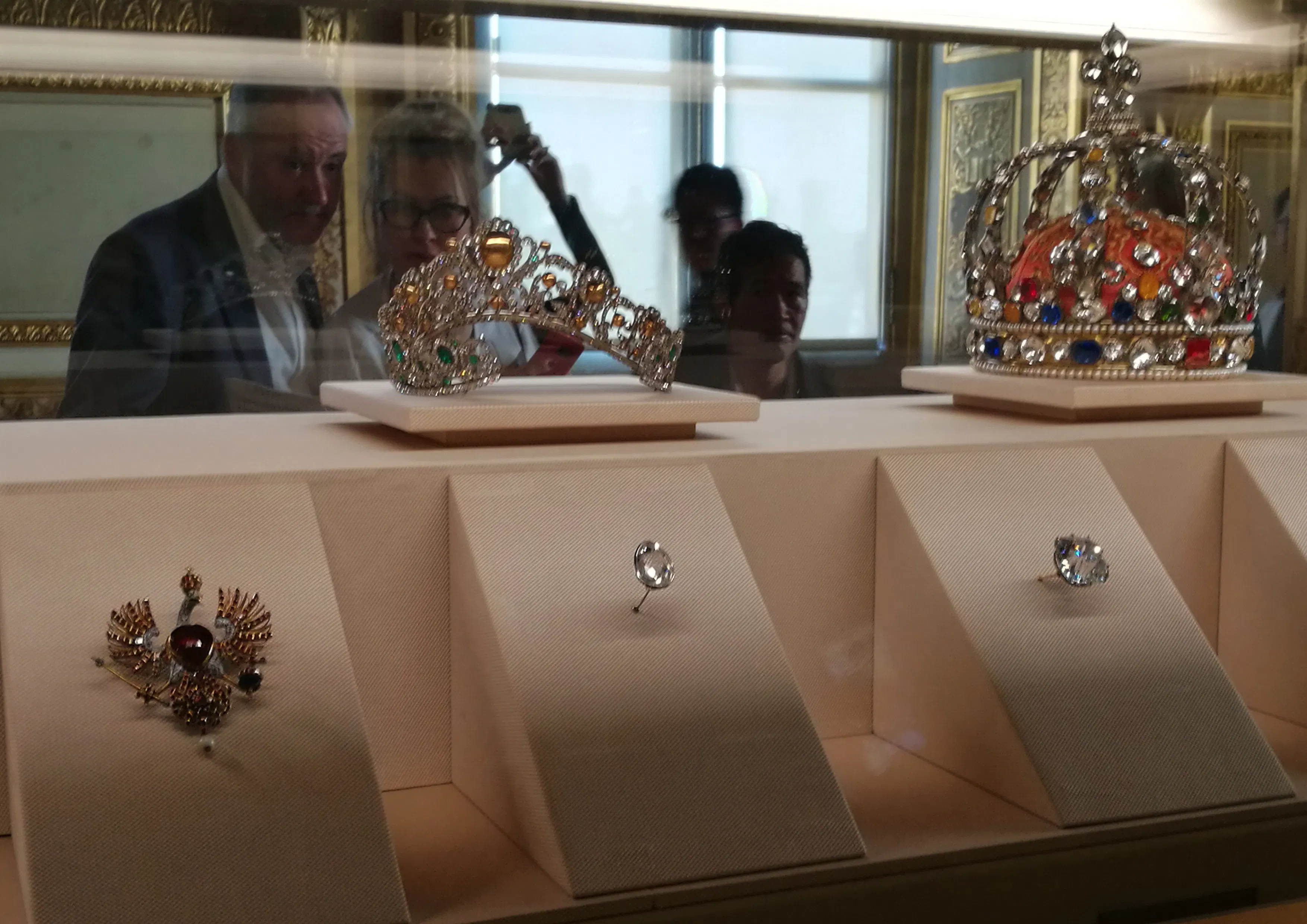
In close proximity to the Regent diamond is another famous gem from the French Crown Jewels: the slightly yellowish 55.23-carat Sancy. Like the Florentine, it is believed that Charles the Bold also carried this diamond with him when he fell at the Battle of Nancy. However, the first confirmed owner was the wealthy Nicolas Harlay, Sieur de Sancy, who represented the French crown as an ambassador in Constantinople about 100 years later. Sancy sold the diamond, named after him, to England, but in 1657, Prime Minister Cardinal Mazarin brought the Sancy back to France, where it became part of the Crown Jewels in 1661.
Want articles like this delivered straight to your inbox? Subscribe to our free newsletter here!
During the French Revolution, the Sancy briefly went missing, and the French government under the Directory (1795–1799) was forced to pledge it. However, it was never redeemed. Throughout the 19th century, the Sancy had various owners, including the Russian industrialist Demidov family. In 1892, it was acquired by American-British politician William Waldorf Astor, 1st Viscount Astor. His great-grandson later sold the diamond to the Louvre in 1976, where the Sancy is still on display today.
8. The Hope Diamond
The most famous of all diamonds is undoubtedly the deep blue Hope Diamond, which is said to be cursed, bringing misfortune to every one of its owners. The origin of the curse is believed to be linked to its theft from a Hindu temple—a story similar to that of the Orlov Diamond. The first identifiable owner of the 112-carat rough diamond, which was recovered from the Kollur mine, was once again Jean-Baptiste Tavernier. In 1666, Tavernier brought the diamond to France, had it cut, and named it Le bleu de France before selling it to Louis XIV. The king had it recut into a faceted stone weighing 67.125 carats and wore it at important events.
See also: Is the Hope Diamond Really Cursed?
9. The Dresden Green Diamond
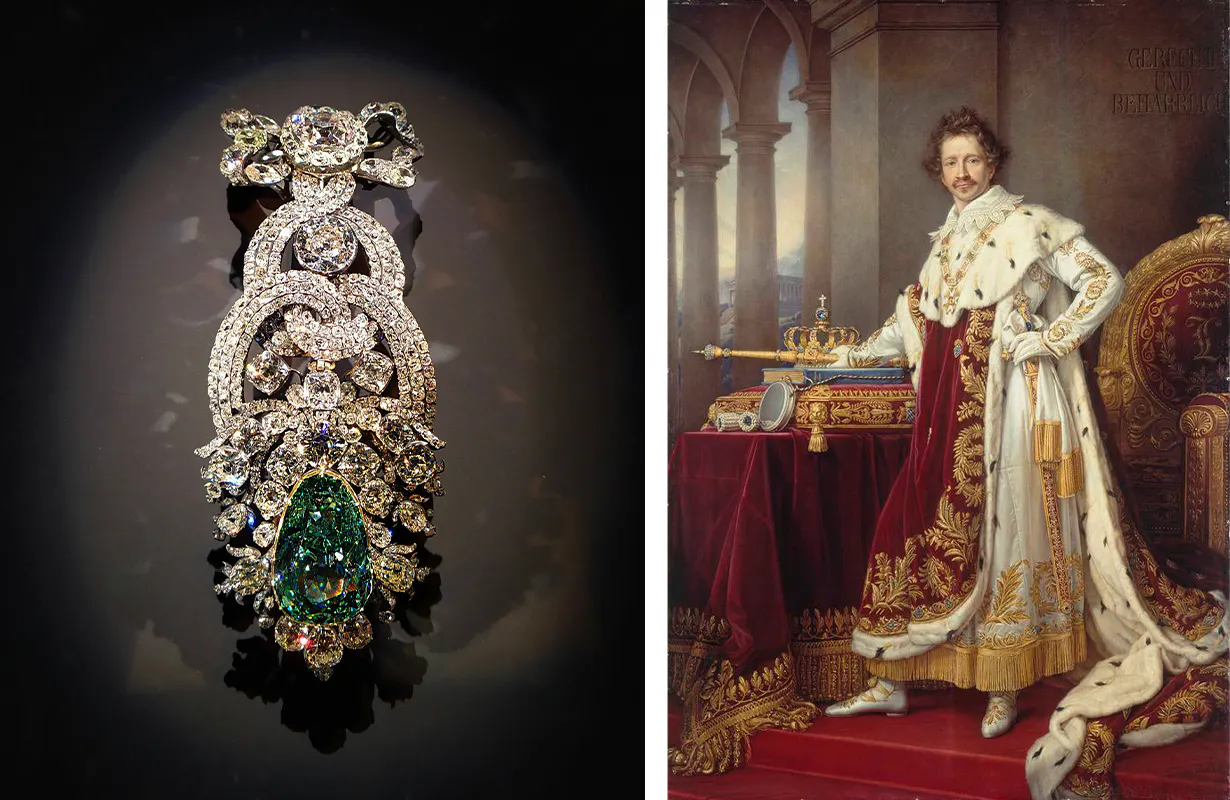
For 300 years, the Electoral and Royal Collection in the Dresden Green Vault has been open to the public, and almost as long, since 1742, the extraordinary Dresden Green Diamond has been part of this collection. It is the largest naturally green diamond ever found, and its unique color is the result of underground contact with radioactivity—making it, in a sense, the "Hulk" of diamonds. Likely discovered in India, the original rough diamond, weighing 119.5 carats, arrived in London in 1722, where it was cut into the pendeloque-shaped gemstone of 41 carats that we know today.
In 1742, Augustus III, Elector of Saxony and King of Poland, purchased the diamond from a Dutch merchant at the Easter fair in Leipzig and had it set into a magnificent Order of the Golden Fleece. In 1768, Augustus’s grandson, Frederick Augustus III, had it recut into a hat clip. From November 25, 2019, to March 1, 2020, the Dresden Green Diamond was on loan to the Metropolitan Museum of Art in New York—a fortunate event, as it allowed the diamond to avoid falling into the hands of thieves who broke into the Green Vault in the early hours of November 25 and stole numerous treasures.
See also: The Surprising Inspiration Behind the Cartier Love Bracelet
10. The Blue Wittelsbach
The last diamond on this list, the Blue Wittelsbach, is also believed to have originated from the Kollur mine in India. It made its way to Bavaria as part of a dowry through the Habsburgs of Spain and Austria, eventually reaching the ruling Wittelsbach family. Like many other famous diamonds, the Blue Wittelsbach was set into an ornate Order of the Golden Fleece. However, in 1806, it was removed and placed atop the new Bavarian royal crown.
After the Wittelsbach family was forced to abdicate in 1918, the blue diamond was assigned to the Wittelsbach Compensation Fund, but it was sold in 1951. Passing through several owners, it was purchased in 2008 by London jeweller Laurence Graff, who acquired it at a Christie’s auction for £16.4 million ($18.4 million), the highest price ever paid for a diamond at auction at the time. Two years later, widespread outcry followed the revelation that Graff had had the historic 35.56-carat stone re-cut, reducing its weight to 31.06 carats. Shortly afterward, Graff reportedly sold the stone—now known as the Wittelsbach-Graff Diamond—for an undisclosed, but undoubtedly high, sum.