After the Cultural Revolution of 1966-76, China experienced rapid and uncontrollable urban growth due to Westernisation. Many contemporary Chinese artists have used this development, alongside their own experiences with their oppressive government, as inspiration for their art. Here are seven contemporary Chinese artists who have done exactly this – and subsequently taken the art world by storm.
There is a recurring theme in all of these artists’ works. Freedom. Their pieces show their fight for the ability to express themselves freely and without suppression. By speaking out and making statements through art, these creators have reached an enormous audience and are gaining massive international popularity.
7. Qiu Zhijie
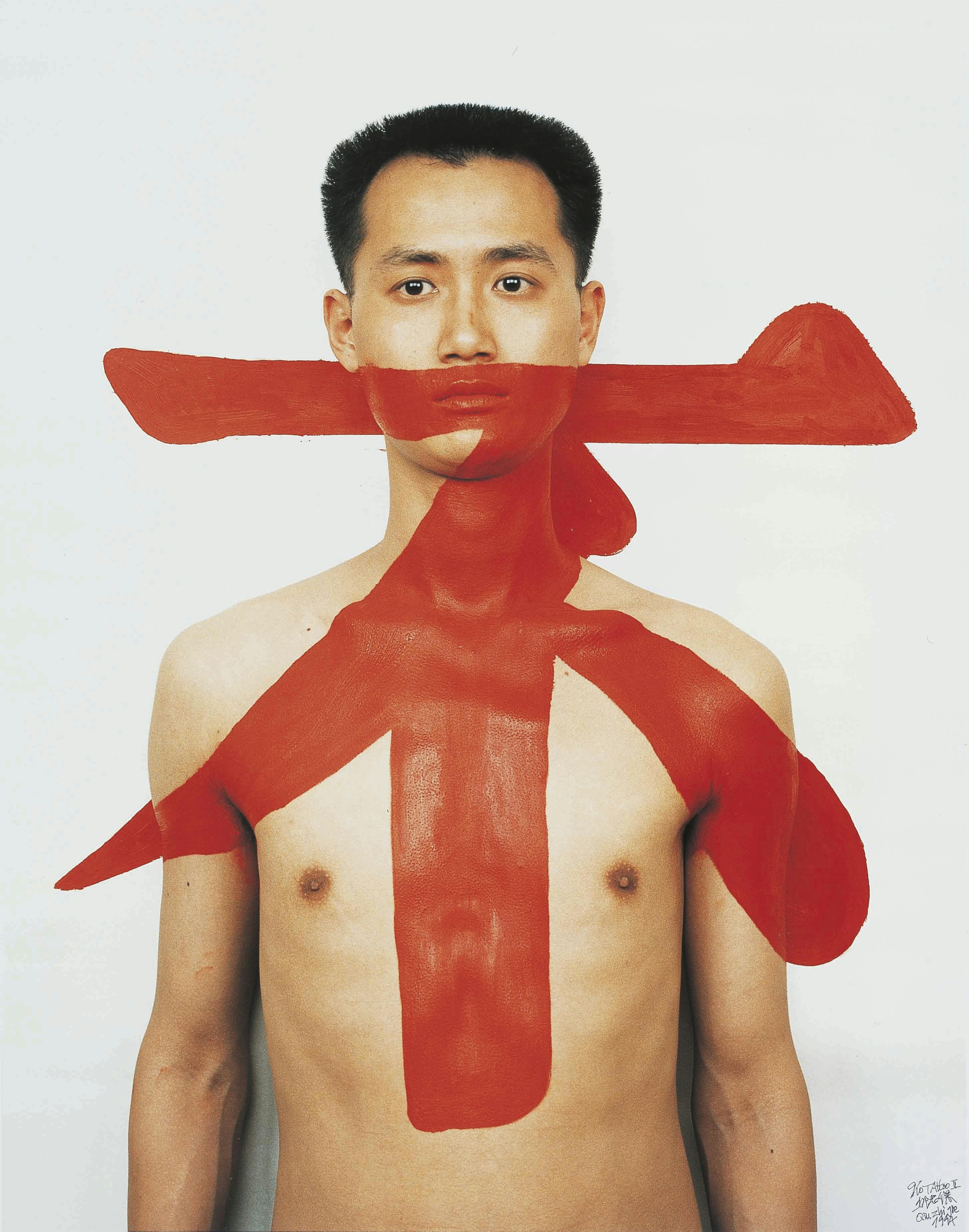
As a mixed media artist, Qiu Zhijie (b. 1969 in Fujian) has made an impact on the art world by showing the social fragmentation and transience present in China, which he achieves by using symbols and icons in his works. Since he finished his degree in printmaking, Zhijie has evolved into a highly sought after contemporary artist with such works as the Public Life/Glass Toilet and the Tattoo Series. The Tattoo Series mixes traditional Chinese calligraphy with the modern art form of photography (cali-photography) to fuse the old with the new.
Through this self-portrait series, Zhijie presents to the viewer what effect societal symbols can have on independence, the way one perceives oneself and possibly even one’s identity – just like a tattoo that never leaves you.
As well as showing works in prominent museums, such as the Victoria & Albert Museum in London and the Hong Kong Art Museum, Zhijie has also taught at various institutions, written multiple books and his piece 30 Letters to Qiu Jiawa sold for £547,003 at Christie’s in 2014.
I have gradually rediscovered China as my deeper personality has affirmed itself.
6. Ai Wei Wei
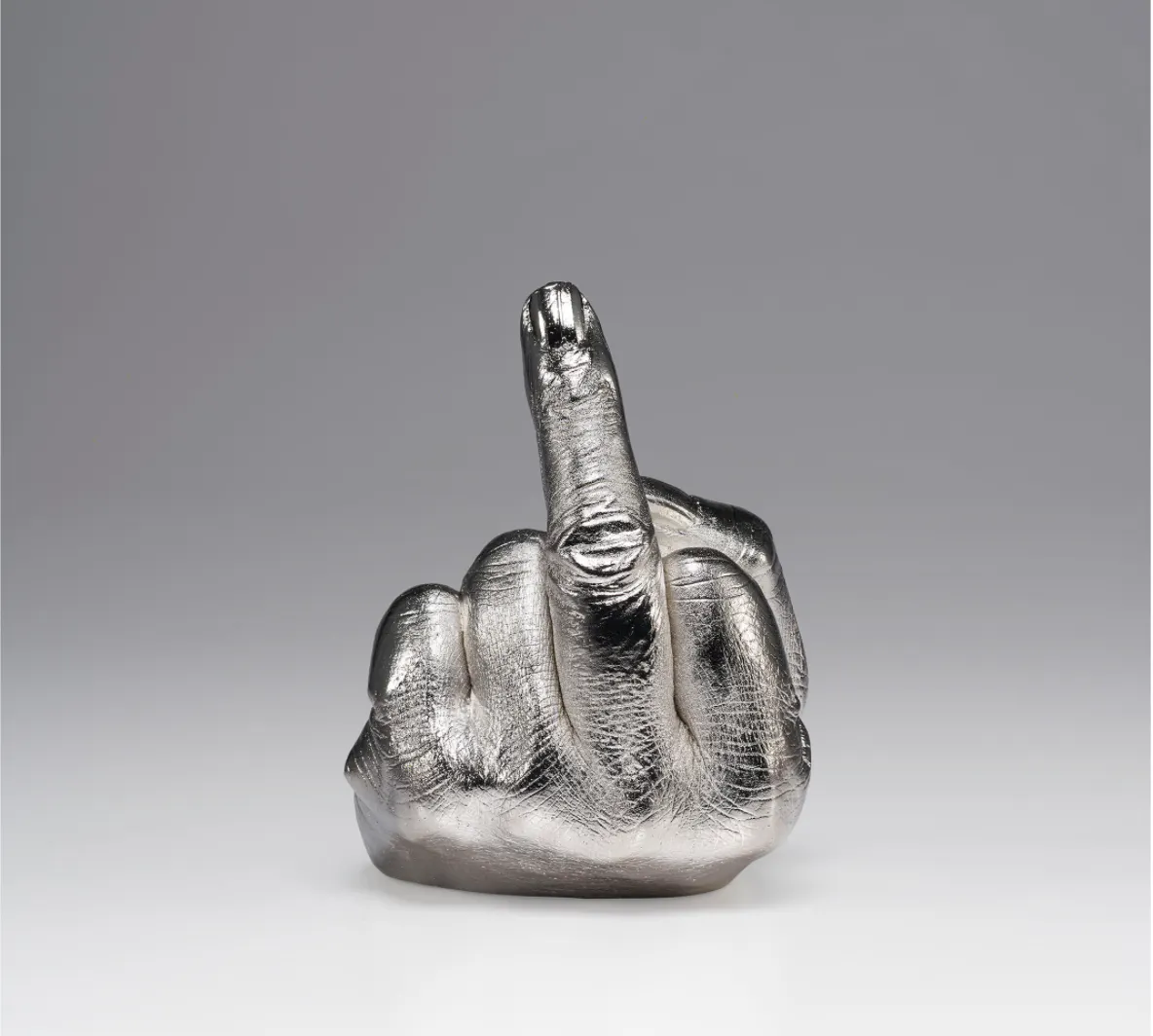
Ai Weiwei (b. 1957 in Beijing) may be viewed as the most controversial artist and activist within this list. At a young age, Weiwei had to endure the hardships of Chinese law when he and his family were sent to a labour camp in 1961. This was because his father, a poet, had openly defended the author Ling Ding and was accused of ‘rightism’. 16 years later, after the death of Mao Zedong, the family returned to Beijing, where Weiwei studied animation at the Beijing Film Academy and formed the avant garde group ‘stars’ with artists such as Li Shuang, Ah Cheng and others.
See also: Chinese Authorities Demolish the Studio of Ai Weiwei
The artist was greatly influenced by his childhood and the government suppression that he experienced. To this day, he is still fighting against this unfair treatment, which has led to his arrest multiple times: he spent 81 days in jail in 2011, was placed on ‘modified’ house arrest for four years, and had his studio torn down. It is his goal to portray this in his artworks, and he also uses his work to fight for human rights and help charities raise money across the globe. During the coronavirus outbreak, for example, Weiwei printed a woodcarving of his iconic middle finger and sewed it onto face masks, which he then sold on eBay in order to raise money for the Human Rights Watch, Refugees International and Médecins Sans Frontières.
Weiwei has made a name for himself through his 100 million sunflower seeds at Tate Modern in London, his bicycle installations, and also the sale of his work Circle of Animals/Zodiac Heads (2010) for £3,442,500 at Phillips in 2015.
5. Xiang Jing
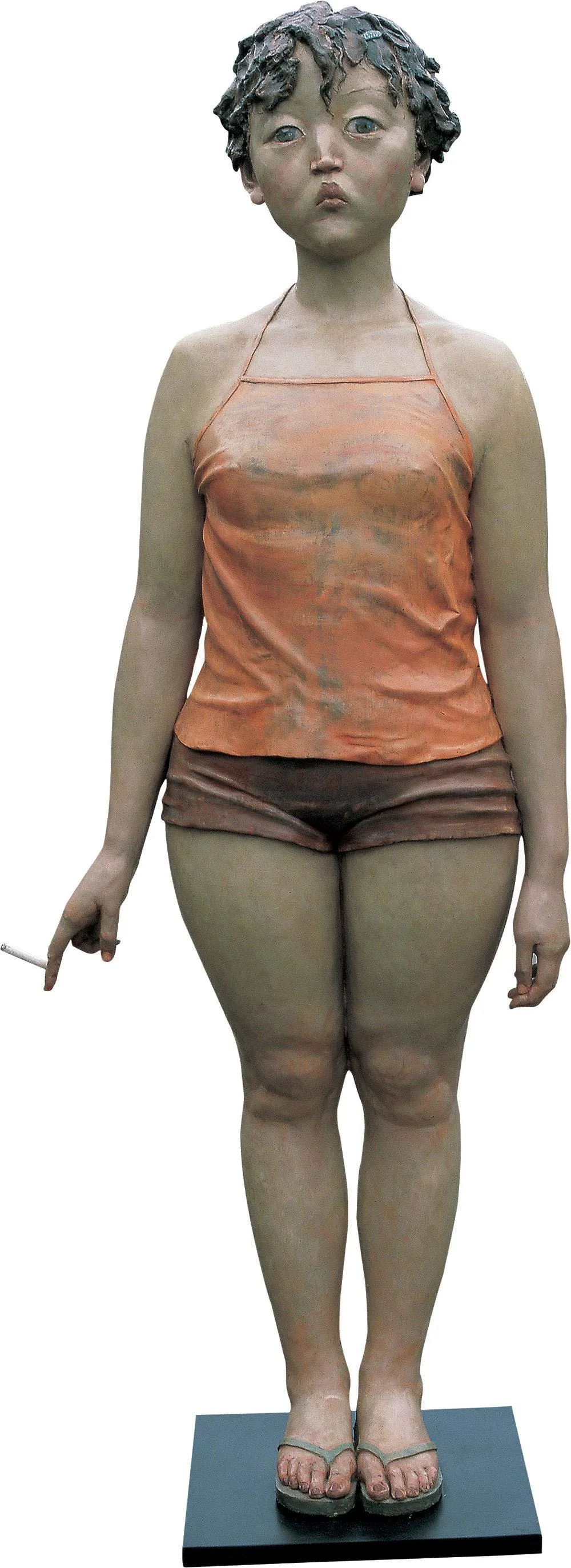
By making political and personal but also satirical statements with her art, Xiang Jing (b. 1968, Beijing) has become a prominent member of the Chinese art market in a country that is still mostly dominated by men. Jing explains this lack of female artists, stating that: “Most of the women I know well, put their families, their husbands and their children before their careers… The only reason I can make so much art is that I do not have a child. That is what I gave up.”
Jing has also stated that the lack of Chinese female artists comes down to women believing that they are “not good enough.” She says that there is a lack of understanding and self-worth amongst women, as most are focused on caring for their families.
See also: The 15 Most Expensive Female Artists
Within her statues that are made of non-synthetic materials, Jing challenges the expectations that are placed on the Chinese women and their established values. By often showing fully naked, imperfect female bodies, she is forcing the onlooker to see the truth: she believes that the female figure is constantly analysed and criticised.
4. Zao Wou Ki
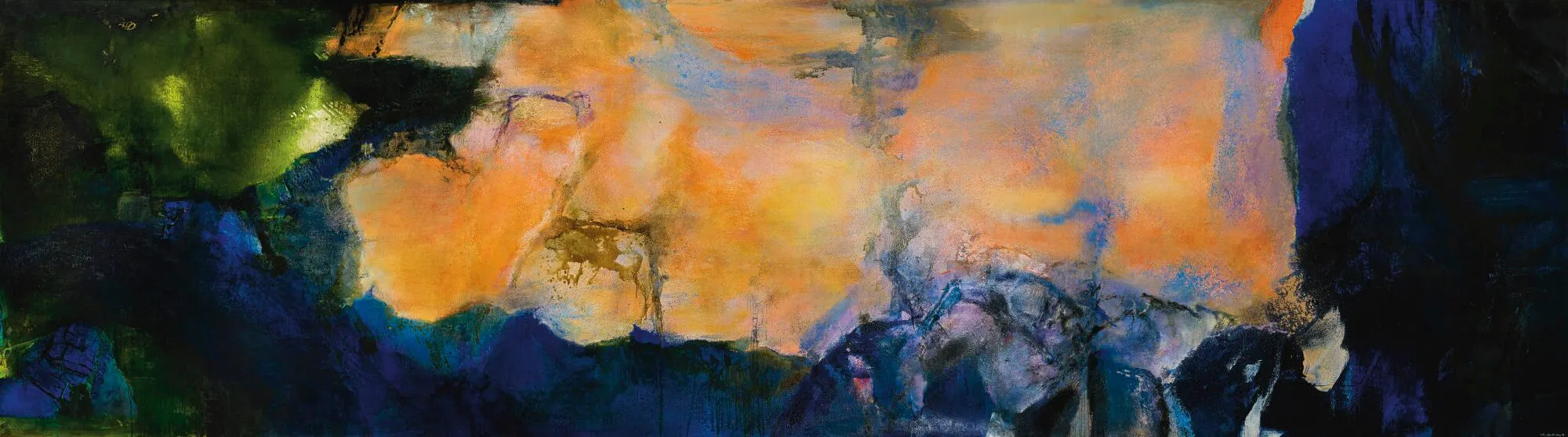
Zao Wou Ki (1921-2013) is no longer alive but can be interpreted as the cornerstone of the changing art perspective in China. He is known for his combination of abstract art, Expressionism and calligraphy, through which he revolutionised the traditional manner of Chinese painting. He is the third most successful artist (2018 and 2019) worldwide at auction, with a turnover in 2019 of £158,436,369. During the 1960s, Wou Ki was tremendously popular in Europe, and that interest slowly moved to Asia where most of his works are sold today. A special mention should be made of his triptych Juin-Octobre 1985, which sold £50 million at Sotheby’s in 2018, a then-record price for the artist.
See also: Abstract Art: From Genre to Movement
In his works, Wou Ki was not only inspired by his homeland but also other countries, especially France, where he lived for the majority of his adult life. His choice to live in Paris was greatly determined by his idolisation of French painters, such as Henri Matisse and Joan Miró. Throughout his life, he had a tremendously successful career with regular gallery and museum exhibitions at institutions such as the Grand Palais in Paris, the San Francisco Museum of Modern Art and the Marlborough Gallery in New York. As well as travelling and painting, Wou Ki taught at the École Nationale Supérieure des Arts Décoratifs and Hangzhou School of Fine Arts.
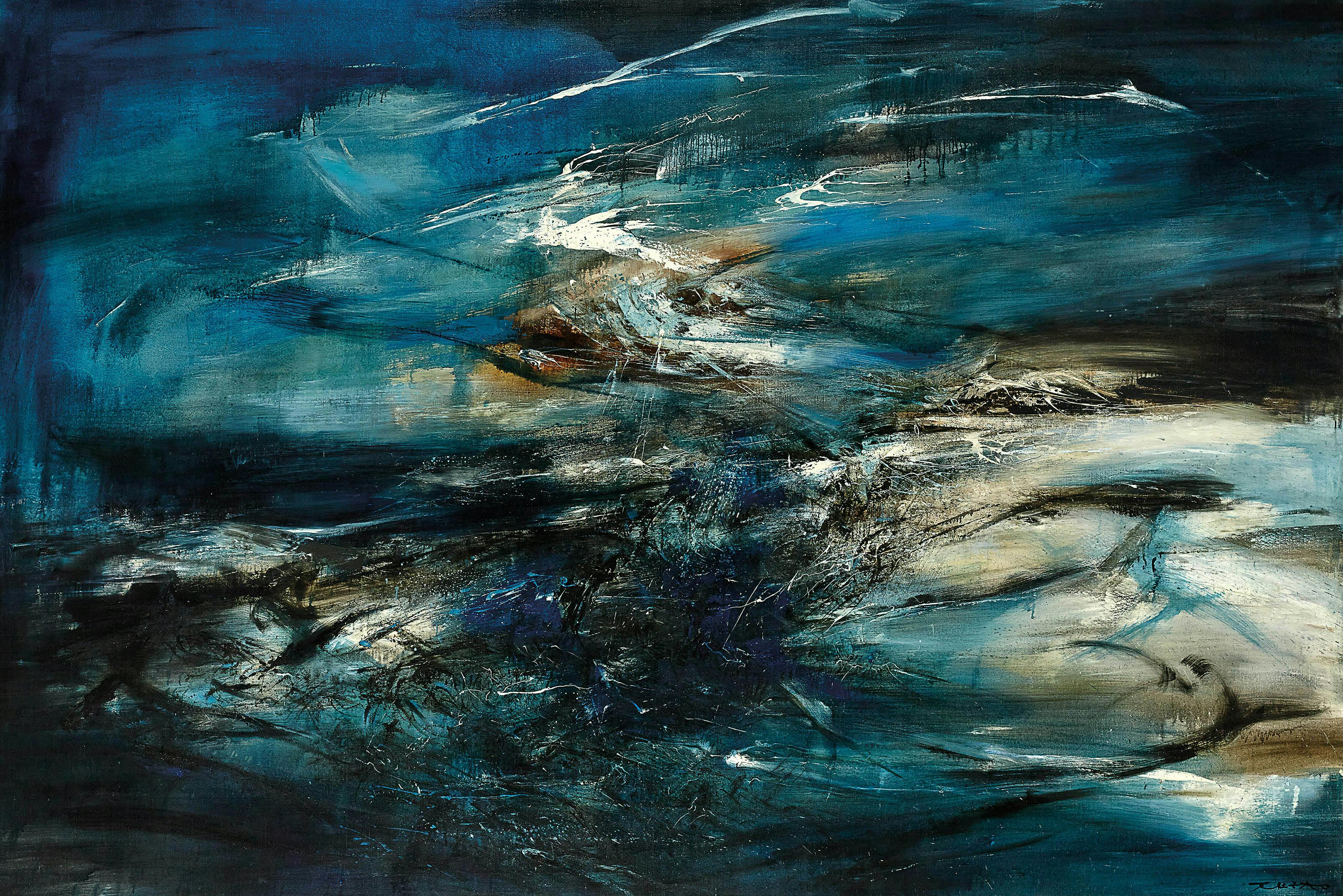
When Wou Ki moved to Paris in 1948, he did not return to China to visit his family until the suicide of his second wife in 1972, which had a great impact on the artist. It forced him to return to his roots, of which he later said: “Although the influence of Paris is undeniable in all my training as an artist, I also wish to say that I have gradually rediscovered China as my deeper personality has affirmed itself.”
3. Yang Fudong
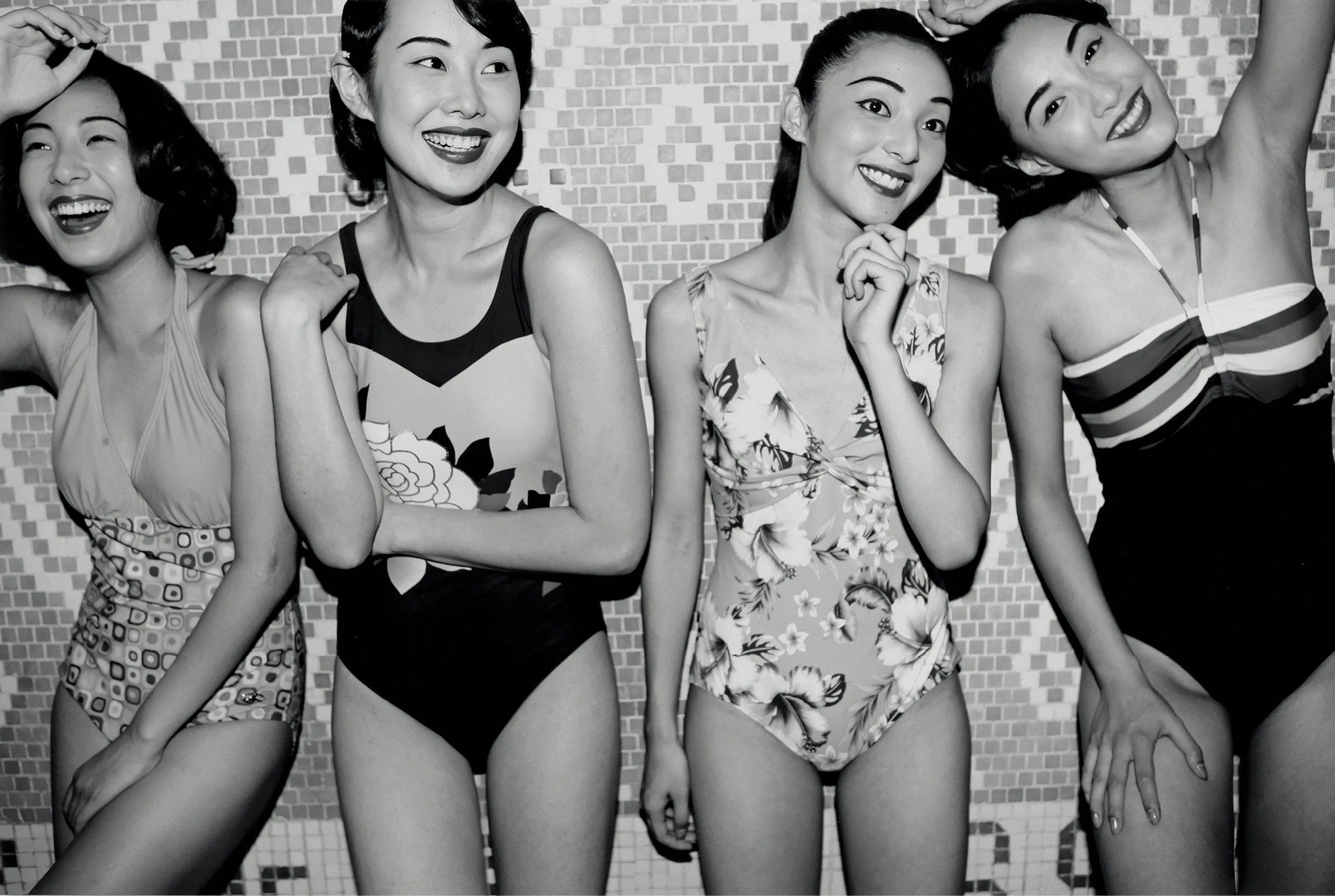
Yang Fudong (b.1971 in Beijing) has risen to fame through his oeuvre, comprising photos, films and installations. Little is known about his earlier life but after having studied painting at the Hangzhou Academy of Fine Art, he quickly realised that he was more drawn to photography and motion pictures.
His works present his perspective of the complex socio-political landscape of his nation and how it is stuck between the past and the future. The Marion Goodman Gallery wrote about his dream-like video installations, stating that “his characters, often silent and disembodied, usually move according to choreographed gestures and transport the viewer into an aesthetically perfect environment. His work deliberately suspends and confuses time.” It is exactly this new style that draws viewers to Fudong’s artworks. He speaks to the generation in modern-day, constantly evolving China, that is struggling to find their place or meaning.
Fudong has exhibited his work at Foundation Louis Vuitton in Paris and at New York’s Metropolitan Museum of Art and Solomon R. Guggenheim Museum. He has also made history with images such as The First Intellectual, which sold for £105,188 at Sotheby’s in 2016 and became the most expensive photograph by a Contemporary Asian Artist at auction at the time.
2. Zeng Fanzhi
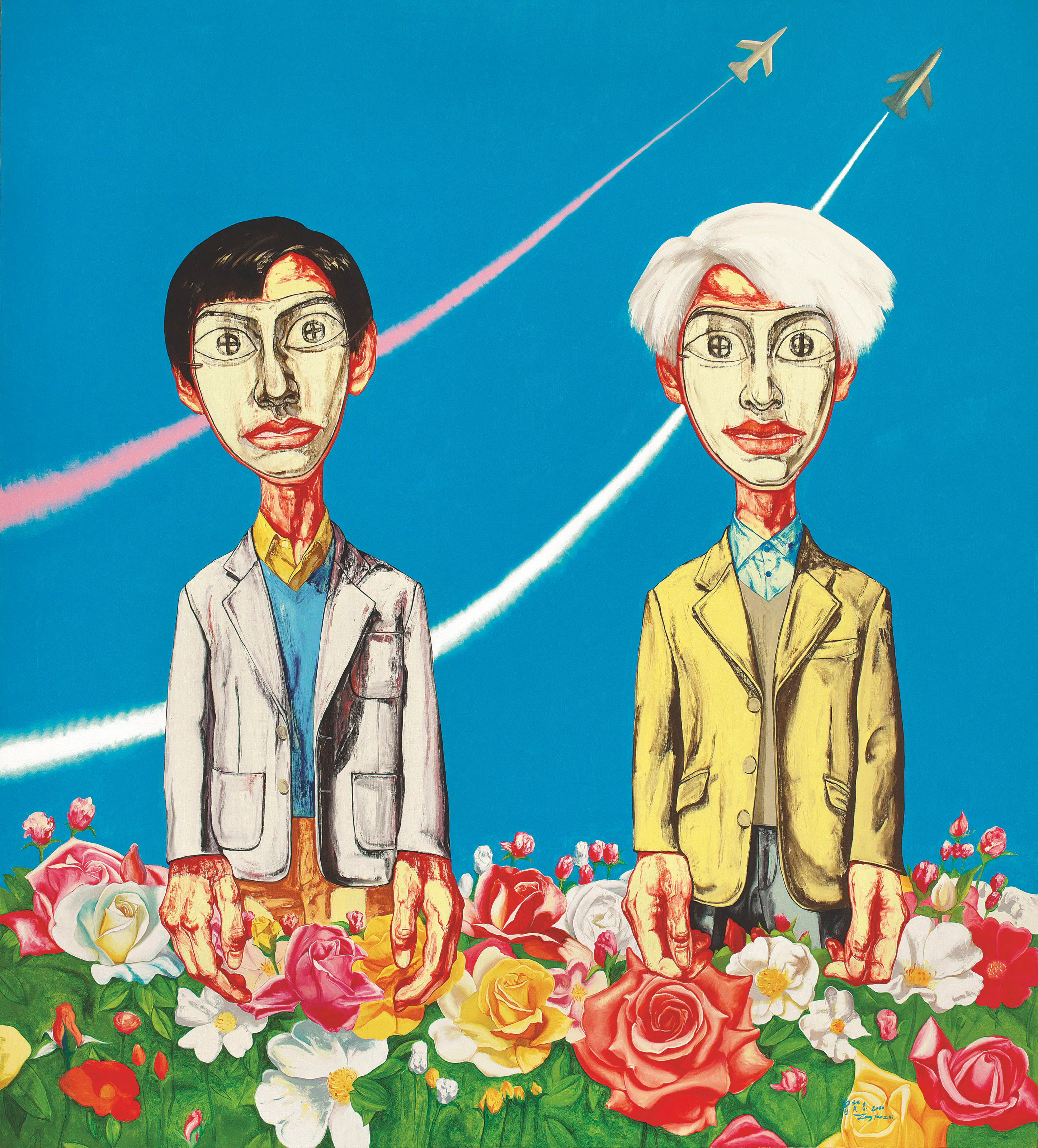
Zeng Fanzhi (b. 1964 in Wuhan) produces works that are extremely emotional and deeply personal. The artist grew up in a poor household during the Cultural Revolution and attended the Hubei Academy of Fine Arts, where he discovered his greatest influence: German Expressionism.
The artist became famous for his Mask Series, through which he wanted to show that “China was changing very fast in the '90s, people wore suits and ties. But you could tell they were uncomfortable inside. There is a tradition of performing with masks…” His masks act as the invisible barrier between us and our surroundings while also representing the many fake relationships we build during our lifetimes. A story that personally affected Fanzhi and which caused him to paint in this manner was when he did not receive a red handkerchief that every Chinese schoolchild earnt as “a sign of acceptance and achievement in the Little Red Guard”.
To this day, these red handkerchiefs pop up in Fanzhi’s works. They express his anger at being bullied by society and marked as an outsider – he was one of three children in his class (of 52) to not receive this award.
See also: David Hockney: Star of Contemporary Art
Through his Expressionist and physiologically explorative paintings, Fanzhi attempts to connect to the viewer on a personal level by encouraging self-reflection and acceptance of oneself. In 2013, Fanzhi broke the record for the then most expensive contemporary Asian artwork – The Last Supper, which sold for £14,451,439 at Sotheby’s in 2013.
1. Liu Bolin
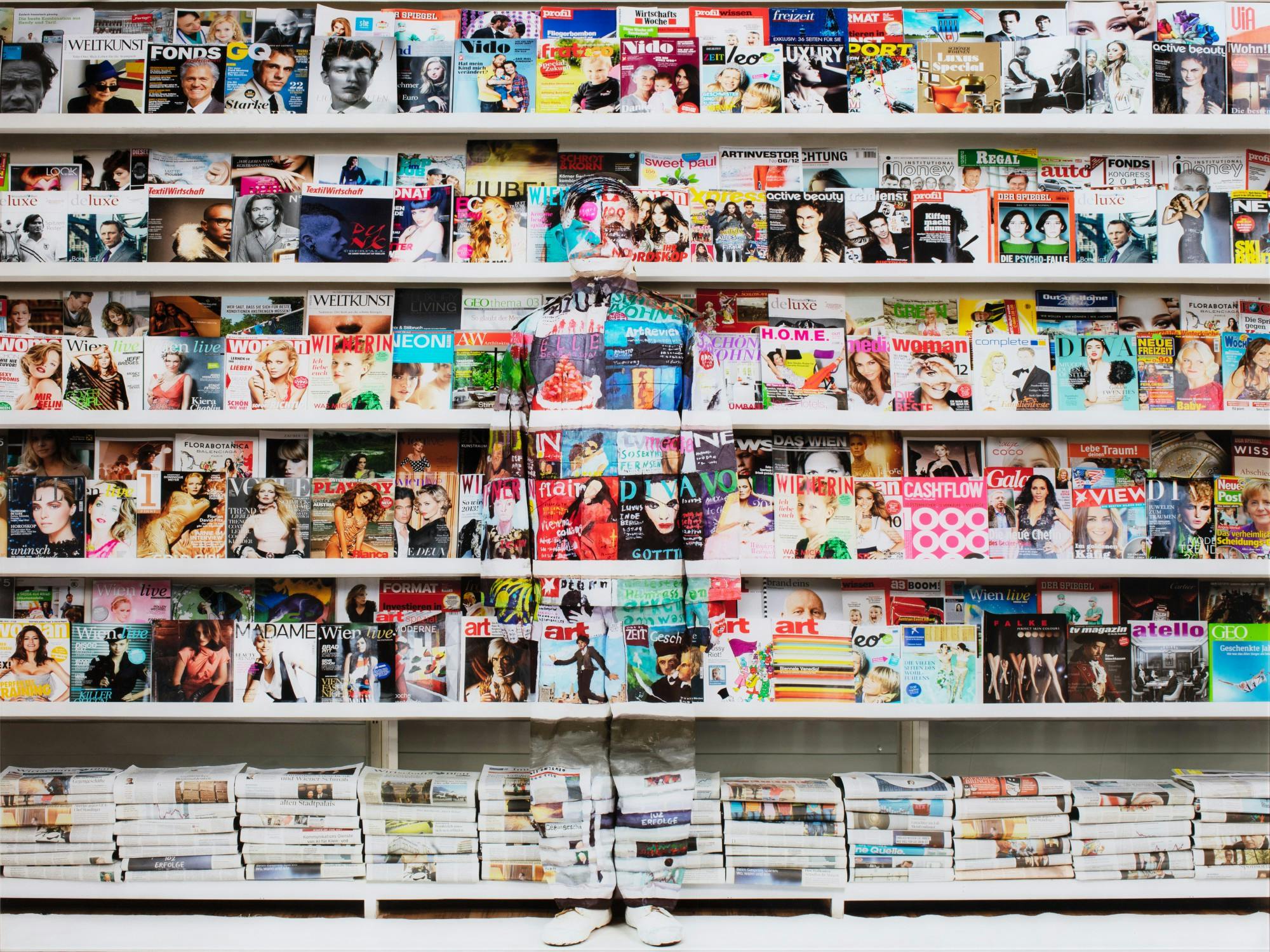
Liu Bolin (b. 1973 in Shandong), also called ‘The Invisible Man’, is known for his camouflaged photographs and performance art. By painting his entire body into the environment behind him, when he disappears it’s almost as if he’s a chameleon.
Bolin uses his art as a silent protest. In the beginning, his art was solely against the Chinese government. After the Cultural Revolution, in the 1990s the country was starting to thrive again, but this growth was happening much too fast. Bolin’s protest finally triggered in 2005 when the government decided to ‘shut down’ Suo Jia Cun, one of the most congregated cities of artists in China. They destroyed over 100 studios, including Bolin’s.
Through his images, Bolin wanted to portray his helplessness and his emotions. He once said: “I was a meaningless person, according to society. Those years made me feel like people can exist or completely disappear.”
See also: The 10 Most Scandals Artworks
His images quickly circulated the world and have been exhibited in many institutions, such as the Broad Art Museum in LA and the Museum of Contemporary Art in Shanghai, meanwhile he has also performed at Art Basel Miami, Centre Pompidou in Paris and most recently at the Hirshhorn Museum and Sculpture Garden in Washington DC.
Bolin moves people with his fight against propaganda through art.
Find more Chinese artists and art on Barnebys
Article by Sophie Bubmann