The universal bond between mother and child has been prominently featured in art for centuries. We have rounded up some of the best known portrayals of the joy of motherhood in painting, sculpture and photography.
Raphael, Madonna and Child

See also: Angelica Kauffmann: The Child Prodigy
Mary and Jesus, the most famous mother and child of art history, have inspired artists for generations. From works of Madonna and the Child to the Pieta, this relationship has been a universal theme and depicted through painting, sculpture, stained glass and more. Raphael, the leading Renaissance artist, painted the Sistine Madonna, combining the humanity and tenderness of the mother-son relationship with the significance of Jesus as the son of God and saviour of the world. It was first commissioned by Pope Julius II in 1512 and in 1754 was purchased by King Augustus III of Poland for 110,000 francs, the most ever spent at the time on a painting, and moved to Dresden, where it still is held today at the Gemäldegalerie Alte Meister (Old Master's Gallery).
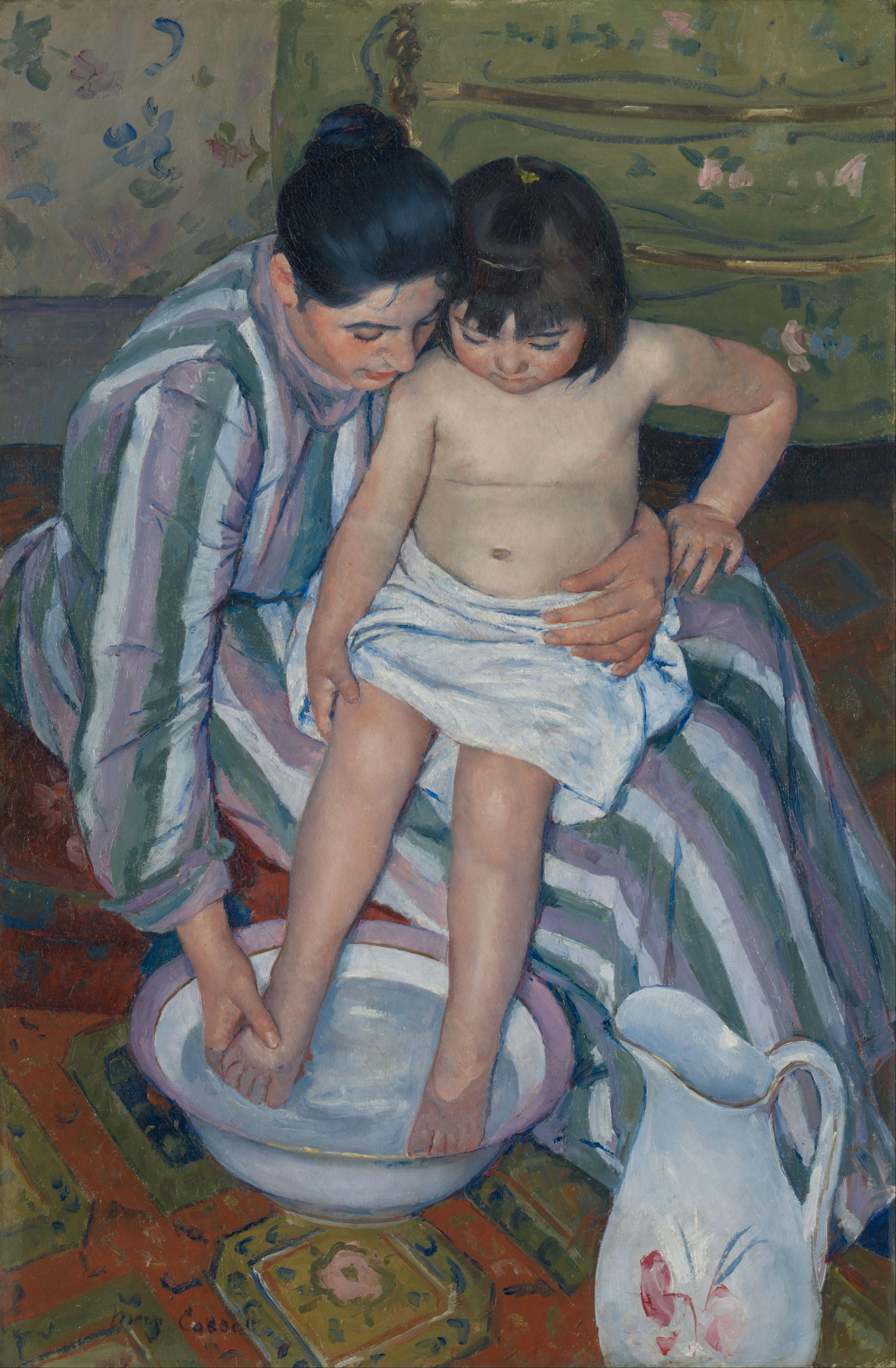
Mary Cassatt, The Child's Bath
See also: The 15 Most Expensive Female Artists
Despite having no children of her own, American Impressionist Mary Cassatt is best known for chronicling mothers with their children in everyday domestic scenes. Her most famous work is The Child's Bath (1893), which shows a young mother garbed in a long dress washing her child's feet in a small basin. The delineated blocks of soft pastel colours and horizontal structure of the painting was reminiscent of Japonism, as an interest in Japanese woodcut prints swept through France in the 1890s. This work was acquired in 1910 by the Art Institute of Chicago. Though Cassatt had experimented with other themes earlier in life, from 1900 until her death in 1926, Cassatt focused exclusively on the sweet interactions of mothers with their young children.
James McNeill Whistler, Whistler's Mother

Want more articles like this, straight to your inbox? Sign up to our free newsletter
When James McNeill Whistler's original model for this painting dropped out, his mother, Anna Whistler, sat in for him (she was 67 at the time). The work, originally titled Arrangement in Grey and Black No.1, is characteristic of the Victorian era in Anna's stoic demeanour, conservative long black dress and white bonnet, and the simple, spartan background. Considered the Victorian Mona Lisa, the painting conveys a quiet grace and is one of art history's best known portraits. It was painted in London in 1871 and though it was not well received by British critics at the time, it was acquired by the Musée du Luxembourg in Paris in 1891 and now is in the Musée d'Orsay.
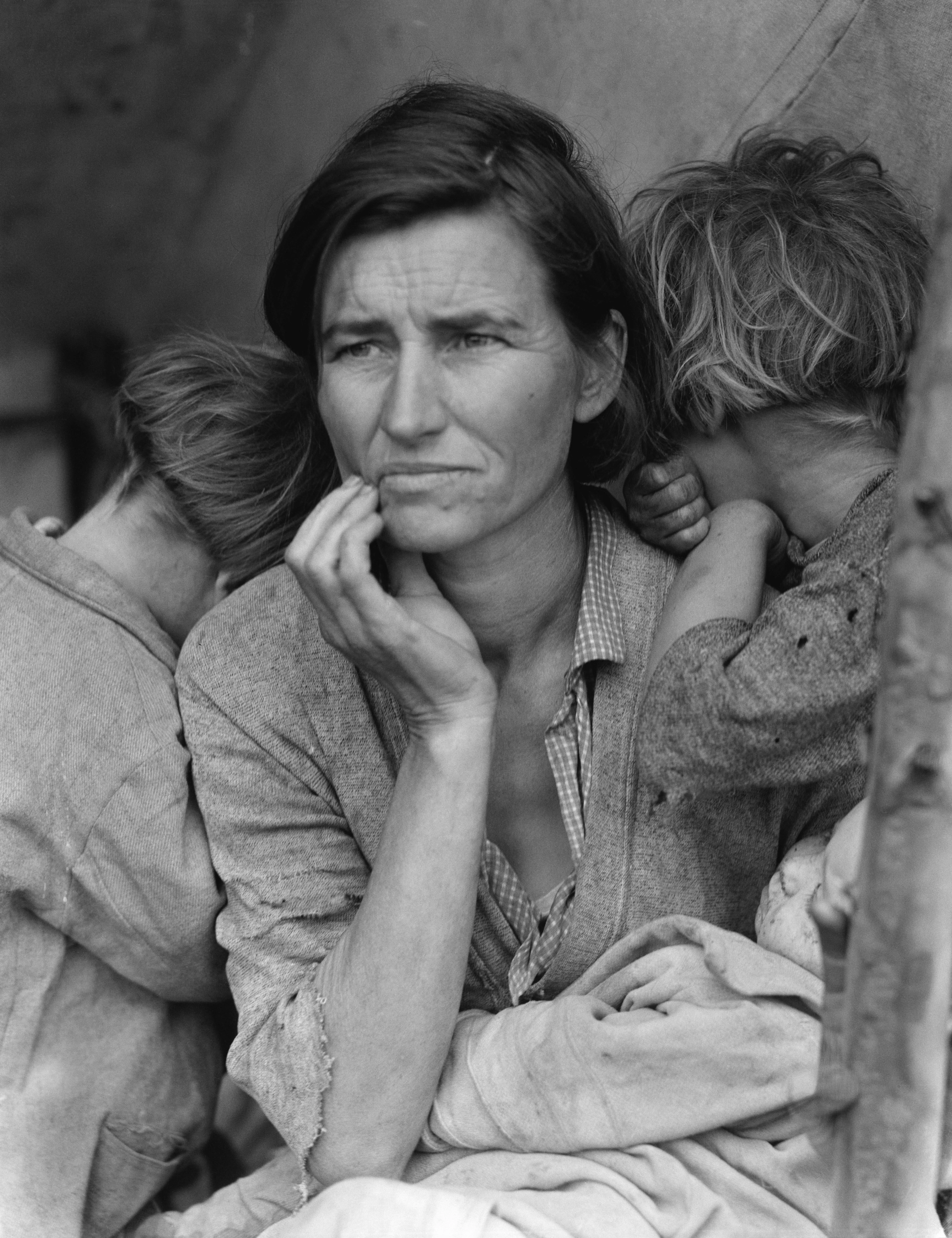
Dorothea Lange, Migrant Mother
See also: The Female Look: 11 Women Who Changed Photography
The most searing and heartbreaking image of the Great Depression, Migrant Mother was captured by photojournalist Dorothea Lange in 1936 in California. Florence Owens Thompson, a mother of seven, had set up a camp on the side of the road after her car broke down near a pea-pickers camp, where nearly 3,000 pea pickers were starving because freezing rain destroyed the crop. The photo conveys Thompson's maternal struggle, and the universal devastation of the decade, with her knitted forehead and anxious look, while two of her children burrow into her neck and another lies sleeping in her lap. The poignant photograph was widely circulated after Lange submitted it to the San Francisco News, and led to the US government immediately sending thousands of pounds of food to the pea pickers camp.
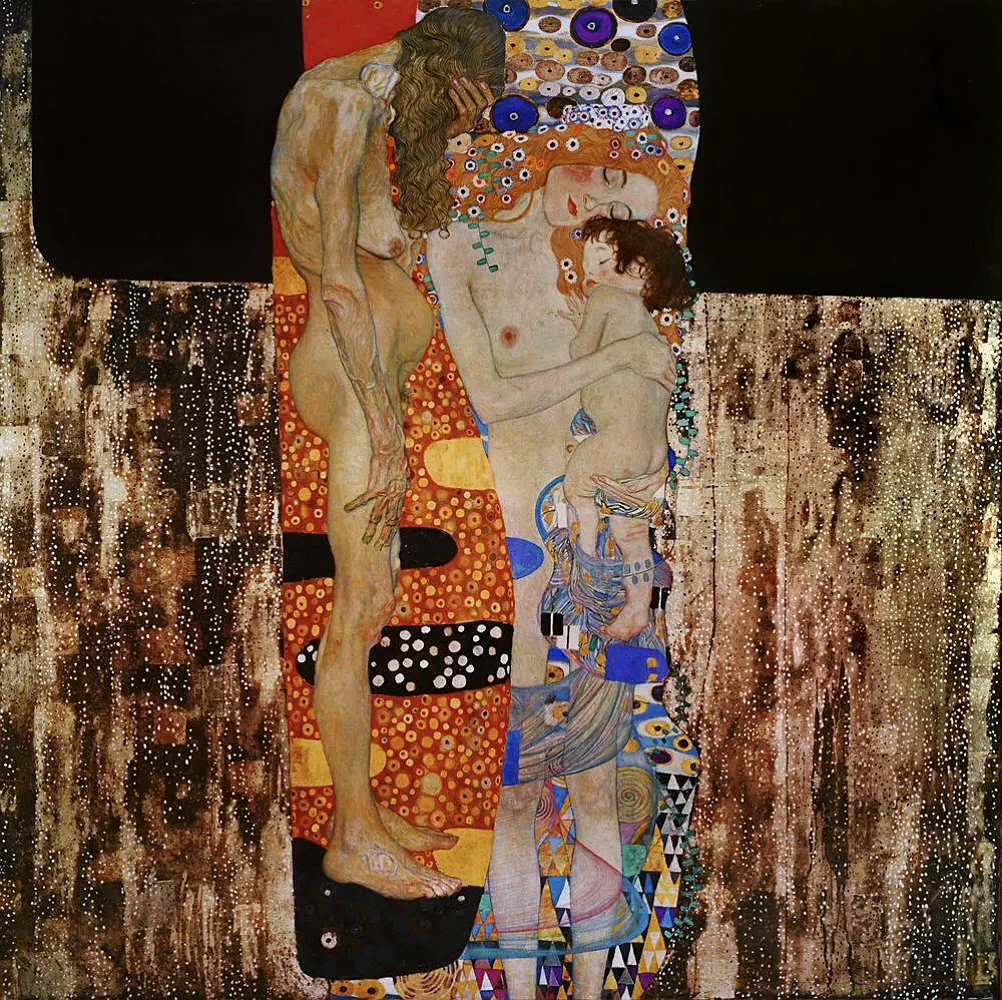
Gustav Klimt, The Three Ages of Women
See also: Fire, Passion, Inspiration: Red Hair in Art
This oil painting by Austrian artist Gustav Klimt depicts the stages of life of three women: child, mother, and grandmother. The young mother, with soft rosy skin and titian hair dotted with flowers, embraces her sleeping baby on her breast. The older woman, potentially a grandmother, stands apart and her long hair hides her face while her darkened, veiny skin contrast the flushed tone of the young mother. This lush work speckled with Klimt's characteristic kaleidoscope of colour and circular shapes depicts the youth of motherhood and the future of old age.
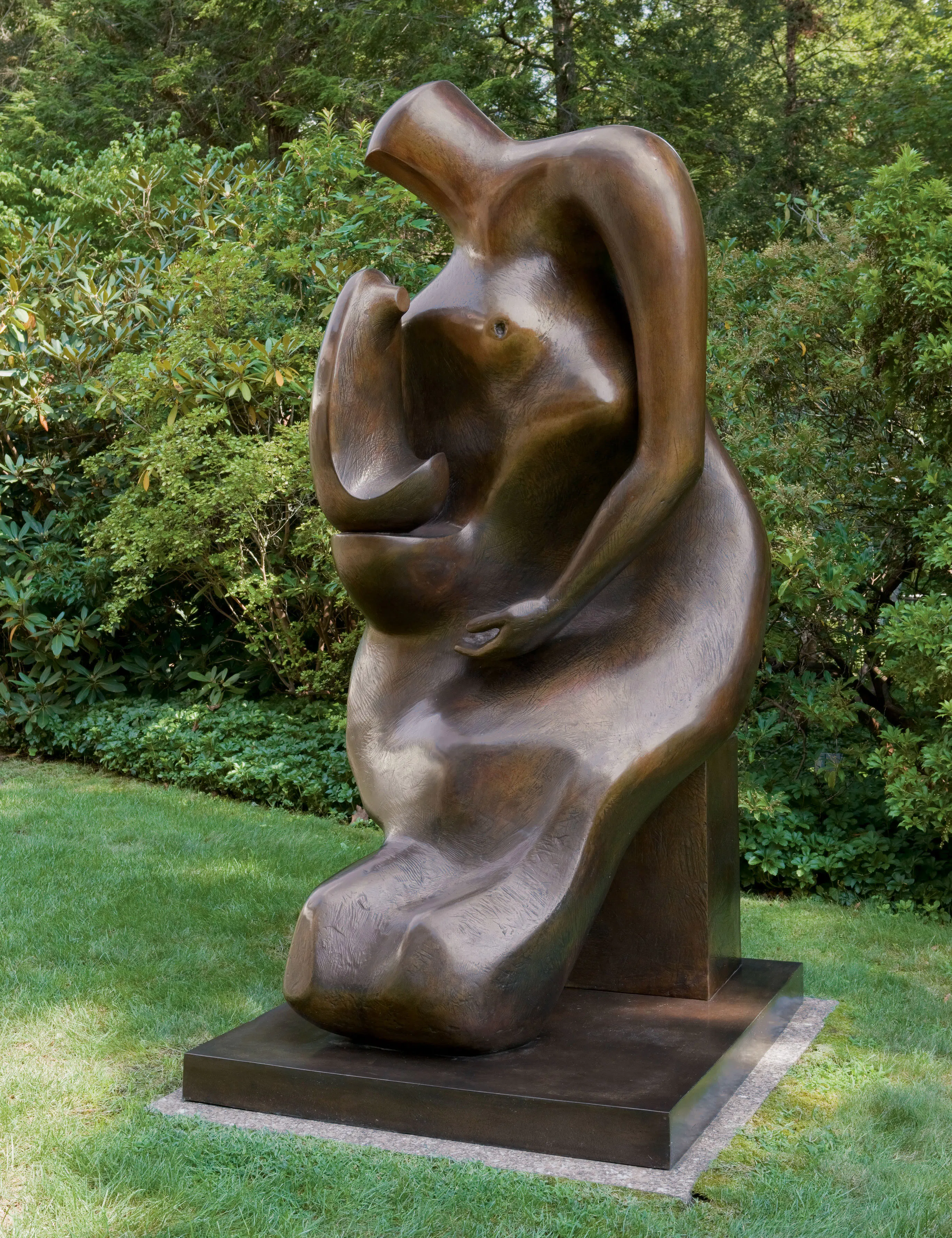
Henry Moore, Mother and Child: Block Seat
See also: 8 Facts to Know about Henry Moore
Henry Moore once said that theme of the mother and child was "one of my two or three obsessions, one of my inexhaustible subjects…(it) is eternal and unending." He experimented with it frequently in his sculpture with abstracted large forms protecting smaller ones and often out of one piece of bronze or stone, highlighting their interconnection. He created many mother and child sculptures in all shapes and sizes that are found at museums like the Hirshhorn in Washington, DC andTate in London. His mother and child works have also appeared at auction, such as this Mother and Child: Block Seat, an abstract bronze work that shows an oblong shape, symbolising the child, tucked in the arm of a curvaceous seated mother. It sold at Christie's in 2010 for £1.8 million.
Élisabeth Vigée LeBrun, Self-Portrait with Her Daughter Julie
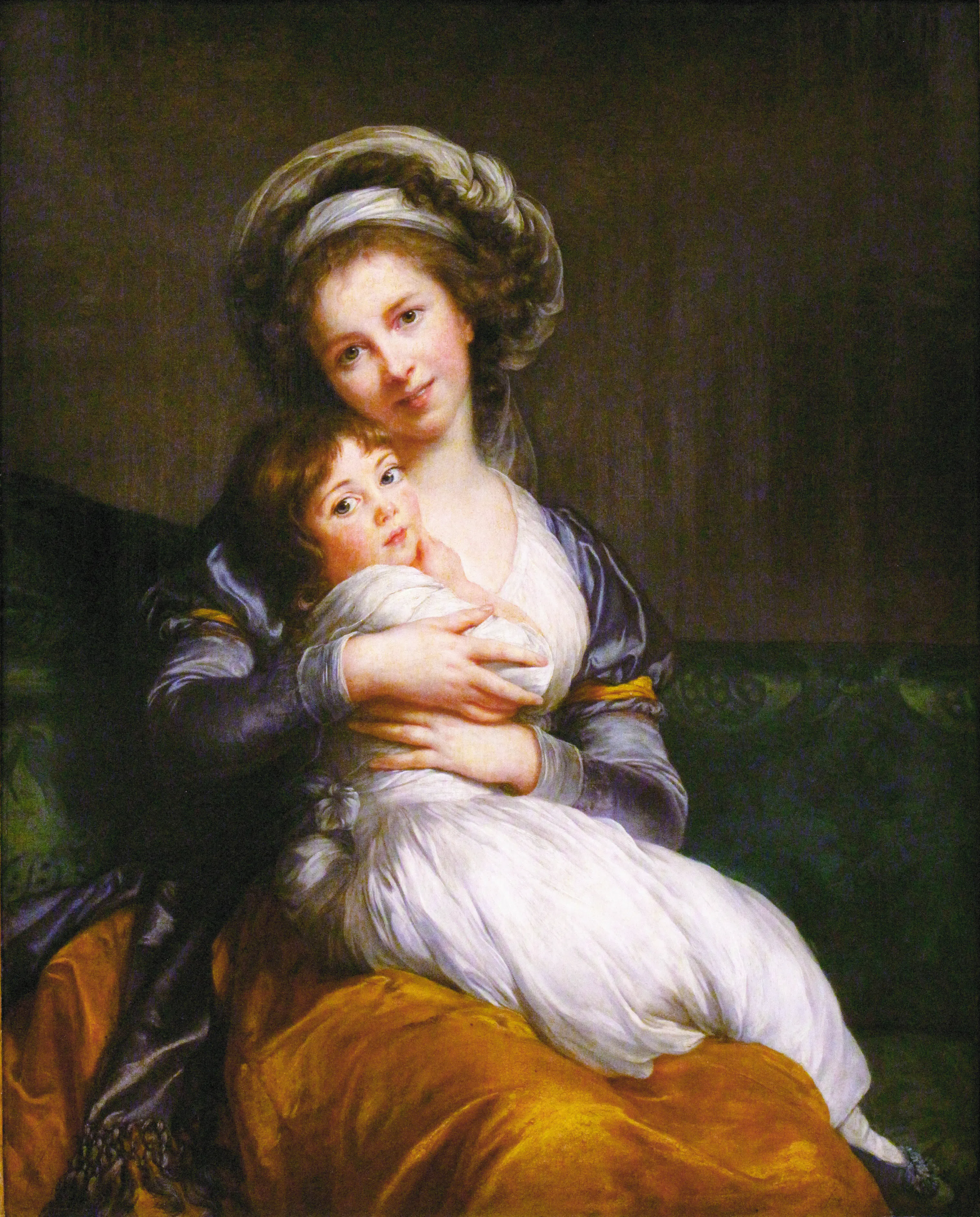
Elisabeth Vigée Le Brun was an immensely successful Rococo portraitist in the 18th and 19th centuries, who was commissioned to paint European royals, such as Marie-Antoinette, and imbued her subjects with a regal gentility and dignity. She submitted this work to the Paris Salon in 1786 where she depicts herself with her young daughter Julie nestled in her lap. The soft colour and luminosity of the work as they both look out from canvas makes them appear almost photographic, the two caught in a sweet moment of embrace. This work was controversial at the Salon as the depiction of Le Brun's showing teeth was considered inappropriate, though the maternal love was undeniable.
Explore more articles Barnebys Magazine
This is an updated version of an article originally published on 11 May 2020